


Following is an extract from our latest ebook, Office Waste: A Guide for our Future, created as part of the Greening Your Office series in collaboration with CitySwitch.
Dealing seriously with office waste can mean examining existing paradigms and throwing them overboard in some cases. For example, the notion that zero waste to landfill is a good target. According to Robyn Pearson, a waste consultant and member of the Better Buildings Partnership’s waste working group, it’s not.
Pearson, who helped develop the waste management strategy for the new Medibank building in Docklands, says many leading organisations have a good handle on the type of recycling that works, with reasonably good diversion of paper and cardboard.
But there’s confusion about what happens to everything else, including traditional comingled recycling and food waste.
In Pearson’s view recycling is just one step above landfill, and can become a “false god”.
“It’s a comfort background. An 80 to 90 per cent recycle rate? I’m not impressed by that anymore. We need to think beyond that. What we are aiming for is reduction and avoidance of waste.”
That means avoiding getting food and beverages in takeaway containers, and trying to generate less paper, even if that paper is going to be recycled.
“Zero waste to landfill is the wrong target to have,” she says, particularly if the business is generating reams and reams of paper waste to send to recycling.
Or take the case of one manufacturing site she audited, where the top 10 centimetres of packing cartons on a pallet went straight into the recycling and were never used. The new supplier of the cartons had been tying them down on the pallets so tightly, the top cartons had damaged corners and could not be used. This was costing the company several hundred thousand dollars a year in wasted packaging.
“The mindset of recycling is fine,” she says, but in terms of the next generation of waste management strategies, we shouldn’t even be talking about recycling; it should simply be standard practice while the target should be reduction and avoidance.
When the mindset is focused on recycling, we forget about the resources we’re actually consuming, including human energy, water, power, transport and the carbon footprint.
The personal desk bin: get rid of it
Pearson believes the under desk bin should be scrapped.
“Get rid of them and see what happens.”
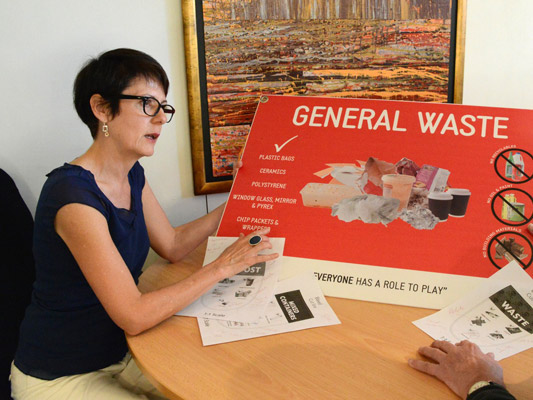
GPT national manager – sustainability performance Steve Ford says the company did just that in one of its office towers in the Melbourne CBD. There, every tenancy is required to take waste to hubs where there are recycling bins and general waste bins.
The feedback from one tenant is that it’s been positive for staff, who now engage in more informal discussion of ideas and have become more productive as a result, simply because they are meeting up on their way to the hub space.
It’s a similar principle to the “bump spaces” that have become so popular in new tertiary education buildings. Encourage people to move about and they will probably talk to each other.
Rethink everything
The key to next generation waste management starts with looking at waste and rethinking why it is generated. From simple things such as upgrading toilet roll dispensers so that cleaners are not encouraged to toss out up to half the roll at the end of the day, to bigger things such as technology upgrades that result in less paper, ink and power use.
In offices where recycling is well established, the majority of waste found in audits of bins is food waste and containers from takeaway food.
Perhaps we need to see a shift to a tiffin system like India’s where the building’s food court or cafe supply lunches in workers’ reusable steel containers.
Pearson says there needs to be a whole mindset change about how we consume food and coffee, for instance.
When she was doing the Medibank WMP, she was conscious of bringing everything back to a person’s wellbeing. The planet is too big a concept for most people, she says, but what’s more important to a person than their health and wellbeing? It’s about tying it all back so what is good for the individual is good for the environment.
Improvements to staff health if they eat better and move around more also translate into lower costs for employers, she says.
Tips:
- Don’t rely on recycling, reduce first – dramatically if possible
- Scrap the personal bin and see what happens
- Examine your product purchases
- Encourage staff to take time out to have a lunch that they’ve brought from home in a reusable container, or eat at a cafe where they offer reusable plates and cups
- Encourage staff to get up and walk to a water fountain for filtered water in a reusable cup, rather than using bottled water – movement is good for people (and can translate to lower costs for employers)
See Office Waste: A Guide for our Future for more.