


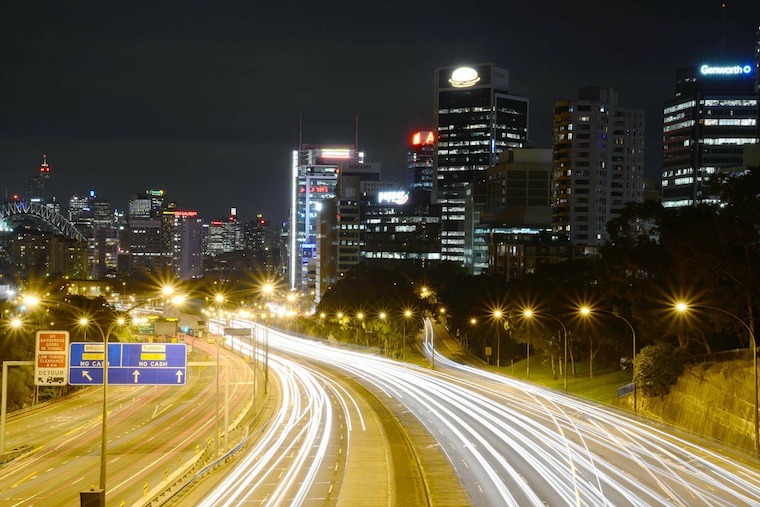
NSW residents are being made to pay even more for toll roads – including those who don’t travel on them.
That’s the news NSW premier Gladys Berejiklian revealed on Monday, announcing that those who spend more than $25 a week over a 12-month period on Sydney’s multitude of toll roads will be eligible for free vehicle registration, backdated from 1 July 2017.
“The majority of eligible motorists will save $358 a year on registration costs, with potential savings of up to $715 a year,” Ms Berejiklian said.
The system is expected to cost taxpayers upwards of $100 million a year, though Ms Berejiklian wouldn’t be drawn on an exact figure because the scheme could “affect people’s behaviour” (read cause more people to drive).
She said it was the government’s strong budget position that allowed her to “give back to toll users”.
Many, however, believe it’s an attempt to quell upset and shore up support in marginal western Sydney electorates, which are being hit hardest with new toll regimes. It’s also being seen as a sweetener to the private operators the government wants to sell WestConnex to.
Greens transport spokesperson Dr Mehreen Faruqi said the scheme amounted to a transfer of public money to private toll operators.
“The government is now going to prop up private profits using the lure of free rego for motorists – but only after you’ve spent thousands of dollars in tolls,” she said.
“This is effectively hundreds of millions of dollars of taxpayers’ money in foregone revenue. The government is desperately trying to prop up toll roads with taxpayer money to generate even more profit for private tolling corporations by offering the lure of free rego.”
Ms Faruqi said NSW was becoming “the toll road capital of the world”, and that a better solution would be to cap tolls, such as recommended in a recent legislative committee report, and to make sure people had alternatives to using toll roads.
M5 subsidy could be extended 40 years
Taxpayers are also being made to fork out for motorists using the M5, with payments made to private toll operator Interlink Roads (minus GST) able to be claimed back from the government through the M5 Cashback Scheme. The scheme was installed by Labor after the 1995 election, and was labelled NSW politics’ most expensive broken promise after Bob Carr went to the election promising to abolish toll roads altogether.
In other words, the government pays Interlink Roads (50 per cent owned by Transurban) with taxpayers’ money for every driver on the M5. Last year the bill climbed to over $100 million. And since it’s been in place since the late 1990s it has cost taxpayers $1.5 billion, and could cost more than an additional $1 billion before the tolls expire in 2026.
The government is also looking to extend the tolls for another 40 years to help pay for WestConnex, and could extend the cash back scheme with it, which means billions more in taxpayer money diverted to private toll road operators.
Subsidies mean more on the roads
According to University of Sydney transport researcher Chris Standen policies like the M5 cashback have affected travel demand, “so that the traffic on the M5 west is much higher than without the cash back”, as apart from GST it is free to travel on these roads.
Mr Standen told The Fifth Estate that those currently travelling on the M5 were in for a shock, however, when from 2020 new tolls go on the M5 East, which would cost a regular traveller $3300 a year, and from 2026 that will rise to about $6500 if the cash back isn’t extended.
“I think it will come to a surprise to a lot of people.”
The government has not yet committed to extending the cash back.
Rego payback a political fix
He said the registration discount was implemented as a “political issue”, following the reintroduction of tolls on the M4.
“It’s needed to cross-subsidise WestConnex, and has caused a lot of dissatisfaction in western Sydney. Labor is really going hard about tolls, so it’s a way of taking the heat out of that.
“From a transport policy perspective it doesn’t make any sense, but I can understand it politically.”
These roads are being proposed by toll road companies
Mr Standen said he wasn’t opposed to public funds being spent on infrastructure that provided community benefits, but was sceptical of some of the big toll road projects.
“In this case these toll roads are operated by quite large corporations with lots of foreign investors, and a lot are being built not with the purpose of improving people’s lives or making it easier for people to get around.”
Regarding WestConnex, Mr Standen said he did not know of one independent transport expert who thought the scheme made sense from a transport or economic perspective. He said he suspected the idea for these sorts of projects originated from the toll road companies themselves.
“The purpose of transport should be to make getting around easier, not making corporations richer.”
- Read Mr Standen’s piece The biggest misuse of public funds for private gain in Australia’s history?
Tolled tunnels are great. They get cars underground and paying their way – what more could you ask for. The freed up surface becomes a much more attractive area, just look at how Surry Hills, Darlinghurst and Woolloomooloo have thrived since the Eastern Distributor and Cross City Tunnels were built. Some people need to drive so let them dive in high priced tunnels.
Means testing would be a sensible way to mitigate the waste of money.
Taxing non road users or no-city residents is really poor targeting.