


If you live in an apartment building, you wouldn’t expect your developer to offer you yoga classes or a parent’s group.
Since the pandemic, some developers have become a lot more conscious of social isolation and the need to foster a sense of community in the properties they build.
EG Funds Management was highly community conscious when it completed the development of the Flour Mill precinct at the nexus of Summer Hill and Lewisham in Sydney’s inner west in 2019. The mixed-use site comprises 11 buildings and is an adaptive reuse of the former Mungo Scott flour mill.
A year later, at the height of the pandemic, the developer became concerned of growing issues around loneliness, so it decided to offer programs that would allow residents to participate during the long, boring hours of being locked down in their homes. EG’s community work has since been spun out into a not for profit called Little Big Foundation, as the developer didn’t feel it was appropriate to be so directly involved in the community.
Little Big Foundation chief executive Sarah Mathews said the team put notes on residents’ doormats inviting them to watch a free jazz concert in the Mungo Scott Plaza in the centre of the development. They also delivered containers of pancake mix and invited people to make pancakes and then post pictures of them on Instagram.
After restrictions loosened allowing 10 people to exercise together, Little Big started providing outdoor yoga classes and bootcamps.
Building cohesive communities
The foundation has since adopted a more empirical approach to social inclusion and has undertaken its own research through the Annual Social Wellbeing Survey. “It asks people to say how many days they feel lonely in a week and how much you participate in civic activity. We surveyed our own community and compared it to the national averages,” Mathews said.
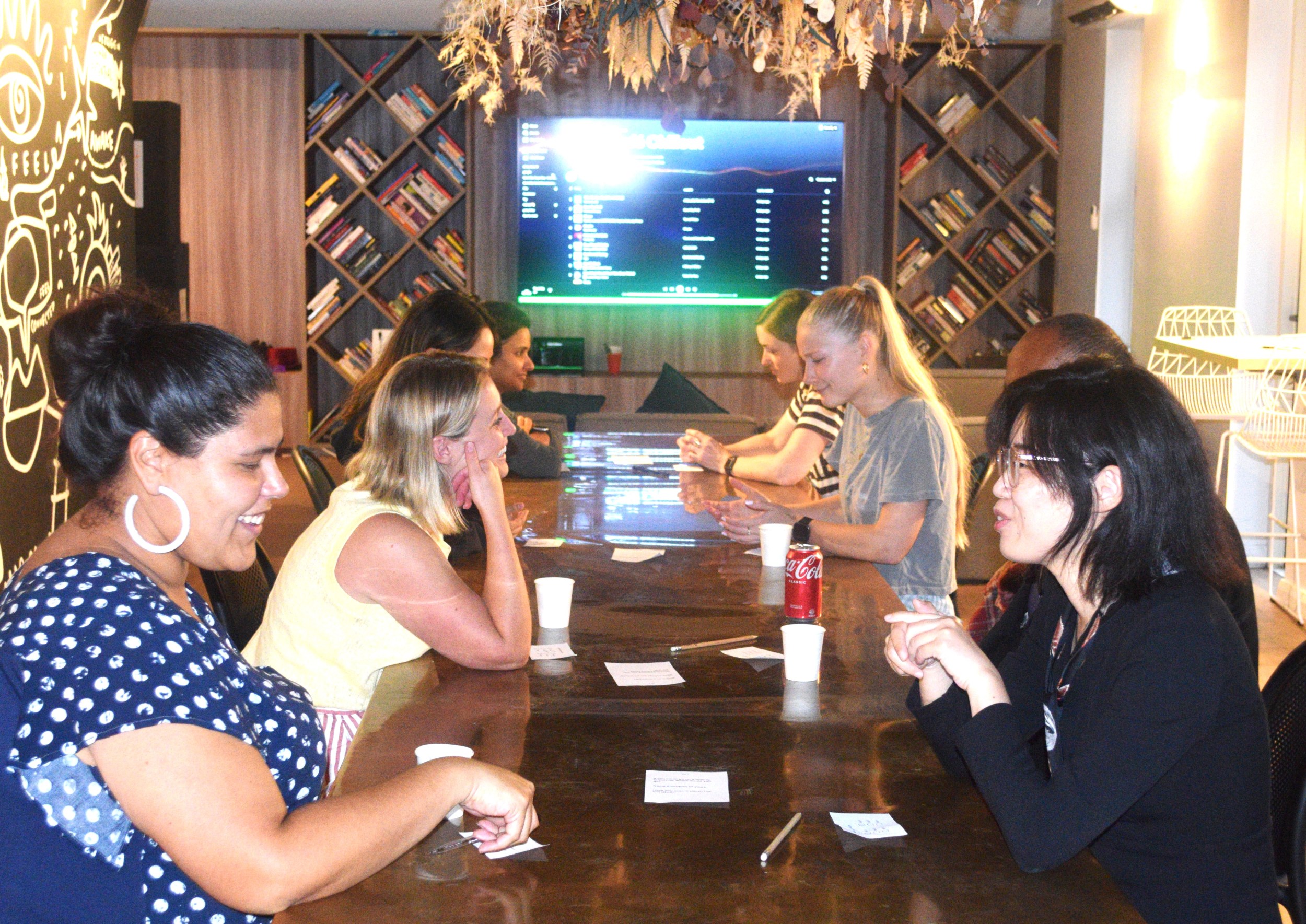
This led to the conversion of one of the Flour Mill buildings into the Little Big House – a shared community space that offers one day per week co-working, a space for exercise classes and community events that groups can hire out, and a comfortable lounge area that can be used for meetups such as parents’ groups.
People tend to be reluctant to identify themselves as “lonely”
Little Big has experimented with various themed group events to bring together disparate members of the community who crave more social connection.
“We’ve had board games nights, speed friending, seniors’ groups and a visiting library,” Mathews said. The foundation even had a request from a tantric massage provider but Mathews said they had to turn that one down. “We don’t have blinds in the Little Big House,” she explained.
The parents’ group has proved so popular that Little Big has enlisted a stream of volunteers to run the groups themselves. Other programs, such as speed friending, was not so popular. Mathews said people tend to be reluctant to identify themselves as “lonely”, so it makes more sense to build group activities around a shared interest.
It also helps to be doing an activity that doesn’t require eye contact, which helps people feel more comfortable, she added. The foundation is planning to rebrand speed friending as a dog owners’ meetup.
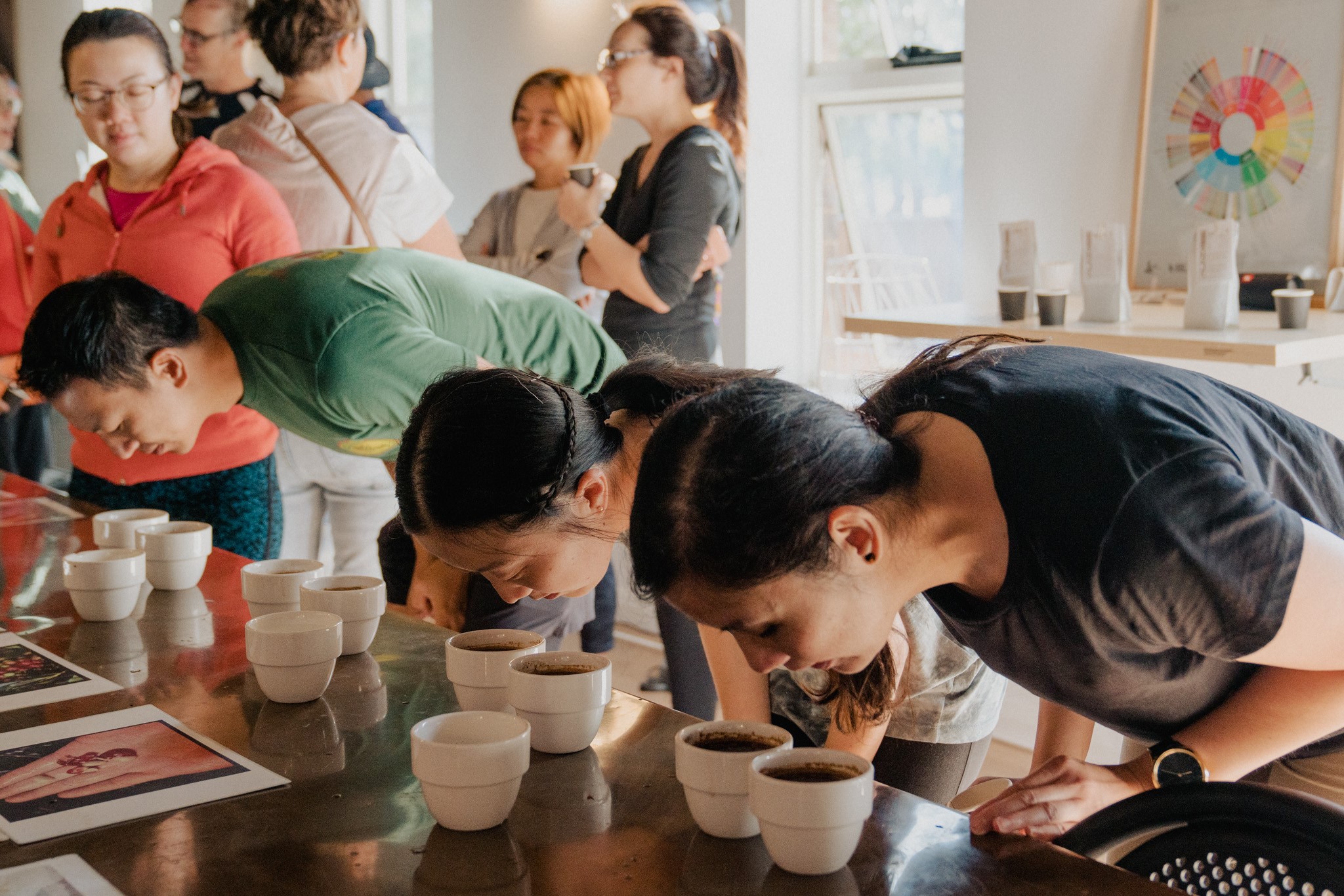
However, Little Big remains conscious of the risk of loneliness, and opens the shared space up two nights a week for people who feel isolated, depressed or even at risk of self-harm to visit and share each other’s company.
The foundation has shared learnings from its program with other developers, including the owner of a Melbourne skyscraper which had many apartments rented as Airbnbs and high levels of petty crime.
Inclusion at work
Little Big is also aware that disconnectedness and isolation also exists in workplaces.
Mathews said the dynamics of this problem had also shifted since the pandemic. “Before Covid there was a lot of research showing that people who worked from home have much greater sense of loneliness than people who are coming to the office.
Research shows that full-time employed people are the most protected group against loneliness, while retirees and young people are the most at risk of loneliness.
Since the pandemic, large numbers of the working population now work from home at least some of the time. “With more of us not going back to the office or going back sporadically, you don’t have those incidental interactions. Research shows that these interactions can help prevent loneliness,” she added.
To alleviate this in the workplaces that EG Funds Management has developed, the foundation is poised to launch the “Good Work” program.
Little Big’s approach is more formulaic and research-based than the highly organic Flour Mill program.
The focus is on the micro-experience..to bring people together.
Mathews said Good Work is currently in the “community introduction phase”, which involves interviewing chief executives and employees in tenanted properties, asset managers, buildings and facilities managers to understand their experience of community and pinpoint any areas they feel are lacking.
They take feedback on what kinds of activities they would like to be involved in and assess their sense of connection versus loneliness.
“This is an extensive piece of work because humans and their feelings are complex and this way of the ‘building owner’ engaging with all levels of tenants is new to people,” she said.
Maximising the micro-moments
Once the community consultation is complete, Little Big assembles a group of community champions to help choose initiatives and volunteers with a specific area of expertise to run events. Initial ideas are mental health training, resources such as a building guide with a list of contacts to help new tenants settle into the building, and events such as networking and walking groups.
“The focus is on the micro-experience within that event and how facilitation occurs to bring people together,” Mathews said.
Bringing events to the workplace
An increased tendency for employees to work from home can be a barrier to launching programs and events in workplaces, but Mathews said they can also help to lure people back into the office.
A Microsoft Work Trend Index survey showed that 73 per cent of employees report needing a better reason to go into the office than just to meet their employer’s expectations and 84 per cent would be motivated to go into the office if they could socialise with co-workers.
EG Funds management will pay for the programs, but Mathews said charging participants a small fee can help increase “perceived value”. Activities will start after July.
Outcomes will be measured through participant surveys. The foundation will establish a baseline measured against national averages and surveys will be used to measure change over time and against the averages. Other measures include occupancy, tenant attraction and retention and price elasticity.