



Five key megatrends are shaping the way technology is used to improve the performance of commercial real estate portfolios, according to Switch Automation chief executive Deb Noller.
Switch is active in both Australia and the US, and while there are some differences in how the markets are behaving, it is clear that companies ahead of the curve will gain savings that will compound like interest over time, Noller says.
Central to the company’s offerings and well in sync with these megatrends is an online platform that gives real-time visibility to all critical data relating to building performance and occupant comfort.
In Australia, that includes how a building is tracking against key indicators relevant to the NABERS ratings.
1. Technology is becoming part of brand identity

Property owners and managers are moving toward a tenant comfort-focused model that startup giant and co-working facility WeWork has seen multi-billion dollar success with.
“They invented a new class of real estate and attract a top-talent workforce to their customer-centric co-working spaces. By focusing on the client experience they are known as a brand who delivers superior service,” Noller says.
How did they do it? They created a standardised experience of excellence across their portfolio. Now, other portfolio managers are beginning to follow suit. The difference is in the “why”.
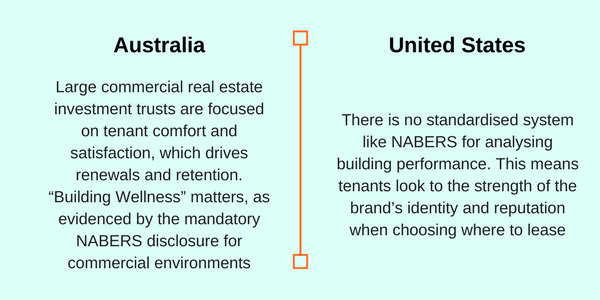

The Switch Platform features a NABERS rating feature that uses the official NABERS algorithm, so users don’t have to log onto multiple systems or work with consultants to assess building and portfolio performance in real-time.
By associating with systems that streamline efficiency and elevate the tenant’s experience, a brand can strengthen its clout as a leader in the competitive arena.
- Need help researching sustainable smart building solutions? Ready to maximise your ROI? Download this free Evaluation Roadmap eBook to learn tips and questions to ask to ensure you select the best option for your organisation.”

2. Real estate operational data is now an asset

“Companies are tired of paying vendors to gain access to their own building data,” Noller says. “They don’t want to be bound to external service contractors. Instead, they want to own their centralised, real-time portfolio information.”
Historically, property managers had to buy their own building data back from outsourced facilities management groups to analyse it, utilising tools such as Tableau and Power BI.
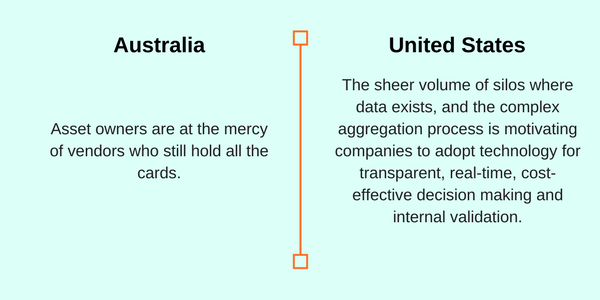
Furthermore, while some buildings install BMSs, there often isn’t any real-time data, making it hard to effectively monitor each individual system. This challenge is compounded for portfolios of buildings, which is encouraging enterprise organisations to lean on a more effective software solution.
For example, real-time data is equipping building managers to better manage properties during climate extremes, such as the recent heatwave.
“When grid load needs to be reduced, having access to complete data in real-time would enable managers to put a building into ‘brown out’ mode, without affecting occupant comfort,” Noller says.
In day-to-day operations, she says systems will “drift” from optimal set-points, and real-time data enables this to be addressed right away, resulting in energy savings and proactive tenant care.
3. The rise of the building technology evangelist

“The ‘building technology evangelist’ (BTE) is an internal stakeholder who has become frustrated with outdated systems and inefficient reporting methodologies,” Noller says.
BTEs see the value of implementing technology solutions to reduce costs and increase investment returns.
They are getting enormous results for their company because they’re able to affect change by understanding the budget, navigating the political landscape of traditional thinkers and implementing critical technological initiatives.
Switch Platform user Mike Smith, former vice president of Building Technology Services at Forest City, moved into operations from a tech background. As such, he was eager to “build those fun, innovative strategies that would save money and make buildings run better and stand out”, Smith says.
4. Change is coming from the top down

Visionary executives are formatting change from the top down.
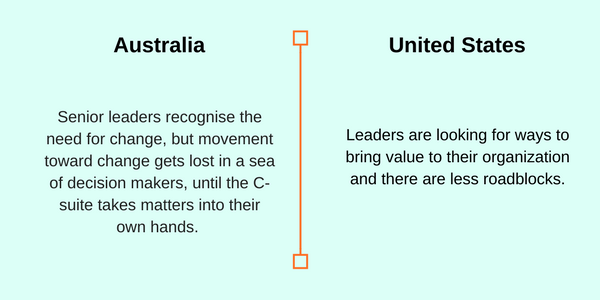
“Pressure is intensifying to operate large portfolios more efficiently and, as a result, the C-suite is more acutely focused on maximising real estate performance than ever before,” Noller says.
The leaders are pushing traditional management teams to explore technological solutions to ROI challenges. The teams are changing as a result, with conventional personnel and old-school facilities managers being replaced with fewer, more tech-savvy counterparts (for example, the BTEs).
Management is becoming increasingly proactive, now focusing on “what did we prevent?” instead of “what did we solve?”; and “how much did we save?” not “how much did we spend?”
5. Centralised command and control

As the new tech-enabled FMs rise through the ranks in true BTE form, Noller says we’re going to see enterprise portfolio management teams move towards centralised control and command.
“Labour costs are rising and it’s no longer cost-effective to have an onsite FM in each building. The industry wants fewer people to manage, less overhead to incur, a slimmer margin of human error.”

Web-based systems also mean that users can log on from anywhere and relay information rapidly and effectively to those who need it, whether that’s carbon data for the C-suite or fault detection alerts for the on-site team.
“Buildings are among the most poorly managed assets, and are hugely wasteful, but given population growth forecasts we’re going to need more of them,” Noller says. “If we can operate our current property stock more efficiently, the energy savings would be enough to cover half the needs of future buildings.”
- Need help researching sustainable smart building solutions? Ready to maximise your ROI? Download this free Evaluation Roadmap eBook to learn tips and questions to ask to ensure you select the best option for your organisation.”