

A new report has found that the rural property market is experiencing increased demands due to more corporates now jumping on “green investments” and looking to invest in “natural capital”.
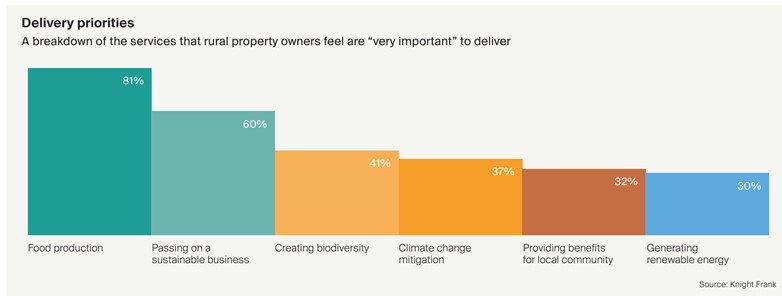
Commercial real estate agent Knight Frank said in its latest The Rural Report 2024/25: “The role of farmers and landowners will inevitably come under closer scrutiny as the debate over how the countryside is used deepens, and the pressure to deliver food security, renewable energy, housing, climate change mitigation and nature restoration intensifies.”
While the report mostly focuses on changes to agribusiness in the UK, Australia and New Zealand also get a spotlight – especially since Australian rural properties are flying off the shelves.
The company’s head of agribusiness valuations and advisory in Australia, Jason Oster, said that demand was coming from groups that are “increasingly required to meet ESG targets”.
“Corporate demand for most types of agricultural businesses is very strong,” Oster said. “Institutional investors seem to be finding it really easy to raise funding to invest in agriculture at scale.
“It feels like confidence is starting to return as inflation is back under control and livestock markets are recovering. Land values are holding up pretty well.
Large-scale opportunities involving natural capital are particularly sought after.
According to Oster, assets such as low-rainfall pastoral grazing”, which have the potential to sequester carbon, are particularly in demand.
“Premiums are being paid for these properties; however, given it is a developing market, there are variations in appetite for the income from carbon credits.
“It’s a bit of a dark art, but big businesses are keen to own such assets because it helps them with their ESG stories,” Oster said.
Investment drivers include new mandatory sustainability reporting requirements that start rolling out in Australia next year, meaning big businesses will be impacted first – and these rural properties are expected to help corporates with ESG solutions.
“We expect the mandatory sustainability reporting to lead to greater investment in agribusiness assets with strong natural capital attributes,” Oster said.
Upper Hunter is a top pick
Knight Frank’s partner and contributor to the report, McGrath Estate Agents, said the Upper Hunter region has seen a clear increase in local demand for green investment.
McGrath’s principal of Upper Hunter, Michael Burke, said, “The biodiversity offsets space has been particularly active over the last five to 10 years in particular as environmental impact assessments have become mandatory for industrial and corporate clients, including those in mining,”.
Burke added that over the last 15 years, ESG and biodiversity preservation acquisition has cumulatively exceeded the land acquired for any other use.
“Properties suitable for biodiversity offsets command as much as a 10 to 15 per cent premium above traditional grazing markets in the Hunter Valley.”
According to Burke, buyers looking for green investments in the area typically looked for properties of 400 hectares at a minimum, with the biggest transaction being around 4000 hectares.
For example, Centuria Capital’s agricultural fund invested over A$400 million in protected cropping assets in recent acquisitions.
Oster told The Fifth Estate that part of Centuria’s investment includes Sundrop farm, a greenhouse horticulture farm committed to producing high value fruit using no fossil fuels and only renewable resources.
According to Oster, features include self-contained glass housing, solar arrays and steam power that generates renewable energy for the farm as well as a collection of reusable water off the roof, amongst other sustainable practices.
“Part of the ESG story on that business is they have a tenant that runs a property that grows produce, and they are the landlord of that assets,” Oster said.
He added that just as the commercial property owner is investing in buildings with better star ratings, they are also looking for renewable aspects to add to their portfolio.
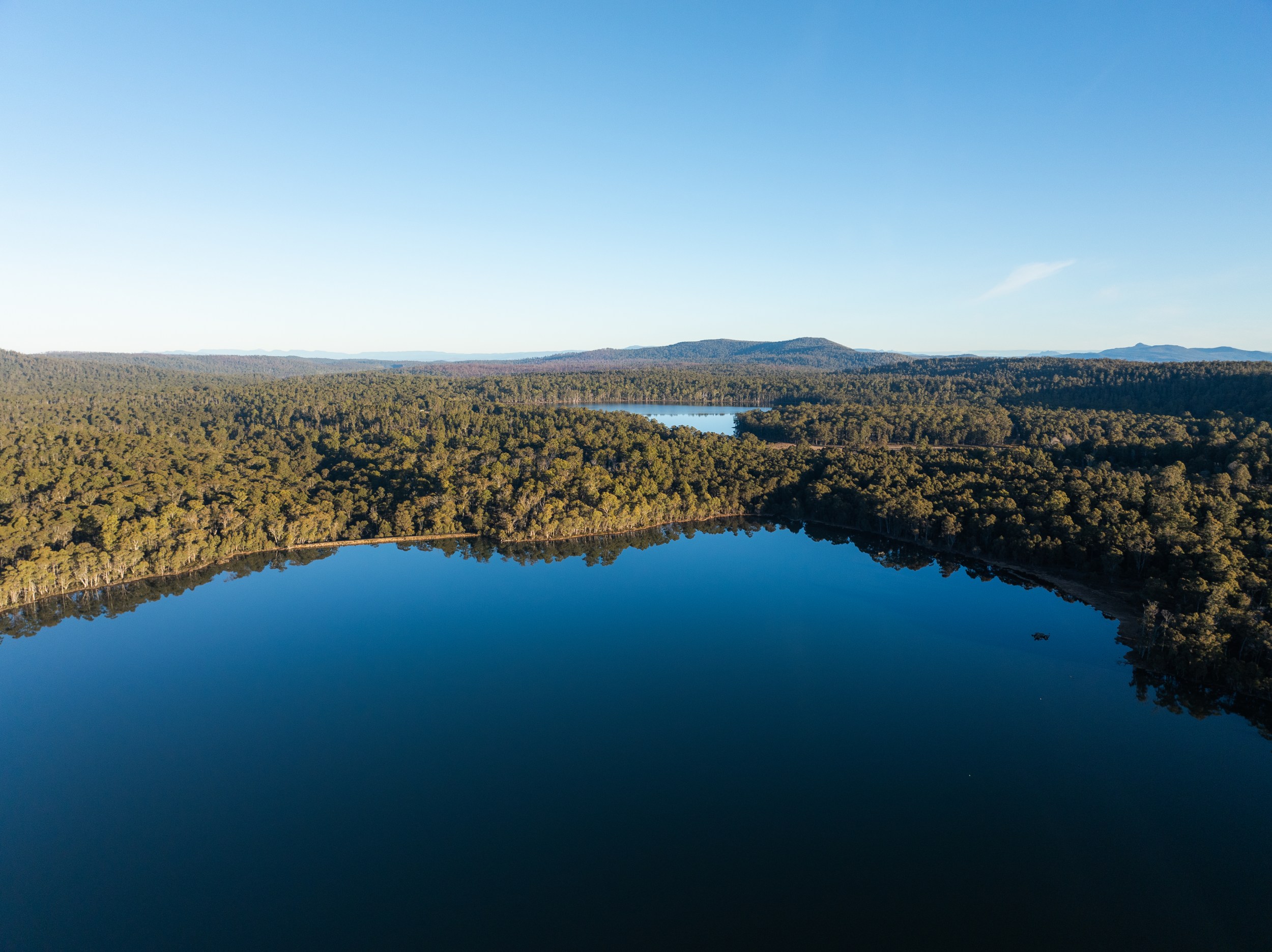
Oster is currently marketing London Lakes in Tasmania, which he says is a significant “opportunity for conservation,” environmental benefits and potentially a “nature positive investment”.
Generating carbon credit is a good source of alternate income stream for farmers, said Oster, although whether it is profitable as their only source of income in the long run is too early to determine.