


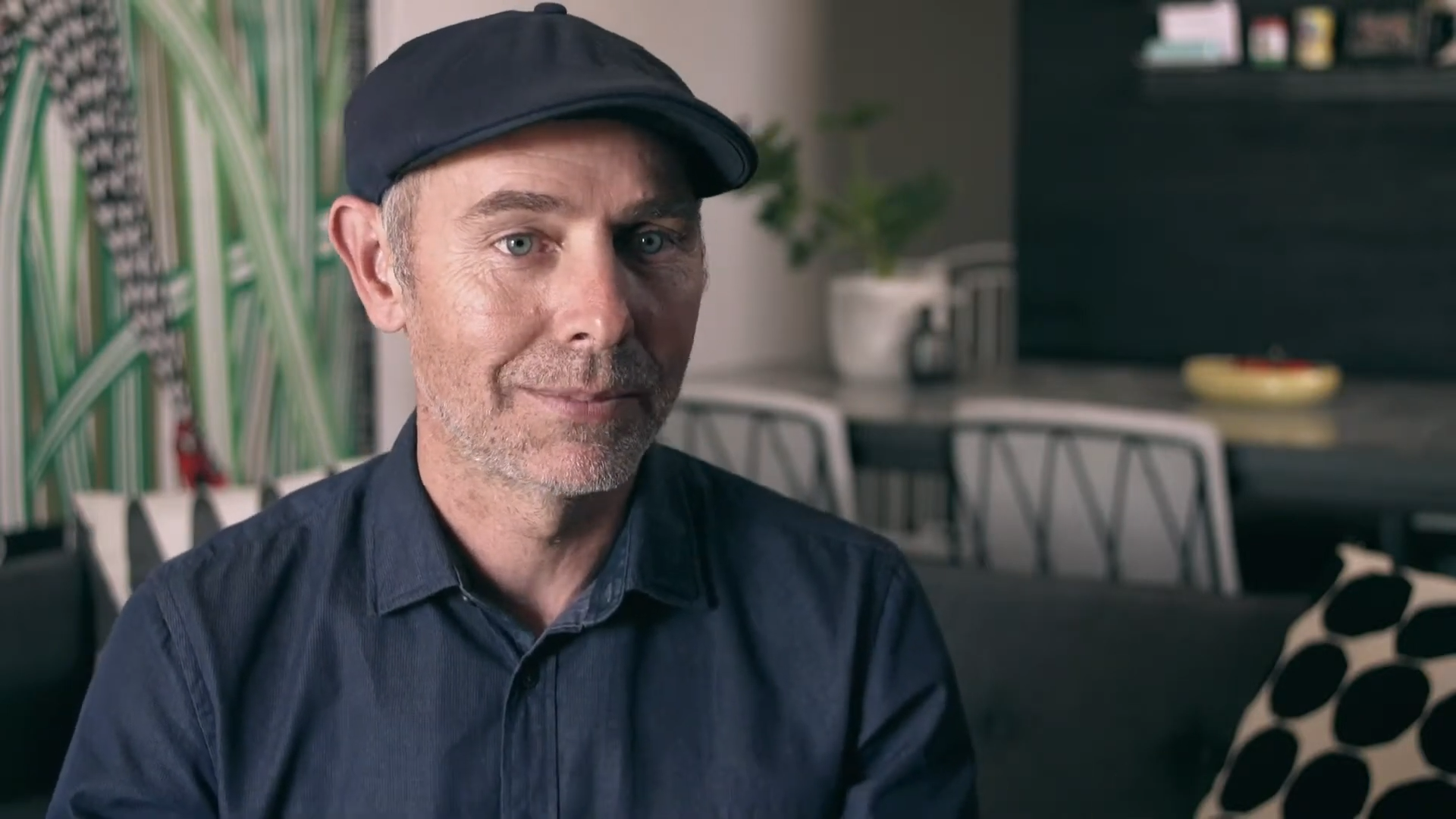
Founder of Nightingale Housing Jeremy McLeod will no doubt go down in history as the man who managed to shift a truckload of preconceptions about what housing needs to look like – what it should cost and who it is for.
Listen to the podcast here
With his wife Tamara Veltre and their Breathe architecture practice, McLeod managed the near-impossible, mostly through sheer determination. They created a housing model that shook some of this industry’s preconceived notions to their core, provided significantly cheaper housing, and made it sustainable.
Luckily, he found a cohort of other people who loved his idea and were ready and willing to listen and then jump in and help.
Credit goes to the very first of these – Small Giants’ Berry Liberman and Danny Almagor, who picked up funding for The Commons, the model’s first iteration, and from whom McLeod learnt to apply some financial guard rails.
His ambition was to “democratise capital” and create a “sustainability of reductionism – reducing cost and carbon”.
Other early followers, too, must have been charmed by McLeod’s notion to throw several regular concepts of development out the window and get as close to a disruptive model of housing as it’s possible to get in this lugubrious industry, weighed down as it is with habit, history and, in one case, pesky neighbours who objected to the lack of parking on site.
McLeod questioned the status quo more deeply than this publication had ever been exposed to: why everyone needed their own internal laundry (they didn’t; instead, they gained a beautiful communal laundry on the roof where the community formed), why they needed a big balcony or a car park; they didn’t and saved a big chunk of money from limited resources.
For instance, take away car parking and save $65,000; take out the second bathroom and save $35,000. Remove the private laundry, save $7000; the display suite, save $100,000; take out the marketing team, save $60,000; the real estate agents, save $15,000.
“So all those are things that you take out,” he tells us in this podcast.
“You build less, but you give more simultaneously.
“What we found is that it was easier to sell the apartments.”
And, of course, the apartments are all as environmentally efficient as possible.
He also threw out the notion that there needed to be a sizeable developer’s profit or finance margin. Nightingale capped its profits, which the financiers didn’t like. These margins normally compensate for risk, but with a long and growing list of willing buyers, that was a risk that could be eliminated.
In fact, McLeod was so inclined to throw the whole pack of cards up in the air that he even opted to disclose the full development books to future buyers.
On one early project the project came in under budget, so the owners were given a cheque for the savings of around $100,000.
There was something else – a clause that said that in any resale, the price uplift would be limited.
The result has been a hotly contested real estate asset that delivers homes rather than investments and has 20,000 people on the database of potential buyers.
Today, the concept has evolved to a foundation, and Nightingale is a well-entrenched licensed model that has made it to several parts of Melbourne, Ballarat, Adelaide and even Sydney. In Sydney the price of land has prevented uptake beyond a project in Sydney’s inner west Marrickville, which relied on the contribution of the site by Fresh Hope Communities.
But what drove McLeod and his wife Tamara to take such a strong departure from the norm? What caused them to design and deliver “what people needed rather than what people wanted”?
One of McLeod’s early influences included the City of Melbourne’s legendary planner, Rob Adams, who came up with some radical planning notions of his own.
He’s credited with the Postcode 3000 program that transformed an ailing CBD into a vibrant place to live and, therefore, work. And a decade ago, he proposed building six to eight-storey apartment blocks all along the major transport routes, a solution that would leave the internal suburban areas “in peace,” as he put it to The Fifth Estate in earlier interviews. This, he said, would hopefully defuse the angst that seems to accompany all development (and was highly visible even then).
McLeod liked the idea and saw it as a solution to Melbourne’s weird “fried egg” planning style, where there’s “crazy density higher than Hong Kong in the city centre and then really, really low density, worse than Los Angeles” at the city edges.
This was an engaging and illuminating podcast that sheds light on some of the influences that seem to generate valuable mavericks – such as Florence Nightingale herself, who inspired the name of this housing model that aspires to leave a legacy as important as hers.