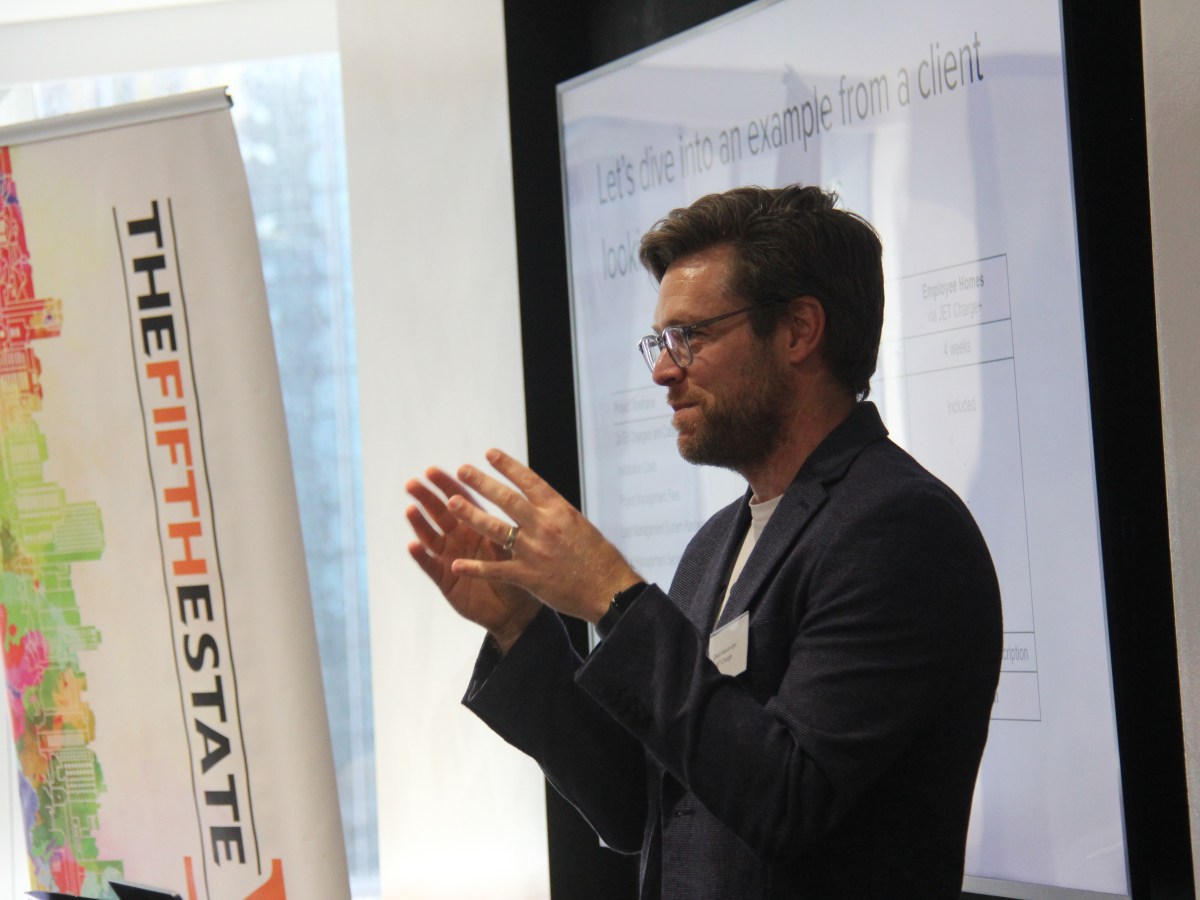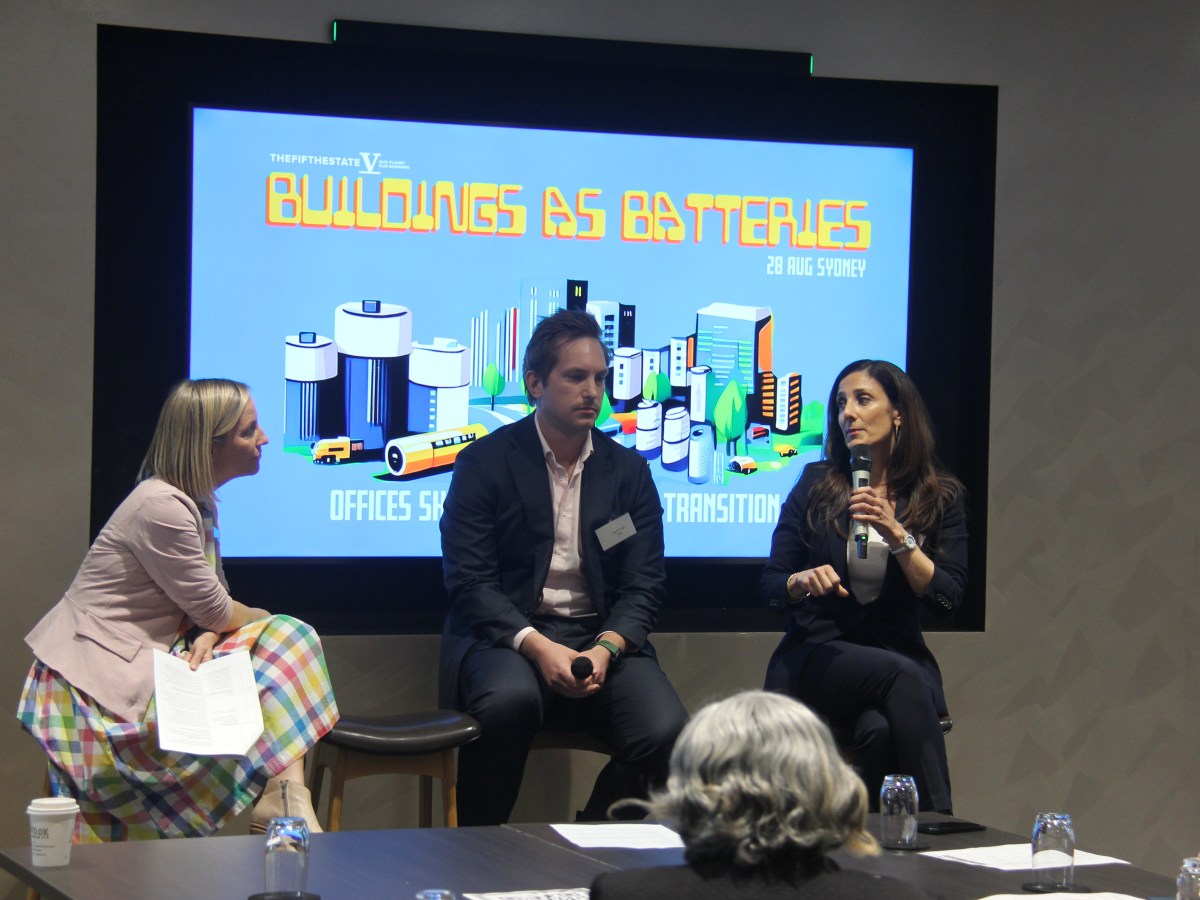


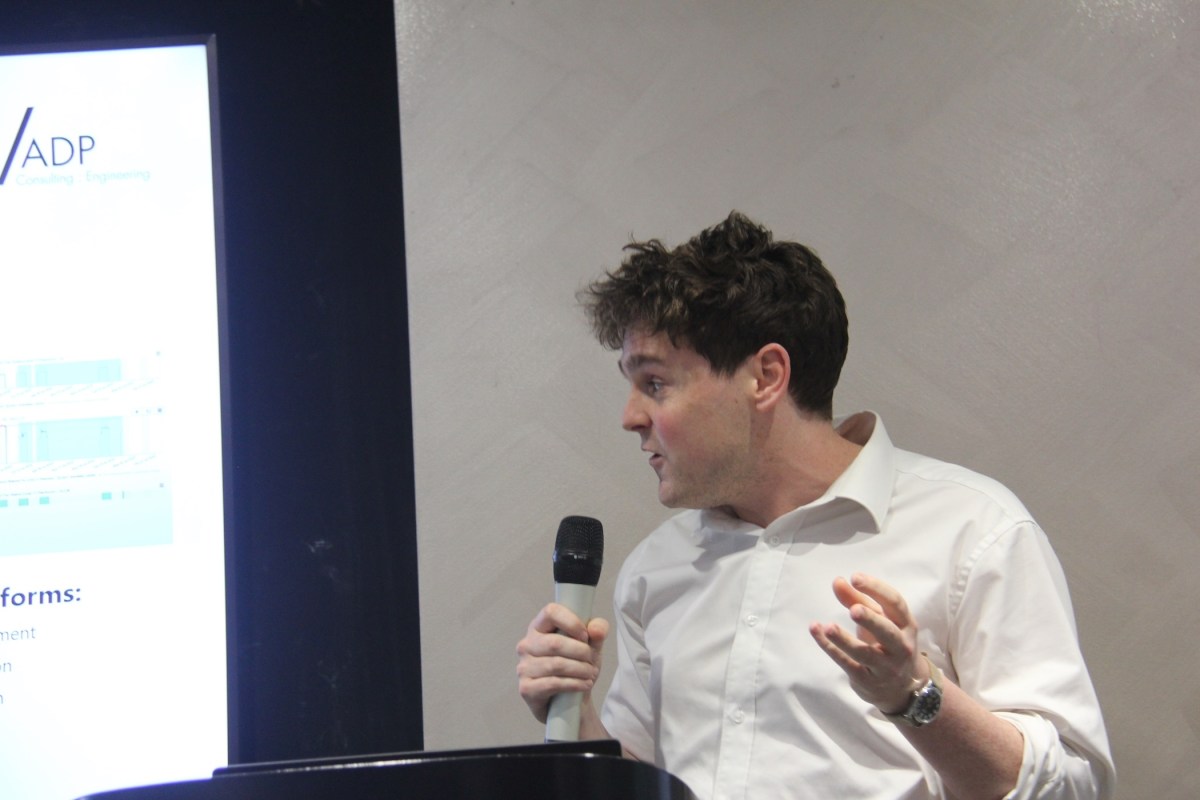
If we want to quickly decarbonise – and we must – connecting all the dots that converge in buildings, transport, infrastructure and human settlements is essential. Alex Sear director (electrification and ESG) at ADP Consulting tackled this topic in his presentation at the Buildings as Batteries masterclass.
According to Alex Sear, director (electrification and ESG), ADP Consulting there are flagship megatrends coming our way: climate change, the energy transition, AI technology, information, the Internet of Things, electrification, the transport revolution, growing demand for digital services, corporate targets and carbon reporting.
These will shape the agenda for existing buildings and open opportunities for the property sector to deal with the collective negative impact urban assets have on the planet, its atmosphere and the climate.
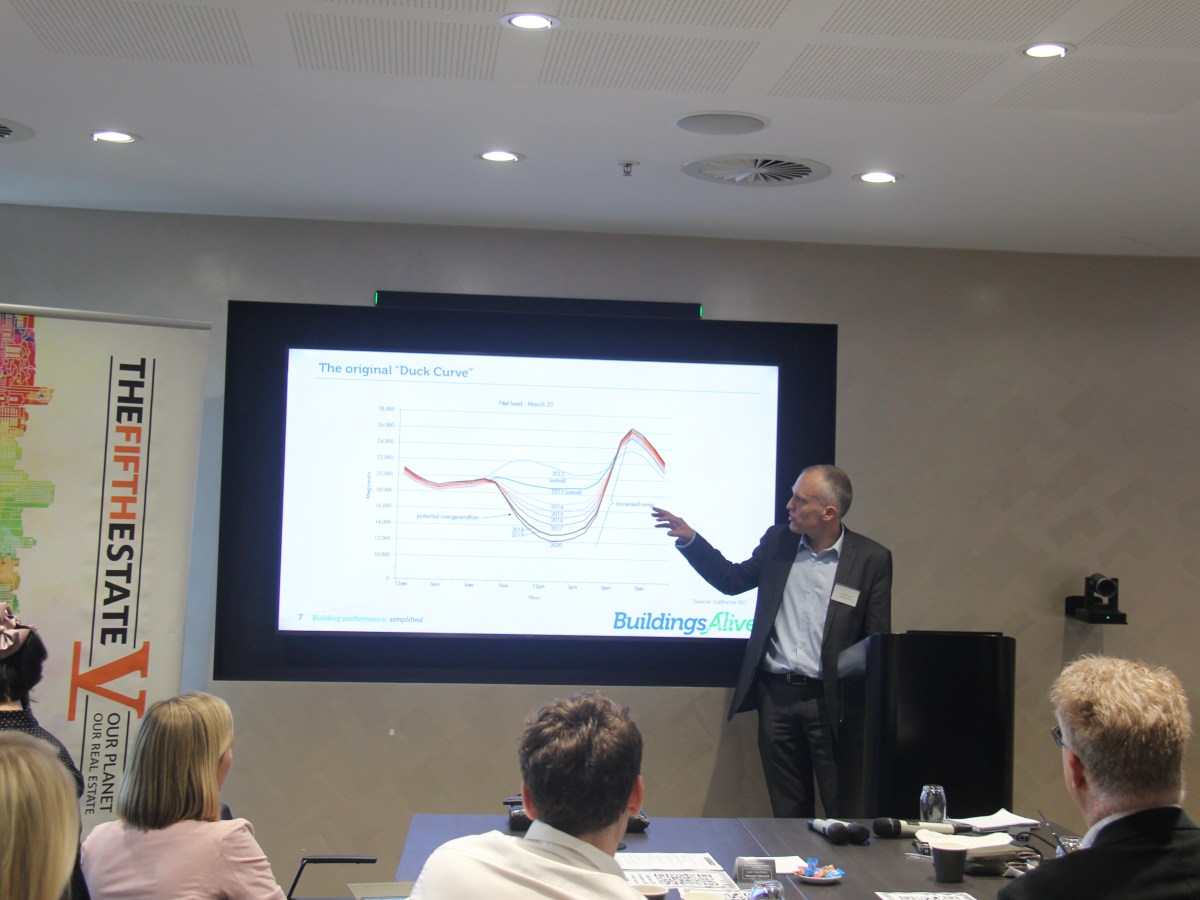
Into the mix throw renewable energy sources – sunshine and wind. And it’s well-established the sun doesn’t shine at night and the wind doesn’t always blow, so the challenge is matching up the resources with all the uses people have for energy.
“There’s that big data centre that normally operates through the night, but we’ve also got all of these
other uses that we’ve got to match these profiles to,” Sear said.
Shifting demand or storing energy for later use are well-established ways to help match things up. They are not, however, the answer to everything.
The Internet of Things can play a useful role, Sear said.
When this intelligence is collectivised, and shown against geography, things start to get really interesting
“Basically, most components we’ve got in our buildings are programable at their own level.”
Operations can be automated, set points changed, variable speed drives retrofitted. Individual load
“Basically, most components we’ve got in our buildings are programable at their own level.”
Operations can be automated, set points changed, variable speed drives retrofitted. Individual load management systems can be brought into play, especially for things like lighting, chillers, lifts, metering and switchgears. Real time energy usage data can be made available, and all this kit together with a building management system (BMS) means demand response energy management can be implemented.
The BMS itself can become a much more nimble tool, Sear explained.
They can detect faults, and they can already program sequences that automate a building to run on predictive weather algorithms.
“So, it’s not a big, big stretch to change it to predictive grid emissions.
“You can change them remotely, and they’re all connected to the internet, of course.”
Add one of the emerging analytics platforms and the massive reams of data from a BMS and building systems can be streamlined and used to inform business decisions and reporting.
When this intelligence is collectivised, and shown against geography, things start to get really interesting.
Demand for heating is dominant in the south east of Australia, and there’s demand for cooling energy the further we move north. If this is considered in the context of the grid, then load shifting and demand response at the regional scale can be achieved through how individual buildings are programed in real time, Sear said.
Next in line at the megatrend intersection is electrification, and the growing retrofit momentum to swap out all things gas for all things electric. This includes boilers switched for heat pumps and gas stoves replaced with induction.
This sounds fairly straightforward except, as Sear pointed out, the main things being replaced provide heating, and demand is greater in the winter, which is when solar is generally producing less wattage.
The time of use also plays into this. In Melbourne, for example, heating buildings in the early morning before people show up is standard practice. This is not the time of day when solar output is substantial.
Proposals to expand the Commercial Buildings Disclosure regulations to cover more asset types such as warehouses, shopping centres, data centres and hotels is going to move the goalposts even further
Load shifting and heating the building later in the day isn’t going to cut it, so Sear explained that some form of storage, whether battery or thermal is going to be important in those retrofit projects.
What levers should we pull?
One easy win is for asset owners or managers to speak to the BMS operator, the facilities manager and an engineer and find ways to “shift a few things around”. This might include refining the heating and cooling strategy, the air supply levels and the timing of heating hot water.
EV charging can become demand response charging, pools can act as thermal storage – even fire tanks have been leveraged for thermal storage by some asset owners. Creative thinking, it appears, is one of the most effective resources available to us!
Behaviour and operational changes are the easy wins – like simply turning things off. It’s working for the industrial sector, Sear noted.
EVs in a grid to vehicle and vehicle to grid arrangement is something that has major potential to provide battery storage that can supplement meeting morning loads in commercial buildings.
We are not there yet, but it’s possible, Sear said.
Another big lever is improving the building envelope. But this is a lever most choose to ignore.
“The sad thing is, improving a building envelope is really, really expensive, and it doesn’t get up on many jobs. I’ve only managed to get it up on like, two jobs,” Sear said. “It’s not like an LED lighting (retrofit) where it’s changed next day.”
The final lever is storage, again, often expensive and somewhat tricky, whether retrofitting phase change materials, batteries or thermal storage.
Many buildings have been designed to take advantage of the cheap power available in the middle of the night, a legacy of the coal fired generators not being able to easily turn down their output during the hours most of us are asleep.
Solutions also need to be fit for purpose. Commercial offices have to manage morning loads. Manufacturing can adopt behaviour changes quite successfully and logistics and warehousing have their massive roof space for PV.
The tough nut is data centres. This is where district-type solutions such as heat sharing from the data centre to other buildings might work, Sear explained.
The pointy end of reporting is coming
Mandatory reporting of carbon is on the way and it’s going to have a major effect across all the big corporates, according to Sear.
Proposals to expand the Commercial Buildings Disclosure regulations to cover more asset types such as warehouses, shopping centres, data centres and hotels is going to move the goalposts even further.
NABERS has already credited as a big success factor in Australia’s claim to having some of the world’s best buildings. Now the new regime requiring reporting of scope 1 and scope 2 emissions, which makes gas use visible, is “going to change the game”, Sear said.
move the goalposts even further.
The sweetener is the amount of funding made available at state and federal levels for positive initiatives such as installing batteries.
Ultimately, all the different pieces need to be brought together in one holistic push for change.
According to Sear the energy retailers also need to come to the table with incentives, such as some type of “kickback for well-performing commercial customers.
“At the moment, we do all of these electrification case studies and these NABERS improvement case studies. We always get there. We get their energy bills, and they’re on a standard off peak, on peak tariff, and they’re not actually seeing any of these benefits.” Sear said.
Ultimately, all the different pieces need to be brought together in one holistic push for change.
Sear summed it up – we need cheaper batteries; we need the benefits of electrification and energy efficiency and demand management to be shared. We need people from the generators to come together. More solar is needed in the market and hopefully electricity rates become cheaper.
We then end up with less carbon going into the atmosphere, and that’s a benefit we all get to share.