


How does the fall in recruitment activity affect the job market in Australia?
Recruitment activity has seen some fluctuations, with a slight decline in August 2024 to 43 per cent of employers actively recruiting, down 16 percentage points from mid-2022.
Recruitment difficulty rose to 50 per cent among employers, particularly for permanent positions, indicating that while jobs are available, finding the right candidates remains a challenge.
Spinifex is an opinion column. If you would like to contribute, contact us to ask for a detailed brief.
The increase in job seekers means more competition for available positions. Even though more people are on the hunt for work, the demand for employees isn’t keeping up, making it tougher for candidates to stand out.
Top job search statistics
- engineers in Australia look for a job every 3 years and 4 months
- 1 in 3 employees would take a pay cut to achieve a better work-life balance
- More than a third of Australians want the option to work from home
- 1 in 3 Australian job vacancies are never advertised publicly
- only 35 per cent of job adverts display the salary for the role
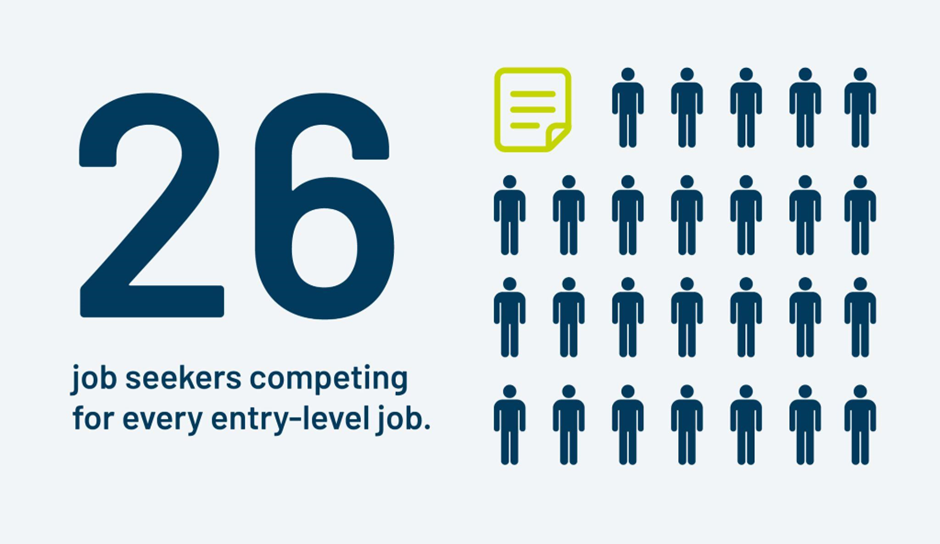
- there are an average of 26 job seekers competing for every entry-level job
- recruiters only spend 6 to 8 seconds reviewing a resume
- only 1 in 4 resumes make it past a recruitment ATS to be read by a human
- 43 per cent of companies are now using AI to interview candidates
How many engineering job vacancies are there across Australia’s built environment?
In June 2024, there were a total of 6293 job advertisements for engineering occupations.
The largest share of these vacancies was for civil engineering professionals, accounting for 39.7 per cent of all ads with 2496 openings.
| Search Term | Number of search results Seek.com.au (Engineering, Australia only) | Number of search results linkedin.com.au (Australia only) |
| chemical engineer | 715 | 175 |
| civil engineer | 2520 | 782 |
| electrical engineer | 2990 | 770 |
| electronics engineer | 1364 | 70 |
| engineer | 4388 | 9010 |
| engineering managers | 2215 | 270 |
| environmental engineer | 582 | 102 |
| graduate engineer | 2776 | 472 |
| industrial engineer | 244 | 79 |
| materials engineer | 168 | 22 |
| mechanical engineer | 3,726 | 603 |
| mining engineer | 373 | 134 |
| production engineer | 833 | 326 |
| project engineer | 3,401 | 717 |
| structural engineer | 1,754 | 344 |
| systems engineer | 1,401 | 371 |
| telecommunications engineer | 100 | 159 |
| traffic engineer | 225 | 132 |
| transport engineer | 212 | 156 |
Significant numbers were also reported for industrial, mechanical, and production engineers (16.2 per cent), Mining Engineers (12.7 per cent), and electrical engineers (9.5 per cent). chemical and materials engineers had the fewest vacancies, making up only 0.7 per cent of the total, with just 44 positions available.
Here’s a more detailed breakdown of the number of advertised jobs by month across each occupation:
| ANZSCO Unit Group | 24 April | 24 May | Junel 24 | per cent of 24 June Total |
| chemical and materials engineers | 55 | 52 | 44 | 0.7 per cent |
| civil engineering professionals | 2,575 | 2,583 | 2,496 | 39.7 per cent |
| electrical engineers | 621 | 623 | 598 | 9.5 per cent |
| electronics engineers | 89 | 92 | 84 | 1.3 per cent |
| industrial, mechanical and production engineers | 1,070 | 1,069 | 1,020 | 16.2 per cent |
| mining engineers | 850 | 839 | 801 | 12.7 per cent |
| other engineering professionals | 446 | 439 | 410 | 6.5 per cent |
| engineering managers | 381 | 356 | 321 | 5.1 per cent |
| ICT support and test engineers | 446 | 466 | 448 | 7.1 per cent |
| telecommunications engineering professionals | 81 | 75 | 71 | 1.1 per cent |
| Total | 6,614 per cent | 6,594 | 6,293 | 100.0 per cent |
How many engineering job vacancies are there by state?
In the six months from January to June 2024, a total of 33,608 engineering job advertisements were recorded across Australia. Queensland led the way with an average of 1464 vacancies, accounting for 26.2 per cent of the total.
New South Wales followed closely with 1387 ads (24.8 per cent), and Western Australia had 1403 vacancies (25.1 per cent). Victoria contributed 837 positions (15.0 per cent). At the same time, South Australia, Tasmania, the Northern Territory, and the Australian Capital Territory collectively accounted for a smaller share, with averages ranging from 1.1 per cent to 5.5 per cent.
| State | Jan-24 | Feb-24 | Mar-24 | Apr-24 | May-24 | Jun-24 | Average | per cent Share of Total |
| NSW | 1,488 | 1,441 | 1,396 | 1,357 | 1,328 | 1,313 | 1,387 | 24.8 per cent |
| VIC | 849 | 838 | 836 | 838 | 834 | 828 | 837 | 15.0 per cent |
| QLD | 1,543 | 1,500 | 1,463 | 1,433 | 1,420 | 1,425 | 1,464 | 26.2 per cent |
| SA | 317 | 307 | 303 | 303 | 307 | 311 | 308 | 5.5 per cent |
| WA | 1,490 | 1,431 | 1,388 | 1,369 | 1,366 | 1,372 | 1,403 | 25.1 per cent |
| TAS | 58 | 58 | 59 | 59 | 60 | 60 | 59 | 1.1 per cent |
| NT | 76 | 74 | 70 | 65 | 60 | 56 | 67 | 1.2 per cent |
| ACT | 76 | 74 | 75 | 76 | 78 | 80 | 76 | 1.4 per cent |
| Total | 5,901 | 5,723 | 5,580 | 5,484 | 5,436 | 5,437 | 5,593 | 100.0 per cent |
Unadvertised Job Opportunities

1 in 3 jobs in Australia never make it to public job boards. That means a huge chunk of the market is hidden behind networking and internal hires.
For active job seekers, this makes the search tougher—those opportunities simply aren’t visible. To tap into these hidden roles, personal connections and industry relationships become essential. Without them, landing a job can feel even harder.
How often do engineers look for new jobs?
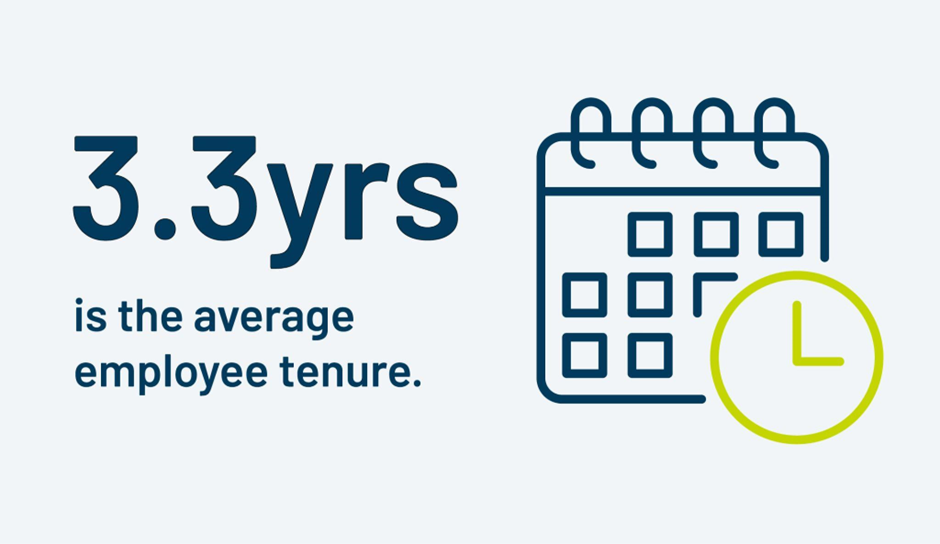
Job mobility in Australia is far from stable; it’s closer to three jobs per decade, with the average tenure now sitting at just 3.3 years due to a voluntary turnover rate of around 15 per cent per year.
How hard is it to find an engineering job?
According to the Australian Bureau of Statistics, 8 in 10 job seekers find the hunt for a new role challenging. The main hurdles are intense competition for jobs and a lack of experience.
In 2024, the Australian job market will be a complex landscape shaped by evolving recruitment trends, changing employment patterns, and shifting worker expectations. Let’s dive into how these statistics affect job seekers today.
How many engineers are competing for job opportunities across Australia?
Finding a new engineering job can feel like a marathon. With tough competition and automated systems filtering out resumes, landing the right role isn’t easy.
Using baseline data, we can make some informed assumptions to paint a more detailed picture.
Let’s break down the numbers and see just how many applications it really takes for engineers to secure a job in today’s market.
How many job seekers per vacancy?
Across all sectors in Australia, there are 1.1 job openings per job seeker, but for entry-level positions, it’s a much tougher battle with 26 job seekers per role, according to SBS News.
How many applications per job vacancy?
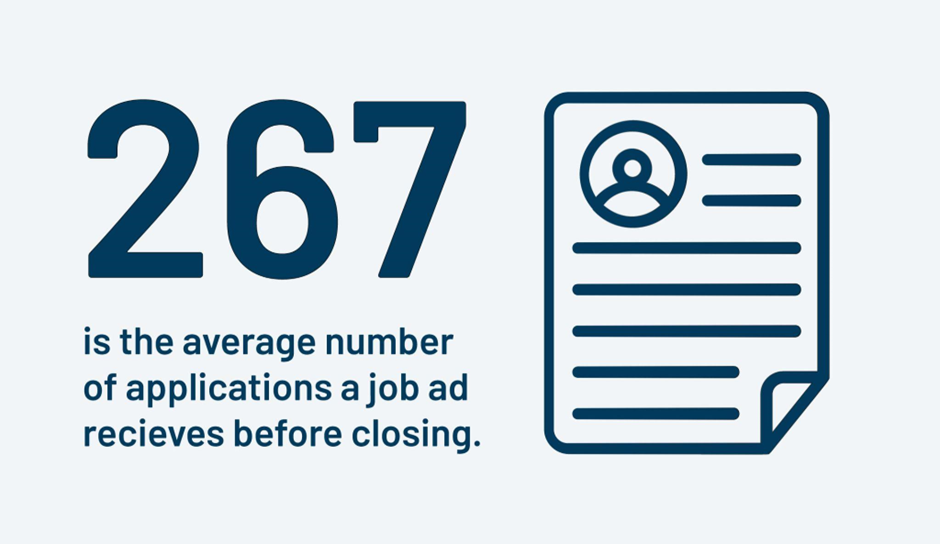
The average job ad receives 267 applications before closing. Yet, despite increasing pay transparency, only 35 per cent of job adverts show the salary, even though 4 in 5 job seekers want that info upfront.
Top reasons employers reject engineering candidates at interviews
A LinkedIn survey revealed the eight most common reasons candidates get rejected:
- poor communication
- bad body language
- unprofessional behaviour
- salary or benefits questions
- cultural mismatch
- lack of courtesy
- negative attitude
- no passion or career goals
Why engineers turn down job offers
On the flip side, job seekers reject offers for three main reasons:
- 42 per cent said the salary wasn’t up to par
- 15 per cent got a better offer from their current employer
- 13 per cent needed remote working options
Are video interviews on the rise?
Since 2019, video interviews have jumped by 57 per cent, and many employers are still using them post-Covid.
43 per cent of companies now use AI for video interviews, where candidates answer pre-recorded questions without an interviewer.
How important is social media in job searches?
Research shows that 70 per cent of job seekers use social media to hunt for jobs, and 84 per cent of Australians are open to job opportunities via social platforms.
73 per cent of employers use social media to recruit, and nearly all of them (96 per cent) turn to LinkedIn.
Here’s where job seekers are looking:
- LinkedIn: 71 per cent
- Facebook: 35 per cent
- Twitter: 21 per cent
- Instagram: 18 per cent
And just over half of recruiters use social media to chat directly with candidates.
The bottom line
While the opportunities are there, getting through the initial stages requires persistence, strong resumes, and the use of networking to access unadvertised roles. If you’re an engineer searching for a job in Australia, be prepared for a marathon, not a sprint.