


Shopping centres may have fallen upon harder times thanks to online retailing but perhaps this speed bump can serve as an opportunity to rethink these giant structures and make them more sustainable and community-focused. Vicinity Centres, for one, has just upped its onsite renewables play (again). And in Sydney AMP Capital’s Marrickville Metro will be “up-cycled” using an old industrial warehouse that will bring “public art and expression to the forefront”.
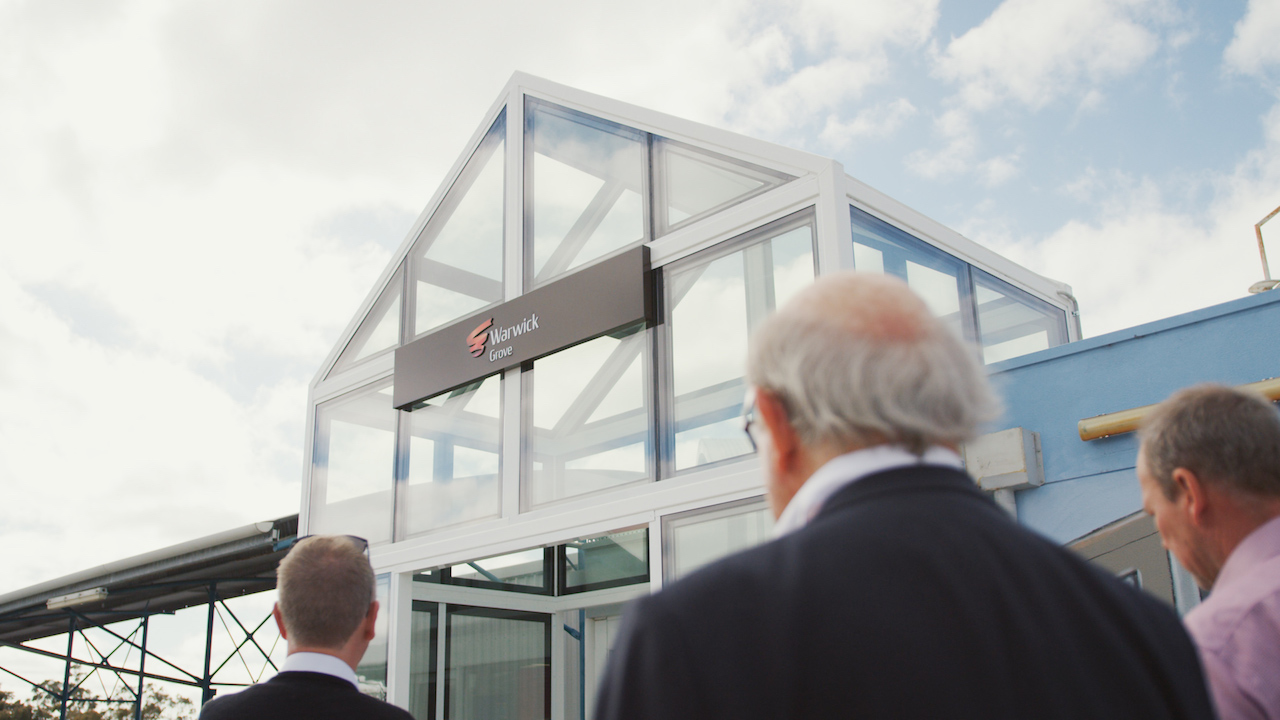
In Western Australia Vicinity says it will be running a world-first trial of ClearVue PV’s solar power-generating clear glass at the Warwick Grove shopping centre in Western Australia.
The clear photovoltaic solar glass, which collects infra-red light and deflects it to the frame where it’s converted to electricity, has been inserted into a new structure where the existing glass atrium used to be.
Twenty-six of the “insulation glass units” have been installed at Warwick Grove, covering an area of about 27 square metres. They are anticipated to generate about 1 megawatt-hour each year in total for the centre to use, according to Vicinity Centres executive general manager shopping centre management Justin Mills.
He said there are a few variables that might impact the energy-generating performance of the windows, including weather and aspect, as different parts of the structure will get sun at various times of day. This will be monitored closely during the trial.
Vicinity were unable to provide an assessment of costs for the pilot nor the price of the product.
The PV glass blocks both thermal radiation as well as infrared and ultraviolet light, according to the ClearVue’s website, and is capable of producing a minimum of 30 watts a square metre and 50 watts will be possible in the future.
It also claims to have “superior insulation properties compared to conventional glass” and can help save as much as 40 per cent on heating, cooling and lighting costs.
Seventy per cent of visible light is transmitted through the glass but 90 per cent of the IR and UV is reflected off the “spectrally-selective” coating on the glass and deflected back to the edges of the glass where the solar cells are placed.
The are many applications for the panels – pretty much anywhere conventional glass is used in both old and new structures – but it has the potential to allow structures such as greenhouses or transparent bus shelters to become self-sufficient. It can even be used in cars.
“ClearVue could transform the way we use glass in our centres, which reinvents the way we harvest renewable energy, reduces our exposure to the volatile energy market and our carbon footprint – a key focus for Vicinity,” Mr Mills said.
The retail property group has already flagged “potential to explore other opportunities” if the pilot goes well.

The sustainable shopping centre revolution is on track
The announcement follows the retail property group’s decision to inject an extra $50 million into phase two of its rooftop solar program. This amounts to $73 million in solar commitments in total and a total capacity of 31 megawatts, to be completed in 2019.
Other large retail owners are making use of the open spaces atop their shopping centres to install rooftop PV panels, including SCA Property Group and Stockland.
But it’s not just about rooftop solar. Marrickville Metro’s $142 million shopping centre redevelopment in Sydney’s inner west involves “up-cycling” an old industrial warehouse. Much of the existing warehouse façade will be maintained in “true inner west style”.
Design by Hames Sharley, the “sustainable development” will have a strong “community focus”. Development owner UniSuper’s head of property & infrastructure Kent Robbins said the project will bring “public art and expression to the forefront”.
Once finished, the Marrickville Metro Shopping Centre, owned by UniSuper and managed by AMP Capital, will be expanded from 22,000 square metres to 33,000 square metres, and will host 44 new retailers such as Coles, as well as a fresh food precinct and indoor and al fresco dining options.
Another win for sustainability in retail is Fraser’s Burwood shopping centre, which is being refashioned from a former brickworks site.
The 12,700-square-metre Burwood Brickworks shopping centre is aiming to become the world’s first Living Building Challenge retail project, which requires developments to be carbon, energy and water positive, among other demanding requirements.
It will aim for 105 per cent of the site’s energy needs to be met with onsite solar PV, offsite renewable energy and battery storage.
Place-making expert Gilbert Rochecouste of Village Well in Melbourne told The Fifth Estate last year that shopping centres are ripe for a rethink to make them about more than just shopping.
He said people now want “quirky operators that aren’t franchises” as well as libraries, co-working spaces, train stations and town centres instead of just shops.