


Some UK builders and solar companies are buddying up to slash homeowners’ energy bills even without the government subsidies that are due to end next month.
It comes at a time when new analysis has shown that scrapping the 2005 Zero Carbon Homes policy has cost occupants of new-build homes over £200 (AUD $364) a year.
The Energy and Climate Intelligence Unit has found that scrapping the 2006 Labour government’s Zero Carbon Homes policy by the Conservative government in 2015 has cost owners of new-build homes £120 million (AUD$218 million) so far, a figure set to rise to over £2 billion (AUD$3.64 billion) by 2020 as further newly-built homes come on stream.
This translates to an extra £208 to £233 (AUD$379 to $424) a year, which is about three times the average saving from a newly-announced government-backed price cap on energy prices.
The policy would have made all new houses from 2016 highly energy efficient and generate as much energy on-site as they consume. House builders were all geared up to implement it at virtually no extra cost on the average house price, they claimed, but scaled back their ambitions after it was scrapped.
Ex-energy secretary Ed Davey called this move the “worst thing the Tories have done”. Since then, the Conservatives have virtually given up on designing effective domestic energy efficiency schemes. The UK currently has no general domestic energy efficiency support scheme, therefore it’s not surprising that carbon emissions from UK homes have risen slightly over the past two years.
“As well as future-proofing new homes, the policy would have saved families money, reduced Britain’s vulnerability to energy supply shocks, and cut carbon emissions. Tackling new build homes is one of the easiest ways of improving the UK’s leaky housing stock, and reintroducing this policy could also deliver a boost to firms involved in insulation and low-carbon heating,” Dr Jonathan Marshall said, who is the ECIU’s head of analysis.
His sentiments were echoed by Paula Higgins, chief executive at the Homeowners Alliance, who said that energy bills were one of the most common concerns raised by consumers.
“One of our long-running campaigns is for better new-build homes; low standards, thin walls and inadequate heating are problems that we see time and again. Homes should be built to the highest standards to be fit for this and future generations; government and industry need to recognise that it’s in everyone’s interest to get this right.”
That’s because some volume housebuilders are cutting corners by leaving new homes unfinished, and council-run Building Control is letting them get away with it. The HomeOwners Alliance recommends new home buyers get a professional snagging survey done. These super snoopers are likely to spot things Building Control wouldn’t, with the help of thermal cameras that can spot leaks a mile off.
“This time of year sees lots of problems like this,” Martyn Maxwell said, a snagging surveyor with New Build Inspections. “We have had lots of clients coming through, from leaky windows and doors to whole homes missing roof or wall insulation.”
But there’s another way.
Making homes zero carbon can be helped by putting solar panels on the roof. But the government has also scrapped the feed-in tariffs which support all renewable electricity installations from the end of next month, claiming that PV solar has reached grid parity.
But neither this nor the scrapping of the zero carbon homes policy has deterred some builders.
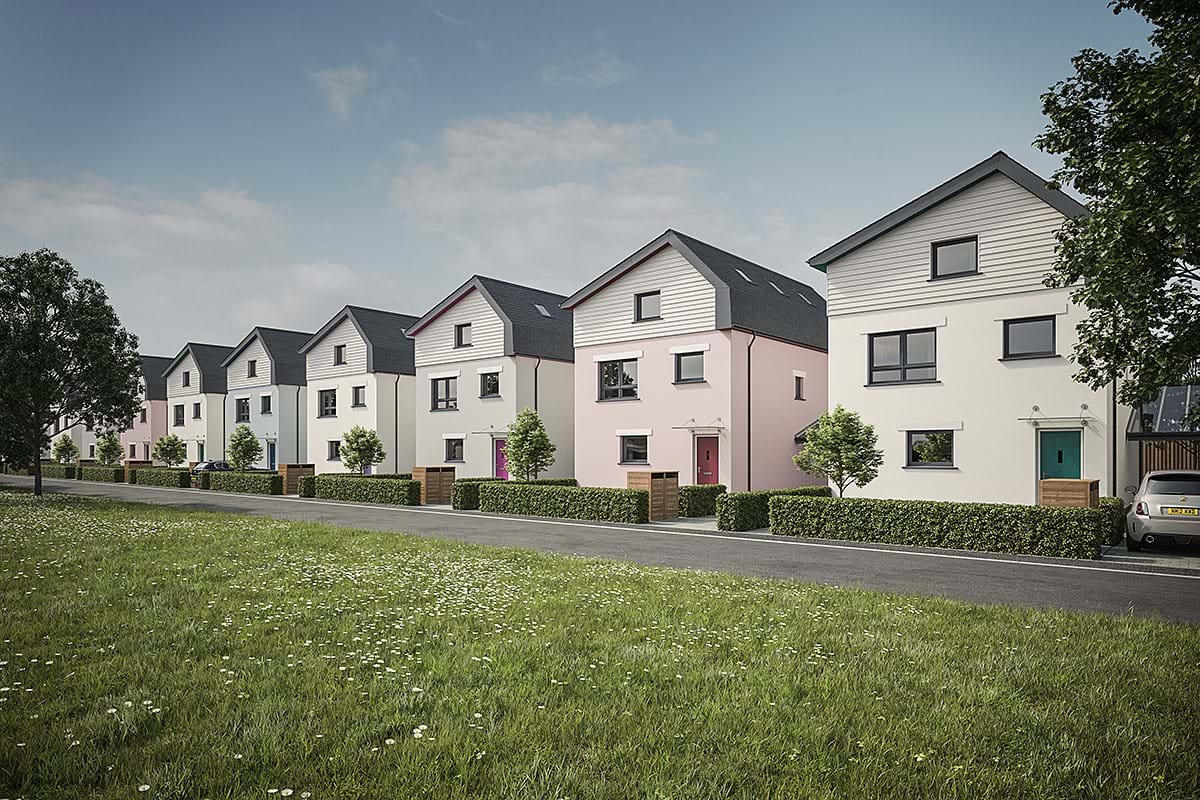
Redrow is one such builder. It is gaining market advantage by building highly energy and water efficient homes in the spirit of the Zero Carbon Buildings guidelines. And it has just signed a deal with solar company Eco2Solar to provide integrated solar PV systems for all its new housing developments.
Eco2Solar have already put solar panels on over 30 Redrow developments across the UK (around 150 installations) over the past two years.
“With an exclusive agreement we are able to ensure that consistently high standards are met across all of our divisions with fully integrated solar PV systems to help reduce energy bills for our home owners,” Redrow group commercial director Clive Parry said.

New build housing developments are attractive to the now subsidy-deprived domestic solar industry because there are cost benefits of installing self-generation technologies while buildings are being built, compared to the cost of installing them in retrofit projects.
Solar PV system manufacturers, suppliers and installers have been rushing to secure contracts with housebuilders. They include:
- SolFit, which have partnered with Countryside Properties to put solar on 166 homes. Countryside support garden cities, towns or villages.
- HBS New Energies, which last year won a deal to put solar on 200 new homes in Oxfordshire built by Crest Nicholson and one this year with Taylor Wimpey for 65 new homes in Bramley, Essex. In the last year, they have signed 11 such deals.
- Viridian has signed up with Keepmoat Homes, which is hoping to build 4000 homes in 2018-19. That was the sixth such deal they signed in 2018.
- Photon Energy, which won best “Residential Rooftop Solar Installation of the Year” at last year’s Solar Power Portal Awards for the installation below, has partnered with Cambridge University and Willmott Dixon.

The development is funded by the University of Cambridge and comprises around 3000 new homes, community facilities and commercial outlets, and Photon secured a tender from main contractor Wates to install solar on various buildings.
The original 2006 Zero Carbon Homes policy appears to be stumbling on in new guises. As well as the private sector initiatives above, in March 2016 the Mayor of London implemented a zero carbon standard that applies to all new homes in his updated Housing Supplementary Planning Guidance.
Also in 2016, WElink Energy and China National Building Materials pledged to develop 8000 zero-carbon homes in the UK. However, the plans have stalled due to problems securing the backing for volume offsite construction of the steel frames for the homes.
This demonstrates how zero carbon homes will remain a niche subsector until a new, mandatory, net-zero policy is reintroduced by a new government.
David Thorpe is the author of Passive Solar Architecture Pocket Reference, Solar Technology, and Sustainable Home Refurbishment.