


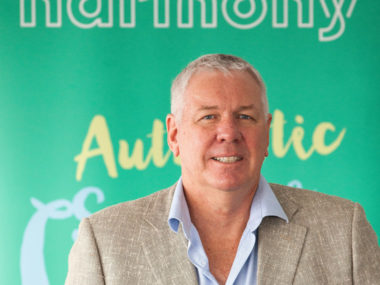
Rising energy and water bills are making home buyers more interested in sustainability, according to Avid Property Group general manager Queensland Bruce Harper.
“The latest bills concentrate people’s minds on energy and water,” he says.
It might not always be the primary decision driver when purchasing property, but it is an important part of many people’s decision-making now, he says.
The developer, previously Investa Land, has made sustainability a focus across all its communities, recently achieving UDIA EnviroDevelopment certification across its entire portfolio of masterplanned residential projects.
UDIA Queensland chief executive Marina Vit says it is the first developer to have its entire active project portfolio rated with the tool.
“It is a significant achievement for a single developer to receive EnviroDevelopment certifications across its current portfolio of masterplanned communities,” Ms Vit says.
Harper says Avid is using the toolkit across all its projects as an alternative to having a sustainable development manager.
Harmony and Brentwood Forest, both in Queensland, achieved certification across all six “leaves” of the tool – ecosystems, waste, energy, materials, water and community.
In Victoria, its Bloomdale community achieved five leaves and Savana achieved four. Harvest in NSW also achieved four leaves.
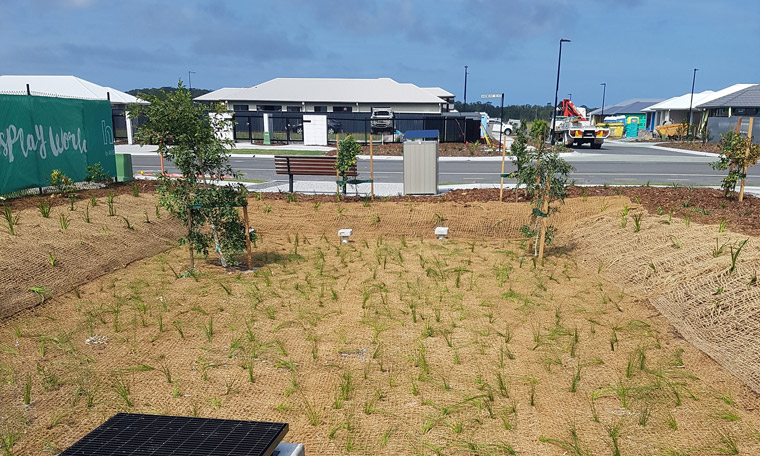
One of the key areas of focus is stormwater management. At its Harmony development on the Sunshine Coast, the roads have been designed to fall one way, directing water into “biopods”, which have been planted with species that can remove the nutrient load.
Once fully grown, they will be wetland areas with trees that will add to the amenity of the street, Harper says.
They will also help cool the area. Like many developments, it has been masterplanned with smaller lots due to council requirements to have 18-20 dwellings a hectare.
Small lots often mean there is little space for greening and trees on the private lot. The streetscape can balance this. Harmony also has more than 30 per cent of its area as open space including parks.
Biopods have also been installed at the developer’s New Base Business Park. Around 45,000 plants that can absorb phosphorus and nutrients have been planted in stormwater detention basins.
Harper says this reflects an awareness that industrial developments are part of a wider catchment and need to consider the impact of their runoff on it.
Reducing potable water use has also been prioritised, with some developments using Class A recycled water delivered through a purple pipe system for irrigating landscapes and toilet flushing.
To encourage solar installation and passive solar design on the part of the home builders on its estates, the developer has incorporated orientation and shading requirements in the building covenants and design guidelines for its residential communities.
Building community
Liveability is on the agenda in other ways too.
“Something that is often overlooked by developers is the sustainable community aspect,” Harper says.
One of the first hires for the Harmony project was a community development manager. Before the first home was even sold, their job was to network with local arts organisations, council and other groups and put events and activation elements in place.
Planned activities include long table dinners for early residents and yoga classes to help build community by helping people meet their new neighbours.
Community transport will also be provided by the developer for the first five years of the estate’s life.
Harper says that new estates often do not have public transport and can often be quite isolated. That builds in the culture of car ownership, he says. It can be some years before state governments or local operators extend services out to a new community.
“By providing a community bus at the start, we can pick up and link people to key features, such as the university, community centres and transport hubs.”
The developer provided a community bus for three years at its Brentwood Forest community, and Harper says he thinks people valued it.
“It was a way of connecting people to nearby places. We don’t want our residents to be socially isolated.”
The masterplanning has also set aside a public transport corridor for future use. Harper says it is not known what type of transport it will be, possibly light rail, but by providing the corridor the possibility is secured.
More broadly, Harper says the property industry has innovated around sustainability over time, and its progress has been gradually adopted by state governments and local councils “as the industry standard”.
When Investa developed Mawson Lakes in South Australia 25 years ago, the sustainability measures were quite forward-thinking.
“Now it is the standard,” Harper says.
Across the board, standards for energy, water, waste and community now are “way above” what was business as usual back in the early 1990s.
Most of this progress has been industry-led, rather than imposed on the industry, he says.
“It was [generally] adopted as a marketing advantage initially,” he says.
Now it has become commonplace, it is “harder to go to the next level”.
“25 years ago, sustainability was a ‘nice to have’. People, I think, are more receptive to those ideas now.”