



David Chandler is not averse to fiery debate and on Tuesday night at our TFE Live event, he didn’t disappoint. Even before the formalities kicked off, he tossed out provocations and challenging opinions.
The session was a retrospective of his five years as the New South Wales Building Commissioner and his work to reform the building and construction industry. The stories of where it’s failed consumers through water ingress, mould, and even structural problems are legion. Families in tears; futures ruined.
- You can watch the recording of the event here – FREE for TFE members
In fact, Chandler was forced to deal with such an episode just this week.
“I had a woman crying in my arms, and I just felt absolutely ashamed of our industry, that I’m going to leave this job, and no one can help this person,” he told the audience. “And her job has been under construction for three years… and you should see what a pile of rubbish it is.”
“So it is very sad to have not been able to solve everybody’s problems.”
But he soon set the tone for far more controversial views. Not far into the event, he voiced his view that he no longer has much time for timber buildings, that he loves concrete and would “eat it for breakfast” if he could. And that modern methods of construction were pretty much dead in the water.
We were upstairs at the Photo Studio. It’s an intimate mini “television studio” for just 25 people seated, 30 with standing room – lovingly crafted from a rambling partly retrofitted industrial building in Glebe Point Road around the corner from The Fifth Estate premises and including high end photography and gallery spaces, perfect for pre and post-event networking.
Moderator Maria Atkinson opened the session with the sobering statistic that when Chandler took the reins as Building Commissioner 39 per cent of residential buildings typically came with defects, in waterproofing, fire safety, even structural issues and key services, hydraulics and lighting.
In our pre session briefing, Chandler said the developers responsible for such work then were “cost shifting”.
“So basically, developers were looking to shift cost to the purchaser.”
On one project at Botany, a developer told him that he’d “nickel and dimed” the bathrooms to save $1500 for each bathroom. But after Chandler “pulled out over 250 bathrooms” for non-compliance rectification cost the developer $15,000 per bathroom. Once the building was occupied the cost would have been $35,000 each.
But a lot has changed since.
Chandler has pushed through Design and Building Practioner’s Act, the Residential Apartment Buildings Compliance and Enforcement Act, and a “suite of discretionary powers” for his role, such as making developers “rectify defective building webs, issuing stock worth notices to prevent or fix up quality issues”.
All great. But even better news is that this kind of reform looks like going national because it’s not just a NSW problem.
One of the guests in the room Ross Taylor of waterproofing specialists Ross Taylor & Associates said the Australian Capital Territory was probably among the worst for waterproofing problems and a close second were public buildings – such as the National Gallery of Australia, which has had water penetration problems for years. In fact, last time The Fifth Estate visited the NGA much of it was it was still closed to visitors. (Luckily Jackson Pollock’s Blue Poles was still on view.)
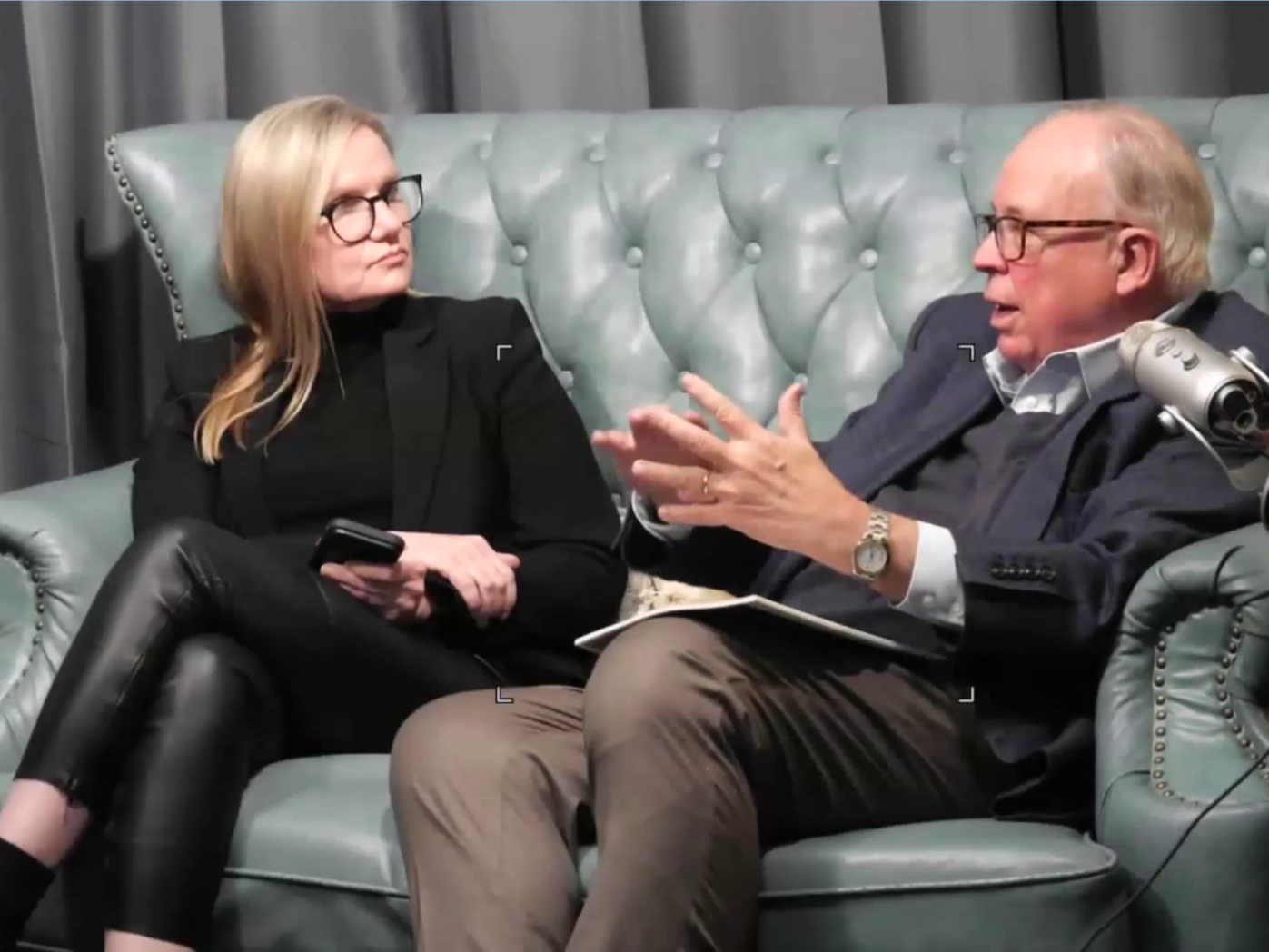
Sitting alongside from Chandler as a counterpoint who has had deep engagement with Chandler throughout was Lisa King, executive director of the Australian Institute of Architects NSW, who says there’s been a lot of confusion among architects from the changes wrought by what we may now call the “Chandler era”.
Atkinson opened the session with some questions on myth busting.
For instance, we’d heard that a small apartment building of just two or three storeys would now need a façade engineer – so the same kinds of consultants and assurances as needed for mid to high rise buildings, throwing building costs sky high.
Not true, King said.
“I think there are there are a number of people in those professions who think, Oh, well, I can’t do class two [multi storey, multi unit apartment] work anymore. It’s off the table. That’s not the case. They can absolutely do that work.
“But when they go to touch the structure of a building, even if it’s one apartment, it actually can impact the structural integrity of the entire building and therefore it does I need to be regulated.”
Another myth was that architects needed to do extra work but could not get paid for it. Again not true.
One of the strong pieces of work the institute had done with the Building Commission, King said, was to “set up a minimum benchmark for documentation so that we have a line in the sand that says, This is the minimally acceptable amount of documentation that you have to do on a building. So that should entitle in itself architects to do that work, to document that work, and to get paid for that.”
Chandler said: “Architects have been the first on the bus in terms of the professions from this. They really have put their blend into this, they’ve really worked very hard. And they should be very proud of the contribution they’ve made.”
And the positives are?
Atkinson moved the conversation to the role of change, which usually occurs when they “hurt enough that they have to”.
“You seem to have fulfilled that motivational goal,” Atkinson said.
“You’ve spent five years trying to heal 20 years of poor or no regulation. But on a positive note, what are a couple of the most rewarding outcomes of the reforms that you’ve delivered in five years? Do you want to share that with us?”
Chandler replied that the public could see that now there were resources to protect their interests. And likewise builders and consultants.
“People walk up to me in the street and say, Commissioner, our life is a lot better. We are respected as a profession. And the same thing goes with people who are, say, waterproofers.”
Building professionals and tradespeople tell him: “I’m told to compromise my work. And normally, I’m owed $100,000 by a developer. And that’s where you’re not getting that 100,000 unless you keep doing more work like that’. And so they were locked into this chain, where they had nowhere to go.”
He said the audit team was also getting positive feedback.
“I get unsolicited phone calls back from developers and designers saying, we’ve just had an audit. And it was the most competent and respectful audit that we’ve ever been through.”
Engineers and the problems they cause
But with engineers, Chandler said, there was still a long way to go and he would like to show them firsthand cases of what “one of their members had designed and signed off on”.
Such as one with more than a few problems.
“The engineer’s position was, ‘I told them’. And I said, ‘Well, what do you mean, you told them?’ He said, Well, I’ve told them and they’ve done nothing.”
Chandler said: “And have you since resigned and walked off the job? ‘Oh, no, but I’ve told them’. That’s not good enough.”
He then goes on to name an engineering firm, now failed, that was one of the “egregious engineering companies” he’s found “responsible for thousands and thousands of defects in structures across the city.”




What about the flow of information to share the knowledge?
Atkinson asked if Chandler and King were getting “access to information as it’s coming out, because David is finding issues, and the industry is learning. So how do you get the information? Are you getting it? Is it enough? Does David and the team need to share more?”
There was a “matrix library” of defects found in 70 per cent of the occasions where defects are found.
“So we’ve now produced the technical findings of what the defects are, what the code issues are…and we make this available to owners corporations, and then we’re going to make it available to universities.”
He noted one university was responsible for the project managers on “50 per cent of the projects where we have serious defects. So we’ve, we’ve gone back to that university, but not in a negative way, in a way to say, you’ve got to amp up all the students you’ve graduated.”
Singapore, he said, now has a program to produce micro learning opportunities for
design and building professionals who are over 35 year old to “bring them up to speed”.
Atkinson said that despite the issues Chandler seemed optimistic, so why and what as in store for after his departure in mid August?
“I think that we’ve got over 60, probably 70 per cent of builders and developers who are really pleased to have their mojo back. They were on this slippery slide at the bottom. And what they’ve said is, the reforms have arrested that and for those who want to get off that slippery slope, we’ve now got a new trajectory.”
The iCIRT rating certifications for professionals is starting to have a big impact with consumers asking for the rating before they buy an apartment and insurers using the rating to qualify projects for 10 year warranties.
What’s wrong with modern methods of construction?
Atkinson also asked Chandler why he was a critic of modern methods of construction.
There had been a “bunch of enthusiastic innovators who’ve really come up with some quite good ideas” but whose business models had failed to provide the support for the methods to live up to expectations.
“It’s a really high attrition rate where at least 60 per cent of people who start in this modern methods of construction space, run out of air.”
He nominated Strongbuild in particular – and that’s a story we will follow up separately, soon.
His key problem was with people who say, “ I’m an innovator, and I’m an entrepreneur, so I should be forgiven all my sins.”
The biggest damage was that failures in MMOC damaged the supply chain, left unpaid debts and removed the avenues for fixing defects.
King chipped in to question how the chain of responsibility falls. “Who’s responsible? Who takes the risks? There’s a policy framework that needs to be built around this work so that we all know who is responsible.”
Chandler says a position paper released in November on prefabricated buildings had started work on finding how to get in front of the harms that are potentially going to be embedded in off site.”.
“So it’s not going to be ambiguous in New South Wales, we’re not going to have an ambiguous entry into modern methods of construction in this state.”
The work has been cited as world class, he said.
Transparency is key
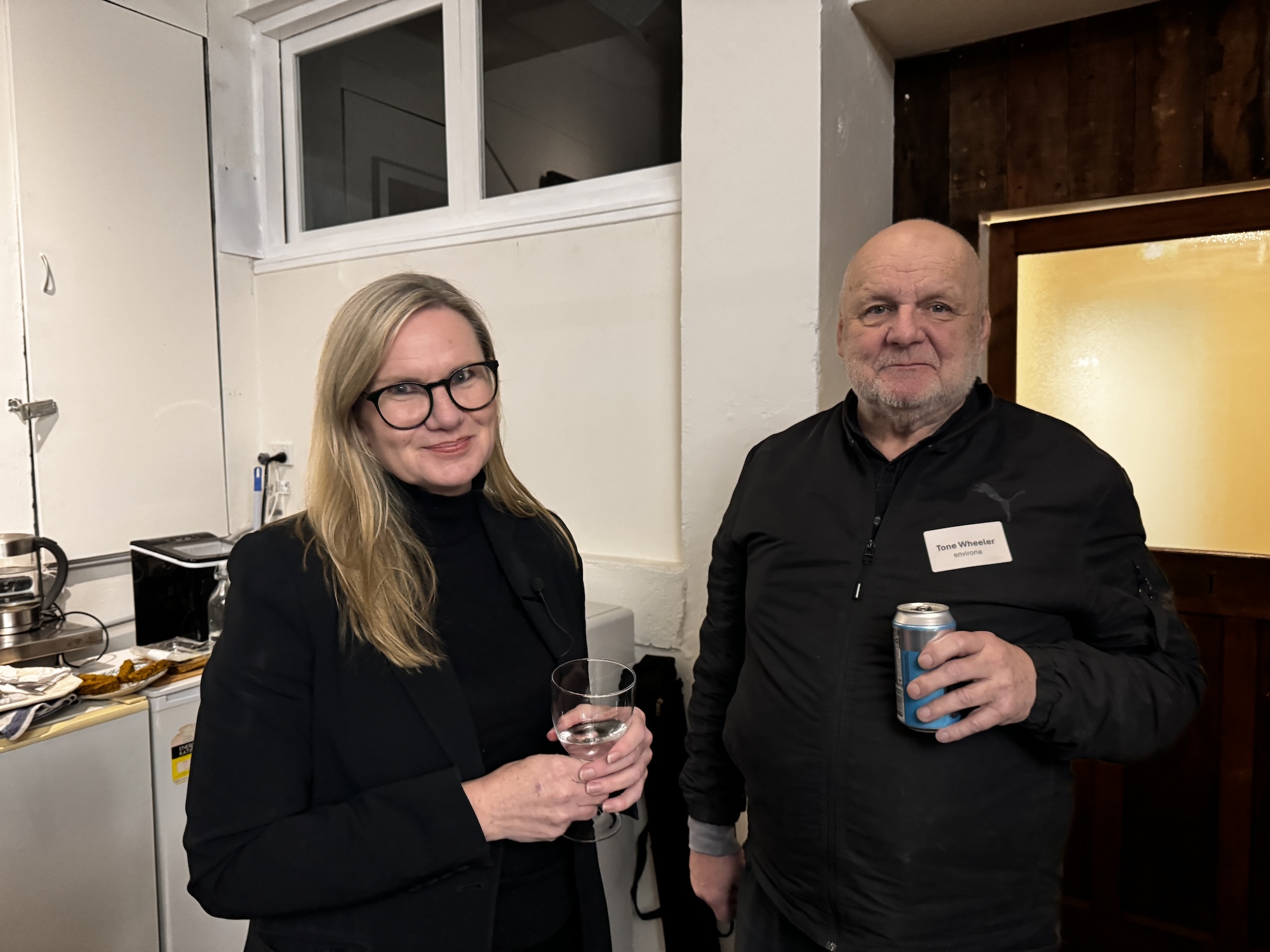


Architect Tone Wheeler of Environa wanted to know how transparency could be improved.
There are also people who were critics of the lack of transparency, and it included the difficulty in working with builders who were iCIRT certified but where the developers were not. Ultimately, it was a pyramid system, he said, with architects and engineers “quite low down – it’s the developers and then the builders, [and] certifiers. And in that system, the developers need to be held to account and I don’t believe that we’ve quite got to that stage.”
It was where he believed architects had been frustrated.
Chandler said that was not the intention and that he did not have a “tin ear” where criticism was warranted.
“People really do understand that I listened.”
King said the institute had worked long hours to jointly solve problems with the Commissioner and with people such as Ross Taylor and all cared “really passionately about outcomes”.
Will the work continue?
The fear she said was whether there would be political will to complete the work and see it through. “Because we don’t want to get to a point in five years’ time where that work is diluted.”
Chandler assured the political will was in place and funded. “Next year’s budget was locked down so momentum could keep going”, he said, adding that Matt Press, the assistant Building Commissioner had been with Chandler since day 1 and was well skilled to be a “continuing custodian of this role”.
iCIRT was now heading to 400 certifications and banks looked like they would make it a requirement of lending. And “once you’ve got 10 year warranty insurance, it’s game over. You’ve either got it or you haven’t got it. So the genie’s not going back in the bottle.”
Even better is that the Victorian Building Commissioner had recently visited and was interested in doing similar work in that state, which would cover about half of the industry by quantity Chandler said.
Nicole Dennis from Cobalt Engagement wanted to know when ordinary home renovators could acquire the certainty over the quality of their home renovations or extensions.
Chandler said that was the next big area to tackle.
“But you know, we had to boil the ocean slowly… it was such a big ocean that you couldn’t go out on day one and do everything.
“I got thrown into this role, with everybody with their hair on fire back in 2019. We had to think about what this job looked like. And how would you do this job because it hadn’t been worked out before.”
And it’s not over yet.