


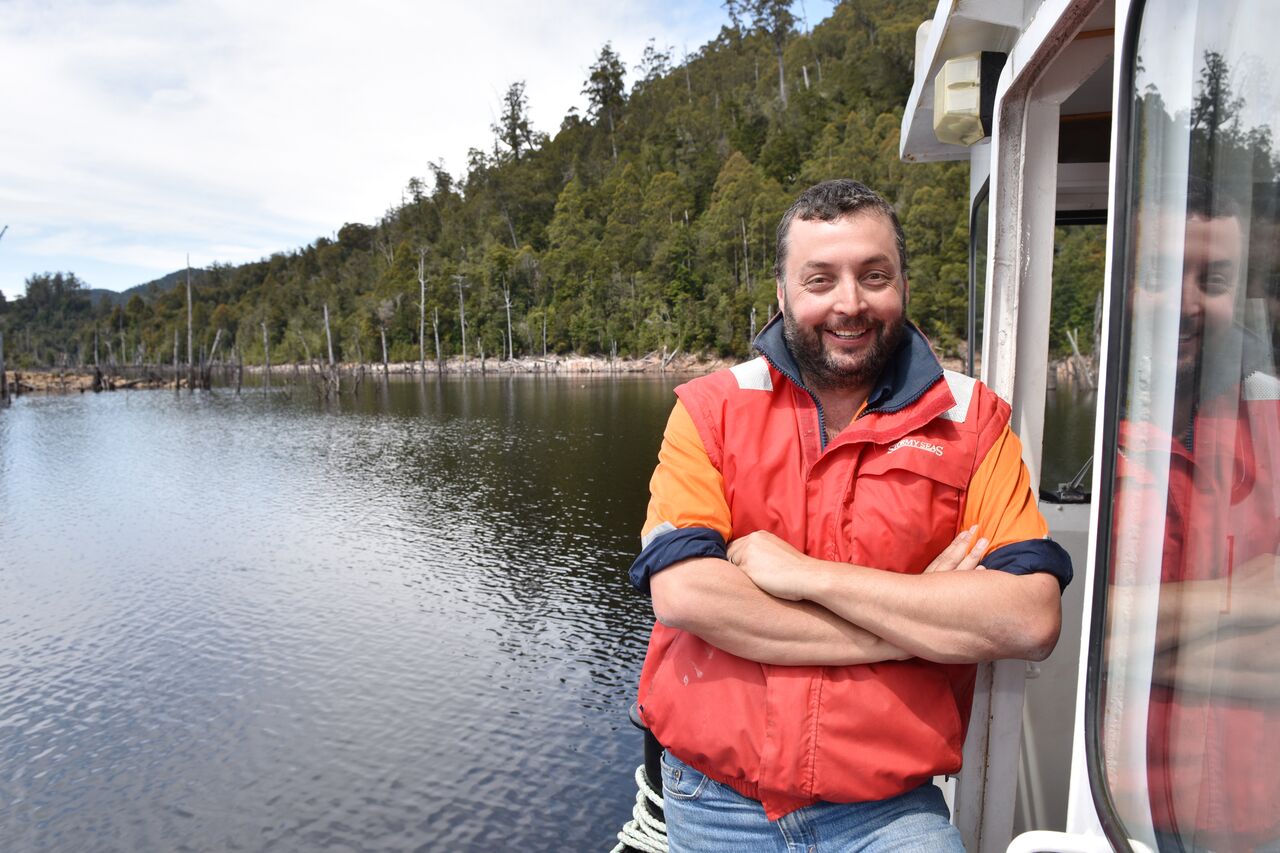
Andrew Morgan and David Wise run a company that operated in the Tasmanian forest industries.
Now, in addition to its “management of plantation assets,” his company is also rescuing their drowned trunks and restoring them to new life.
Some of Australia’s leading architects are pleased and lining up for this unusual version of recycled timber. So are the makers of fine furniture and other crafts.
“We’re a forest management company. Operating since 2001,” Morgan told The Fifth Estate in a recent conversation.
“That’s what we are,” the whole “trees on trucks thing”.
And yes, SFM Environmental Solutions has been “engaged in saw milling for solid wood and… woodchips,” he says, noting the particular sensitivity of the word.
It’s interesting to note, he says, that despite the advent of the paperless office, global demand for woodchipping is greater than ever. It’s used for fibre, cardboard and writing paper.
A big contribution has been the “rise of the middle class around the world,” Morgan says.
“When you buy a new television it comes wrapped in cardboard. And in New York you don’t just get one serviette in a restaurant, you get 20.”
So in many ways, this timber salvage operation is redress for this appetite and a source of beautiful timbers said to have unusual colouration thanks to its immersion.
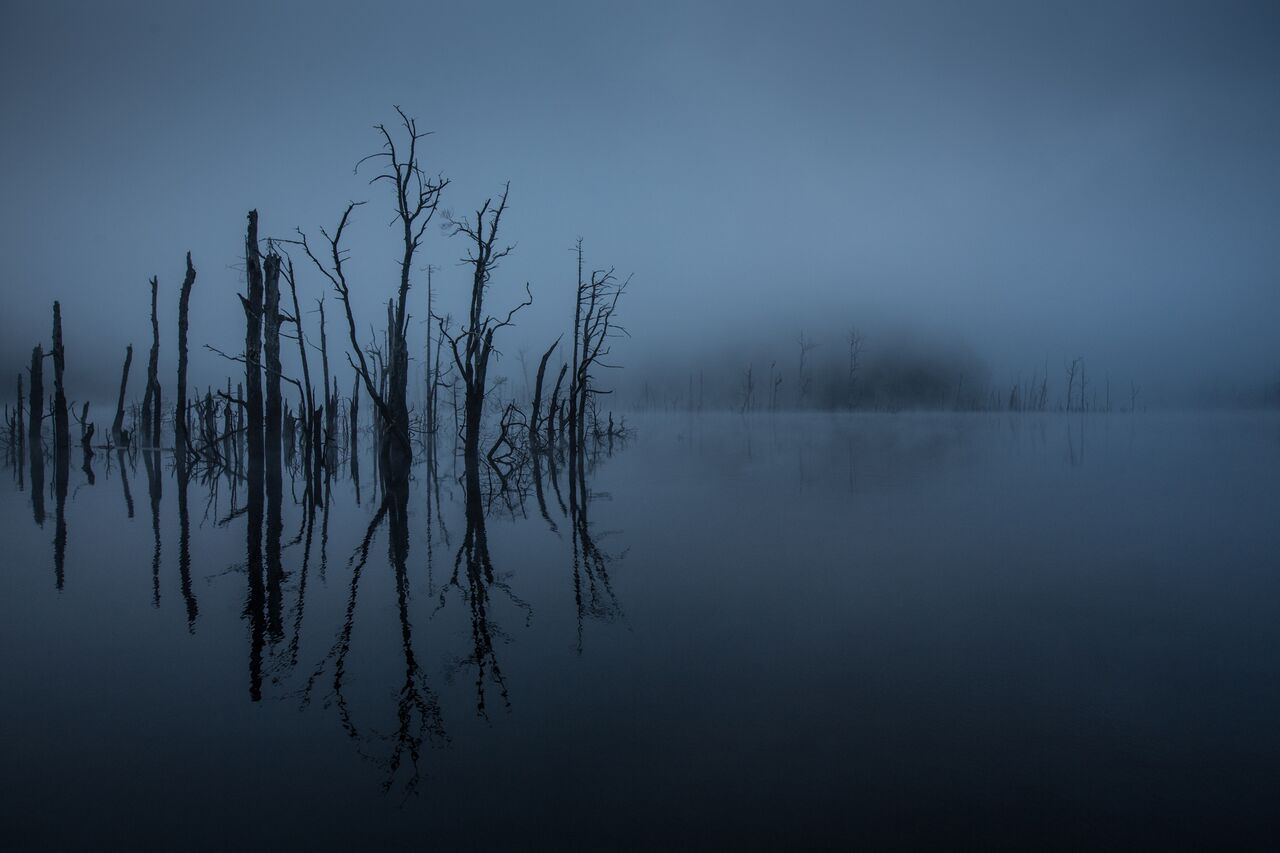
All of the harvested product is known as Hydrowood and so far comes just from Lake Pieman, in the remote central west of Tasmania.
Typical species include Tasmanian oak, eucalypt, blackwood, myrtle and celery top pine with a “smattering” of huon pine (now very rare) and sassafras.
Part of the inspiration for the new business came from a trip to British Columbia where Morgan saw trees floating down the river. “There they use their rivers as very efficient transportation systems.”
Then there was the television show in the 80s called The Beachcombers. “Dave and me were big fans and we saw how they used to salvage the big timber.
“Dave is also a pilot and in Tasmania, he was flying over these lakes and seeing grey trunks sticking out of the water.
“We thought ‘why can’t we go and see if that timber is okay. We did a feasibility and then created a machine [that could harvest the trees] without putting people in the water.”
The response was not encouraging: “You’re mad, the timber will be no good, it will be rotten. You won’t be able to build [a machine] that works,” is just a sample of what was said.
“There was a whole lot of naysayers.”
In 2012 the pair trialled their first timber harvesting, drying it out and taking it to the University of Tasmania for testing.
“The timber was fine.”
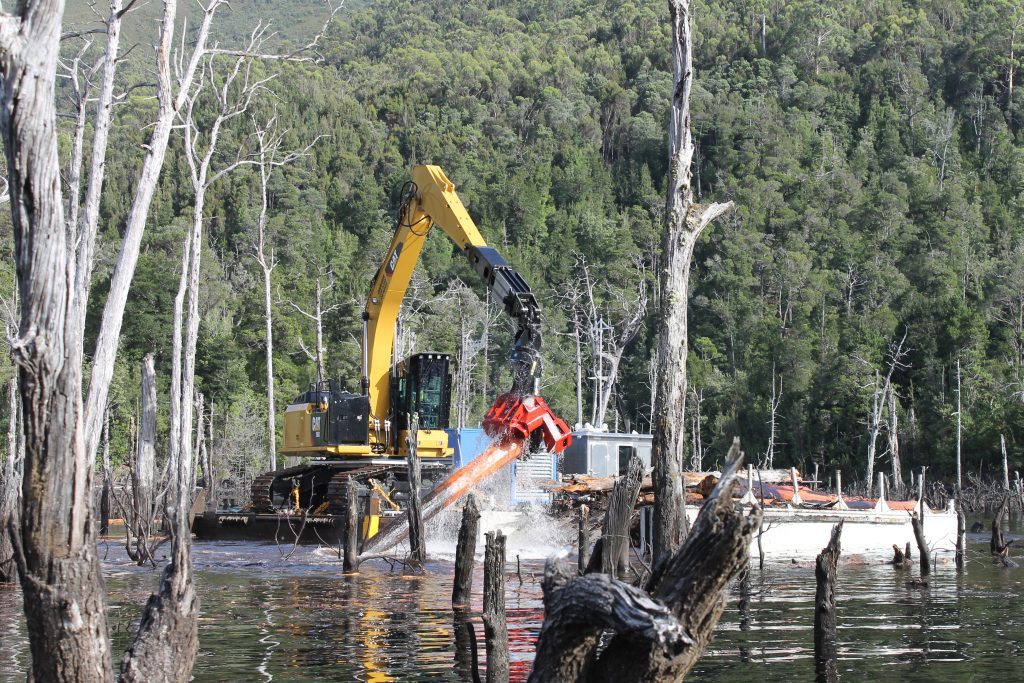
The “machine” the pair built is a 140 tonne barge that’s self-propelled, with a 45 tonne excavator sitting on top.
“The machine goes down, grabs hold of the tree and with a saw cuts it off at the bottom and then hauls it up to be ferried to shore and processed into boards,” Morgan says.
The harvesting started in October 2015 under licence paid to government–owned Hydro Tasmania. (The fee remains undisclosed).
The company has had approaches and interest from people around the country for tree removal from lakes for timber harvesting in some cases, but mostly for safety reasons, Morgan says.
He thinks there will be enough timber to harvest for another five years, but there are other lakes to look at.
The pair thinks there is between 50,000-100,000 cubic metres of this submerged timber available overall.
And so far they’ve removed just 5000 cubic metres.
But although this is similar to recycling timber that might otherwise be wasted or thrown to landfill, Morgan says it’s not sustainable.
“This is really akin to mining; it’s a resource, once it’s gone it’s gone.”
Most is used for high end furniture and high end interior fitouts in mostly Melbourne, Sydney and Tasmania.
A good demonstration is in Parliament Square, Hobart, where the committee rooms and tables and chairs are Hydrowood.
Some clients like to come and see the timber in its raw form and follow its progress to the finished product in their home.
Interest in the operation has come from Queensland, South America, Africa and Snowy 2.0, mainly for safety reasons. But Morgan isn’t worried that his company will have competitors any time soon.
They’d be up for a similar investment as his company, which at this stage is around $7 million.
The company has also developed a lot of intellectual property around the product, especially the drying process. “And then there’s the novelty factor: we were in first and being first really helped elevate us.”
In many ways this company is a godsend to the timber industry. On the one hand is the growing love of timber that’s seen a booming demand for the product and a corresponding increase in prefabrication of various timber products.
Architect Jonathan Evans of Tzannes Architects told us ahead of his presentation at Tomorrowland 2017 that after his studio completed the prize winning International House at Barangaroo, demand shot up by 30 per cent from clients who were now comfortable with the concept.
On the other side of the ledger are the concerns for how long timber takes to grow, poor plantation strategies in Australia, the issue of monocultures in plantation and how that squares up with land that might otherwise remain degraded farmland. And with the needs of the environment.
Certification is a raw issue especially on the efficacy of the Forest Stewardship Council (FSC) versus Responsible Wood, previously Sustainable Forest Sustainable Forest Management. FSC is generally seen as more environmentally sound but has not been immune from attack from people who say it’s not sufficiently strict.
The latter certifies that timber is legally logged, which is of little comfort when it comes to governments (Victoria’s included) that allow seriously questionable practices.
With Hydrowood, there’s a reprieve. No one has questions about the value of rescuing it from the bottom of the lakes. But as Andrew Morgan says, it’s like mining, once it’s going it’s gone.
