


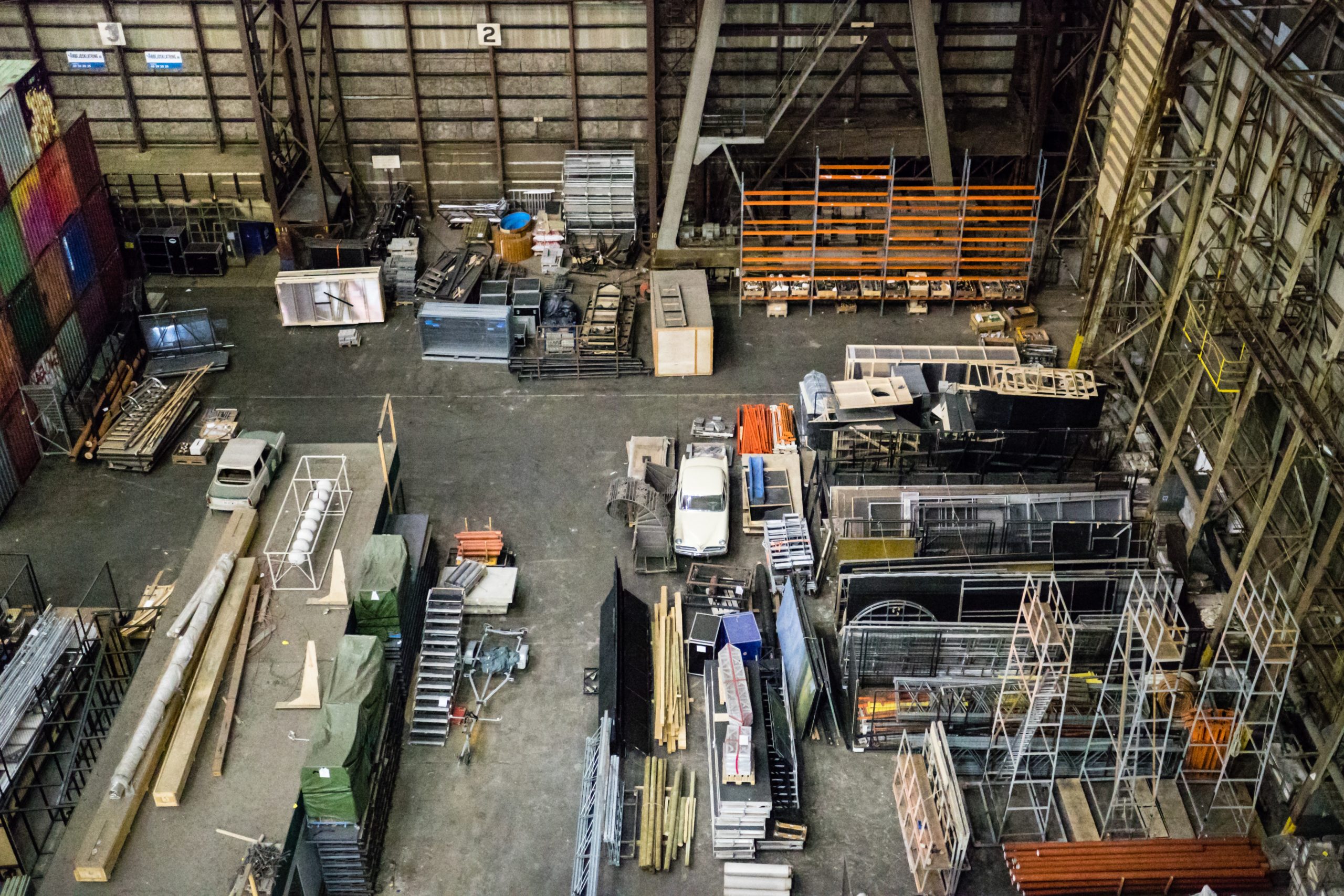
The booming industrial sector is going great guns under Covid with people shopping more online and forcing up demand for more logistics space, but will the low carbon profile of many of these buildings as flagged by the Green Building councils of Australia and New Zealand potentially lead to unintended consequences.
As the need for solutions to the climate crisis become more urgent, the Australian and New Zealand Green Building Council is reporting industrial buildings face becoming “stranded assets” if they can’t show they are low or zero carbon.
Hundreds of these buildings, existing and in the pipeline for the next decade – potentially worth billions – could risk becoming “undesirable for use or investment” unless sustainable building practices are embraced and independently certified, the report’s researchers say.
See the report, Green Star in focus – the case for sustainable industrial buildings.
But academics have cautioned against these “emotive” claims saying that while it is critical to address the carbon footprint of all buildings as the window to reach Paris Agreement targets close in, the narrow lensed conversation could see developers building new over retrofitting existing.
Dr Timothy O’Leary, a lecturer in construction and property at the University of Melbourne says it’s a stretch to earmark these industrial buildings as “mothballs” facing a desolate future.
“Within industrial buildings that might have been built in areas that are no longer industrial sites, or are not quite up to current codes, there is a lot of embodied carbon energy, and rather than bulldozing down or forgetting about them we can retrofit for other uses,” he said.
The report states new Green Star certified industrial buildings produce 66 per cent fewer greenhouse gas emissions than standard buildings.
GBCA chief executive Davina Rooney said the forecast growth in the industrial sector, driven largely by the expanding online retail market, creates an opportunity to build better assets which are designed and built to minimise embedded carbon and carbon emissions in operation.
In a statement released at the time of the report, NZGBC chief executive Andrew Eagles highlighted the large financial institutions backing new low carbon builds.
“They’re being backed by large financial institutions, international agreements, national legislation, and by businesses who can see the all so obvious benefits. Most importantly, less polluting buildings are backed by the people working in them.”
There is no doubt we need to accelerate towards a low-carbon economy and society and low and zero-carbon buildings play a critical role in the shift, but as The Fifth Estate recently reported, “while there are valid arguments for both retrofitting and building new, from an environmental perspective it is almost always better to retrofit.”
Frasers Property Industrial has committed to certifying all of its assets under Green Star performance and achieving certification for over 30 industrial buildings.
Andrew Thai, the property group’s sustainability manager said the multi-national company is striving for net zero carbon, but there are challenges.
“We’re building more efficiently using the Green Star as a mark and we are certifying all our new buildings to be five-star,” he said.
But he says the carbon conversation is a narrow lens in the context of stranded assets.
“The industrial industry is a really interesting space at the moment,” he said, “it is booming right now.
“During this pandemic we are living in, there is appreciation of diversification in class assets and we are seeing a lot of investors snap up industrial buildings over more mainstream paths like retail.”
While the company might be embracing sustainability, their efforts can only go so far.
“The challenge with industrial buildings is unlike a typical place you might rent, the customer has full control of the asset. So even if we build efficient, they can run it inefficiently,” Mr Thai said.
“As a landlord we see our role as an enabler, to demystify what is relevant and make it easier to understand why it is important to be as sustainable as possible.”
In 2019, the year that drove hundreds of governments around the world to declare states of climate emergency, Australia’s building codes were updated with a focus on commercial and industrial buildings.
Updated in three year cycles, the next round of updates are likely to focus on residential buildings, Mr O’Leary said, as industrial buildings tend to be less energy intensive.
“Typically, they are a very simplistic build, often just a giant shed, so it is really about the operations that go on inside them,” he said.
“In the hierarchy of energy intensity, hospitals, and buildings for food prep are right at the top. Retail and office buildings come in next.
“The big problem with industrial buildings is that you might have industrial processes that have a high carbon output going on inside.”

According to research by Australian think tank Beyond Zero Emissions, the production of materials like steel, chemicals, plastics and cement produce about 30 per cent of global greenhouse gas emissions.
They found the majority of emissions from manufacturers are a result of burning fossil fuels to generate heat and chemical reactions in industrial processes.
“To reach Paris Agreement targets we need to get better across the board,” Mr O’Leary said.
He says that while “stringent” measures to improve the sustainability of industrial buildings are already in place, the world is presently way off course to meet climate reduction goals, as emissions continue to increase.
“Only about one per cent of buildings are at net zero carbon,” he said.
“We need to be much better at utilising existing buildings. We should be asking: can we meet our needs with fewer new buildings?”