



As the movement towards looking at embodied carbon gathers pace, scientists are starting to urge an end to demolition.
According to William Gillett, energy program director at the European Academies Science Advisory, “We must urgently broaden the scope and look at emissions embodied in construction materials and methods – both for new buildings and building renovation.”
Speaking at the launch of a major new report from the council on the decarbonisation of buildings for climate, health and jobs, Gillett said, “Policymakers have long focused on creating energy-efficient buildings that reduce the need for heating and airconditioning or generate renewable energy on site. But the energy used for operating buildings is only part of the story.”
The new metric: cumulative greenhouse gas emissions
According to EASAC, a coalition of the national science academies of the EU Member States, Norway, Switzerland and United Kingdom, the focus on only improving comfort for occupants is outdated.
Cumulative greenhouse gas emissions should from now on be the indicator for assessing the climate impact of a new building or renovation.
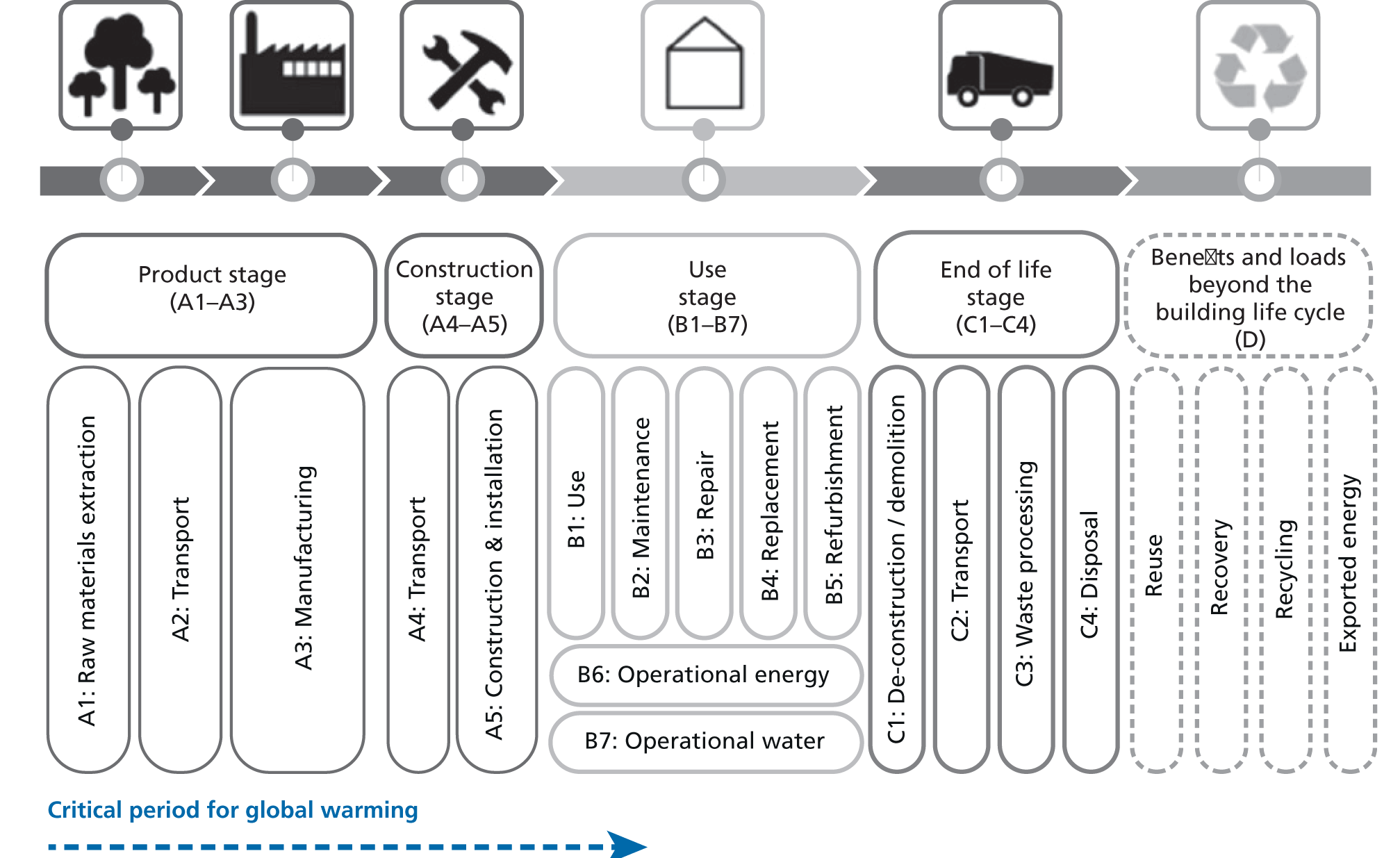
This includes embodied emissions produced by the building works, and operating emissions produced by the building in the years following those works.
“As there are only about 10 years left before the door closes for limiting global warming to less than 1.5 degrees Celsius there is an urgent need over this period to limit the creation of embodied greenhouse gas emissions when renovating to produce nearly zero emission buildings,” Gillett added.
No more demolition
New buildings should also be designed to be flexible, so their use can change, easy to maintain, and easy to disassemble and recycle at end of their lifetime, they say. This will minimise the need to demolish buildings.
Most of the built environment is still designed using a linear take-make-consume-dispose approach. Transitioning to a circular economy would not only permit the reduction of resource consumption and the carbon footprint, but also address the waste problem.
“Circularity has many facets,” said Prof. Brian Norton, co-chair of EASAC’s working group. “Many building materials can be reused, recycled and recovered. To start with, buildings and their components should be designed to be easily disassembled at the end of their use.
“We need to factor in the massive emissions of the construction industry and supply chain, when calculating the climate impact of buildings.”
Prioritise eco-refurb
Renovating existing buildings must be a priority, the scientists argue.
“Renovating a building to reduce its energy consumption makes little sense if there is no control of the carbon-intensive materials and components used for the renovation, and if these are transported over long distances,” said Gillett.
“There is a lot of embodied carbon in a building structure, especially in the concrete and steel. With today’s technologies and digitalized processes, renovating has become a lot easier and sustainable. We have to stop the current practice of knocking down structures to rebuild from scratch,” added Norton.

“It’s important to consider the re-use of existing buildings rather than replacing existing buildings with new ones,” he added.
The report argues that to achieve these aims legislation must put a limit of embodied carbon per square metre of floor area that is brought into a building when it is constructed or renovated.

Local authorities have the power
Buildings are an emission source that municipalities have a lot of control over. The academies make clear that cities therefore have a big role to play.
“Municipal councils and urban planners have tremendous influence on procurement specifications. They can stimulate the renovation and construction of nearly zero GHG emission neighbourhoods with integrated energy and transport systems and adequate green spaces,” said Norton.
“They can facilitate up-grading existing district heating and cooling systems or build new ones with optimised use of renewable energy, including PV, heat pumps, solar and geothermal heating, waste heat and natural cooling. And they are particularly well-placed to oversee renovations of social housing and subsidise the deep renovation of private housing where necessary to reduce energy poverty.”
To achieve this the report recommends cities must step up building regulations and enforcement of these building standards, including embodied GHG emissions in building materials and components, and promote recycled materials, re-used building components, and renovation instead of demolition.
Building designers’ checklist
The report contains a helpful building designers’ checklist for minimising embodied GHG emissions:
• Consider the re-use of existing buildings rather than building new ones
• Prioritise the option of renovation over that of demolition and the construction of a new building
• Perform a full LCA for the whole building to be sure that design decisions are well founded
• Optimise/reduce the building size and thus the overall need for materials, if the client can be convinced to accept this
• Consider the re-use of materials, components and systems rather than using new ones
• Choose materials with low embodied GHG emissions, such as wood products, natural materials, recycled plaster, low carbon concrete and recycled (or re-used) steel or aluminium
• Use materials and components with embodied GHG emissions that are certified in environmental performance declarations (product environmental footprints where appropriate)
• Wherever feasible, build light structures, lightweight instead of compact roofs, and strip foundations instead of massive concrete ground floors (Note: such designs typically have low thermal mass and may therefore need active cooling systems to prevent overheating.)
• Use building-integrated systems such as building-integrated photovoltaic generators
• Choose local materials (where available with appropriate quality) to reduce GHG emissions produced by transporting materials to site. (Note: transportation emission savings may be small.)
• Choose durable, long-life materials to reduce the need for replacement/renovation
• Design for ease of disassembly and re-use or recycling of materials and components when the building has to be demolished at the end of its life
• Select waste-free, fossil-free and emission-free construction sites, and use electric construction machinery
The funding challenge
The challenge is huge. In Europe alone climate neutrality by 2050 requires renovating more than 90,000 homes per week.
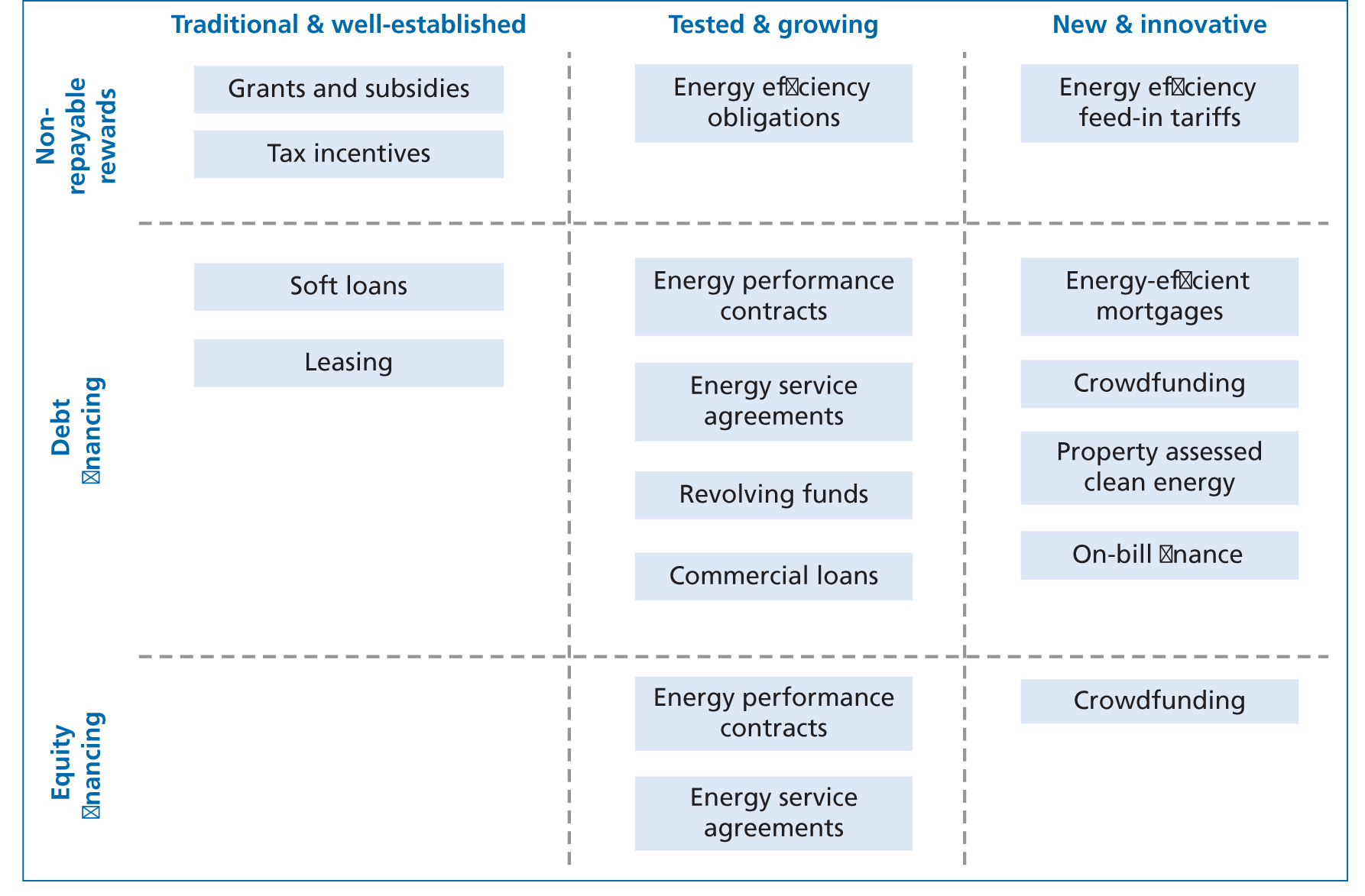
As for funding this, there are a number of solutions proposed by the report illustrated in the table below.
Building renovations and decarbonised energy supplies are complementary. Both are urgently needed to deliver carbon neutrality targets, and the report recommends that the building sector must operate in partnership with the transport and industry sectors in an integrated energy system.
While there is no unique optimal ‘silver bullet’ solution for prioritising between investments in building renovations and in decarbonised energy supplies, more ambitious long-term building renovation strategies and targets are urgently needed.
David Thorpe is the author of ‘‘One Planet’ Cities: Sustaining Humanity within Planetary Limits and Director of the One Planet Centre Community Interest Company in the UK.