


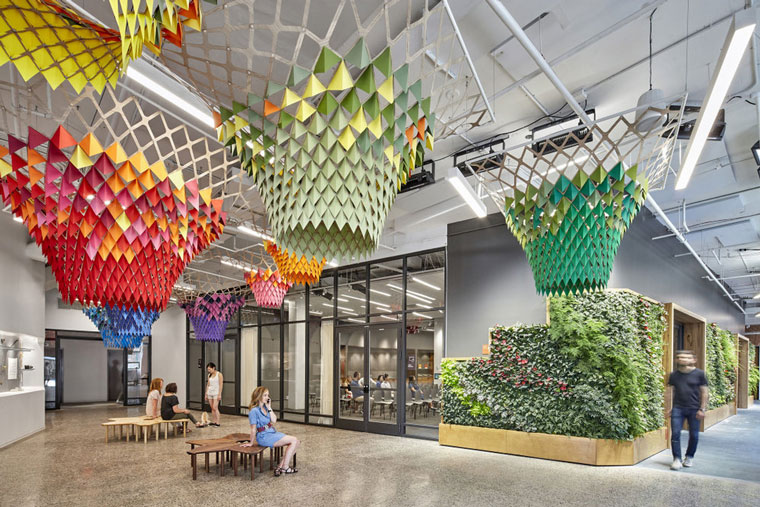
Projects from the US and Australia came out on top of the healthy, sustainable projects vying for gold at the International Green Interior Awards, now in its fourth year.
The overall winner and winner of the Office – Large category was the Etsy Headquarters in Brooklyn by Gensler.
“At 225,000 square feet [20,900 sq m], Etsy’s new Brooklyn headquarters is currently the largest Living Building Challenge Petal-certified commercial building in the world and the only LBC certified building in New York City,” a statement said.
“The design of Etsy’s new headquarters aspires to be a fully independent, regenerative ecosystem that sets a bar for a more dynamic and robust interpretation of sustainability. The Gensler project team sought out LBC compliant construction materials, ultimately vetting more than 1500 materials for Red List, California Department of Public Health compliance, and ingredient disclosure.”
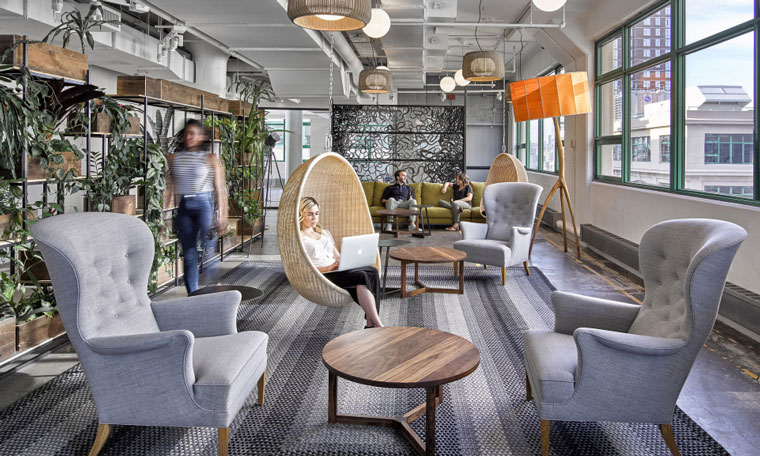
The fitout engaged furniture makers that sold products on Etsy to help design furniture, and also engaged with the Forest Stewardship Council and the International Living Future Institute to make sure the furniture was Declare labelled.
“In all, the project incorporated 69 Declare Labels representing 24 per cent of the materials budget. With more than half the pieces crafted by local artisans, Etsy is truly a handmade, community-grown experience.”
An Australian project, Cachet Group’s WT Partnership, took out the Office – Medium category.
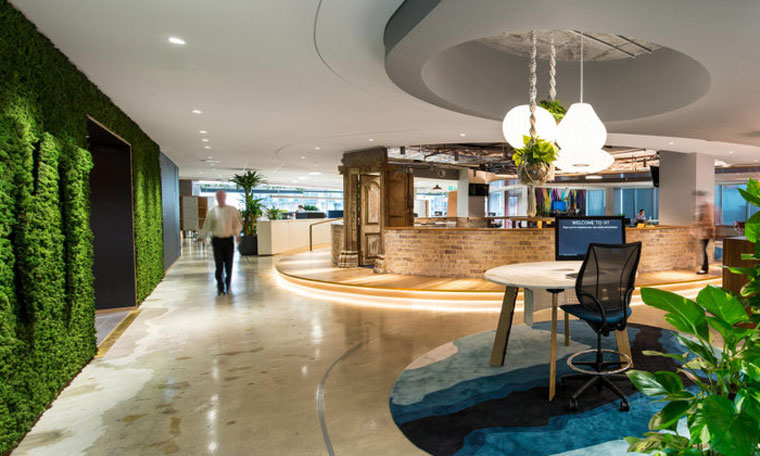
“One of the WT Partnership’s main objectives was to achieve a 5 Star GBCA (Green Building Council of Australia) Interiors rating,” a statement said.
“Although the building itself was relatively new, the fitout needed to be completed in alignment with the ratings tool, which involved the use of recycled materials, energy-saving lighting, WELS rated tapware, reused furniture and also the incorporation of multi-functional spaces.”
The Office – Small winner was another US entrant, Bently Enterprises Farmer’s Bank Adaptive Reuse by Revel Architecture & Design, which created a modern office from a historic building.
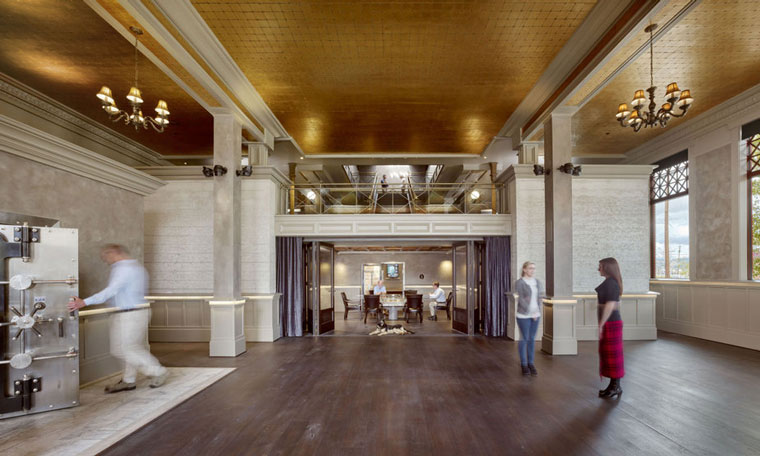
“The new elements and materials that make up most of the building are faced or treated to look historic and create a perfect illusion of originating in history. Some of the historic building elements were reused to create custom design elements, like a conference table made from the historic bank vault door,” a statement said.
“The team custom designed many elements when off-the-shelf products would not blend seamlessly with the building’s character or would not meet sustainability requirements.”
In the Residential – New category, Australia’s Alexandria Residence by CplusC Architectural Workshop came out on top.
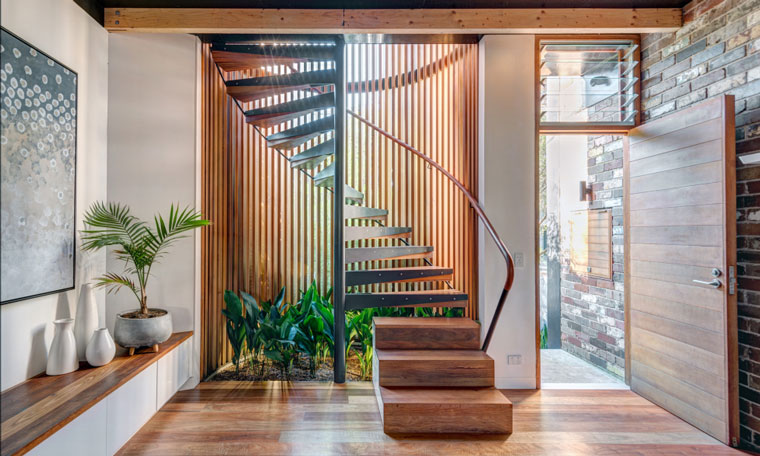
“The Alexandria Residence has reinvented terrace living by locating the vertical circulation in the front façade with a glass and timber batten circular stair doubling as a greenhouse,” a statement said.
“The house combines cutting edge architectural design with off grid green initiatives.”
The Residential – Renovation award was taken out by Canada’s Skygarden House by Dubbeldam Architecture + Design.
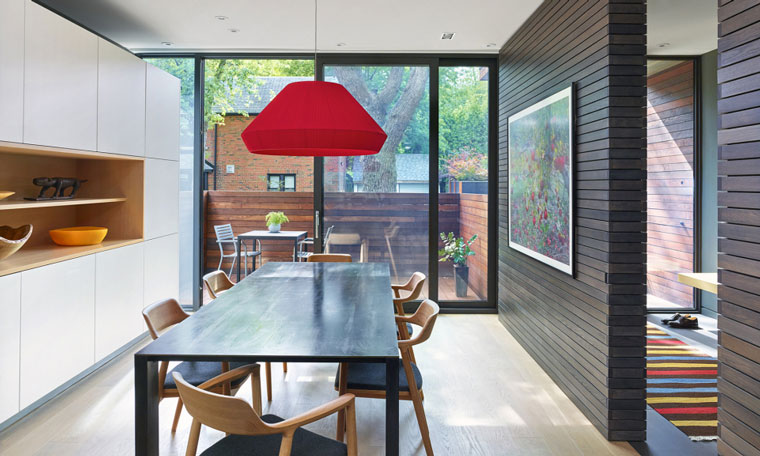
“Skygarden House is a prime example of how green products can be integrated into a home to create design excellence and a space filled with character and light,” a statement said.
“The project reworks an older home while maintaining the existing shell, using interior design strategies to “expand” the interior space without increasing the footprint of the house.”
The winner of the Education category was CK Design International Australia for the Rockdale Library and Council Customer Service Centre.
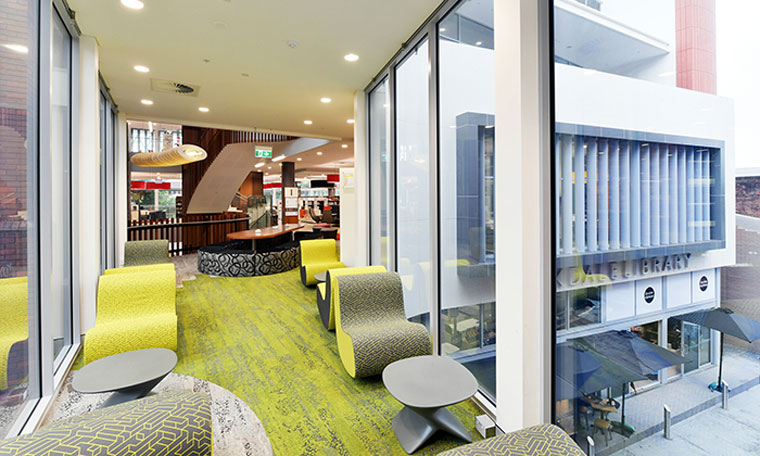
“Rockdale Library and Council Customer Service Centre is an exemplar of the power of interior design as a vehicle for expanding the repertoire of what green interiors can offer, celebrating the local environment, in word and deed,” the winner’s statement said.
“Sustainability is not only achieved by selection of materials but also for the approach to design, and ensuring flexibility and functionality of spaces, such as the Customer Service Centre meeting rooms and waiting areas, which become and extension of the library when the Customer Service Centre closes, ensuring the use of resources is always maximised.”
The Retail winner was South Africa’s Earthworld Inside for Trailwolf Cycles, a retail outlet and bicycle workshop at the Wolwespruit Cycling Trail, Pretoria.

“Reuse, reduce, recycle … those are the sustainability buzz-words, but when it comes to practically applying the principles, it is not always executed in exciting new ways,” a statement said.
“At Trailwolf Cycles … these principles are successfully and extraordinarily applied. Using recycled materials in unconventional ways was a means to separate the wolf from the pack.”
The Product Innovation category was taken out by Graphenstone Australia, which produces lime and graphene-based paints and coatings.
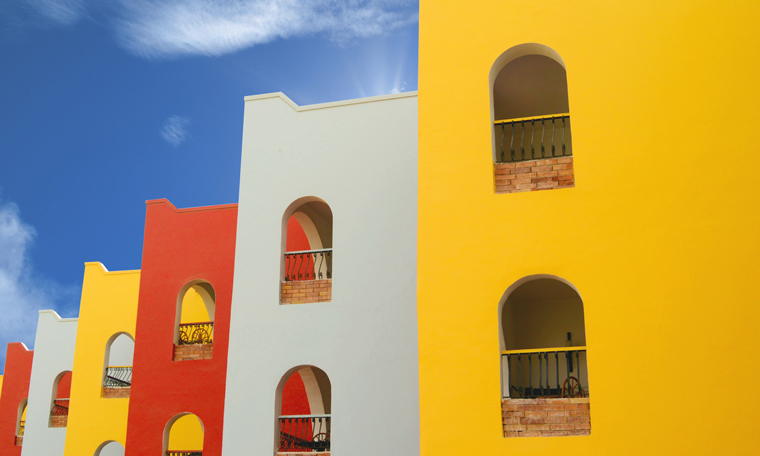
“Graphenstone has developed a product range with a whole green life cycle. It complies with the reuse, reduce and recycle philosophy, guaranteeing the most efficient use of materials,” a statement said.
“For that reason, Graphenstone meets the Cradle To Cradle Certification program requirements, being the only paint in the world with GOLD rate.”
The winner of the student prize for Product Innovation was Laura Van de Wijdeven from William De Kooning Academy in Holland for a biophilic light made from a potato-based bioplastic.
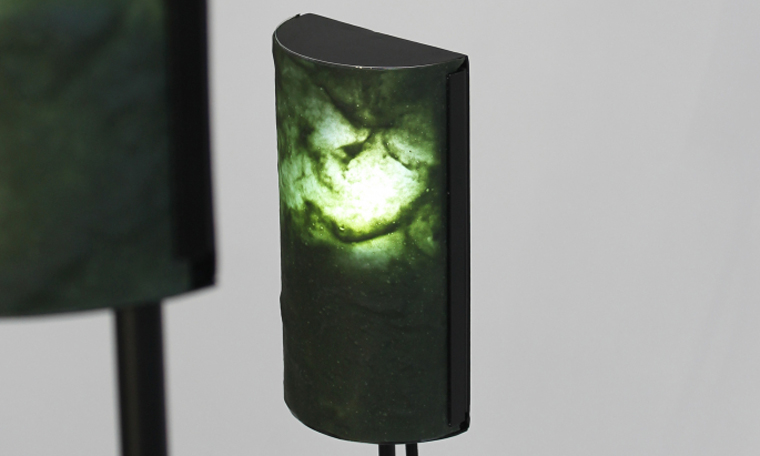
“The lampshade is biodegradable at the end of its life. As soon as you want to throw it away, you can leave it with your vegetable waste. But the material can also stay in a good condition for years,” Ms Van de Wijdeven said.
“I want to create awareness about the materials people use in their interior.”
Winner of the Student – Projects category was Chad Kraus from Dirt Works Studio in the US for the Chalmers Hall Renovation.

“With the very real constraints of time, budgets, physics, chemistry, and a myriad of stakeholders with, sometimes, competing interests, making sustainable choices when they are difficult is all the more valuable,” a statement said.
“In the Chalmers Hall renovation, the studio transformed a highly visible/trafficked area of an existing campus building into a beautiful, highly functional space without ever losing sight of our fundamental principles of sustainability.”
Judges were Daphna Tal, Australian Living; Caroline Pidcock, PIDCOCK Architecture + Sustainability; David Baggs, Global GreenTag; Sophie Solomon, SSD Studio; Megan Norgate, Brave New Eco; Kate St James, Universal Magazines; Meryl Hare, Hare + Klein; Helen Edwards, Recycled Interiors; Chris Knierim, Code Green.