



Offsite solar gardens are offering some hope for renters and other parties locked out of the rooftop solar market.
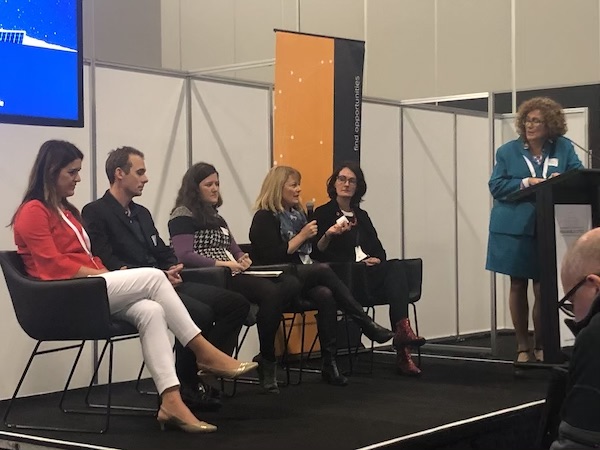
Speaking at the Renewable Cities Forum in Sydney on the 13-14 June, founding director of Community Power Agency Nicky Ison said that her organisation currently has a couple of solar garden feasibility studies in the works and hopes to get some pilot projects underway in the future.
Popular in the US thanks to a raft of incentives, solar gardens rely on an offsite solar array “somewhere like the edge of town or on a big warehouse roof.”
People locked out of the solar market, such as apartment renters, then own or lease a portion of generation from that solar array, say 5KWs.
These people then engage with a “progressive” retailer that will credit the 5KWs owned or leased solar through their electricity bill.
The Community Power Agency is looking to see if the solar garden concept is possible in Australia. It’s worked with the Blacktown City Council on a feasibility studies and has the Inner West Council for another one.
Ison says that although the model has been deemed both desirable (people want it) and feasible (it’s legally doable), it’s still difficult to make financially viable.
“The rules of the game are stacked up against it.
“You still need to pay the poles and wires cost, which means it’s not as effective as putting solar on your own roof (if you also install batteries and can disconnect from the mains).”
She says that it can help to save on electricity costs, “particularly if renters or people on low income can access the type of support home owners have been able to get.”
“And I’m talking about the Labor rebate back in 2008, I’m talking about premium feed in tariffs, and rebate loan schemes available in Victorian and soon NSW.”
“The existing technology means we can democratise our energy system and everyone can benefit.”
There’s also action councils can take to make solar gardens viable.
The cost of the land is one barrier to solar farms, and she says one way councils can help is by providing free or cheap land. This might be an old landfill site, depot roof or carved out of a bigger solar farm owned by the council, with “the bigger the project the better”.
The legal work for the first project will be expensive, she says, but “after the first couple it will be a lot easier.”
“The third thing councils can do is advocate. Advocate for a solar rebate for those who are locked out so that different models, such as solar gardens, rate financing, microgrids….”
A fast and just energy transition will be a challenge
Ison is passionate about ensuring that the transition to clean energy happens as fast as climate science says is required and “as fairly as we should all demand.”
She says that between 30 and 40 per cent of Australians are unable to put solar on their roof.
“That’s creating a two-speed energy system, those that can lower their electricity bill and as part of the push to decarbonise can benefit, and those who can’t.”
But she says that “one thing I’ve found out from working with people locked out of the solar market is there is no silver bullet.”
Barriers to solar and energy efficiency upgrades include cost, ownership of apartment and tenure type.
They might be market regulation or legal impediments.
“It’s a case of death by a thousand cuts”.
But there’s been some success stories, such as in Darebin City where solar can be financed through council rates.
“But in NSW it’s not possible because the local government act doesn’t allow it.”
Ison says the community energy sector is definitely moving in the right direction from a decade ago where there were only three or five community energy groups and no major projects. She says there are now 105 community energy groups.
The Renewable Cities Forum was help in partnership with the Australian Energy Storage conference and exhibition held at the same time by the Australian Energy Storage Alliance.