


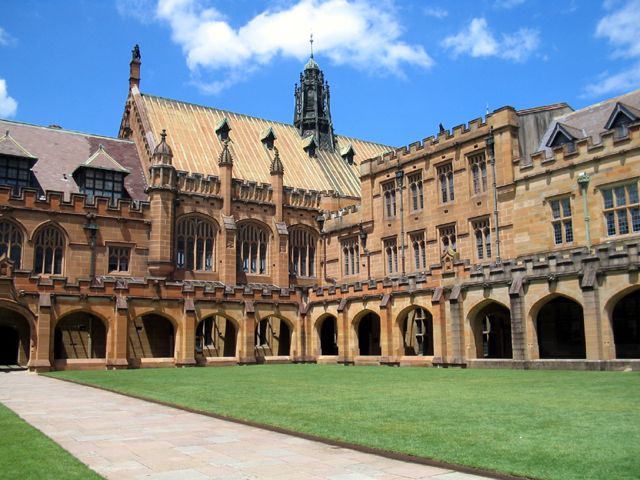
The University of Sydney has announced it will reduce the carbon footprint of its $413 million investment portfolio by 20 per cent over the next three years, rather than divest from all fossil fuel holdings. The news follows a bombshell from Norway’s $870 billion sovereign wealth fund that it has been selectively divesting from greenhouse gas intensive companies over the past three years.
The USYD decision follows its review into fossil fuel investments that researched leading practice on “sensitive investments”, taking into account the global mood and global divestment action.
The review considered whether to fully divest from companies with fossil fuel interests, but found divestment to be a “blunt instrument which delivers sub-optimal outcomes for all parties concerned”.
A media statement said divesting from all companies with fossil fuel interests would result in divesting from companies that were committed to building renewables and would not target non-fossil fuel companies that nonetheless had high emissions.
“Based on the review’s findings, the University of Sydney believes a whole of portfolio approach to reducing its carbon footprint is an effective and meaningful way to address climate change,” the statement said.
The university will now ask its listed equity fund managers to build a portfolio that is 20 per cent less carbon intensive by 2018. The university will publicly report progress annually.
“The new strategy balances the university’s obligation to manage funds wisely on behalf of our students, staff, donors and alumni with its desire to address climate change and protect Australia’s heritage,” USYD vice-principal (operations) Sara Watts said.
“This strategy will give the university a legitimate voice in the conversation on how organisations can best address climate change risks. The university’s strategy signals to the entire market that investors are concerned about the impact of climate change and expect contributing sectors to respond with plans to reduce their emissions.”
The move was welcomed by the vocal student-led group Fossil Free USYD, though it criticised the university for not committing to fully divesting.
“We, as a university community, must do more than simply begin to partially pull our own weight,” Fossil Free USYD spokesperson Clodagh Schofield said. “Our role as a thought leader is to help Australia move first into the 21st century on climate change, and then into the future.
“Already more than 20 universities [worldwide] have completely divested from fossil fuels, yet Sydney University’s announcement will only see a handful of companies shed. We also don’t know how they plan to define and implement the target, nor which companies will be divested.”
Divestment action group 350.org has already started a “divest the rest” campaign.
Norway reveals its selective divestment approach
The university’s divestment announcement comes just days after Norway’s massive sovereign wealth fund, which holds around $870 billion, published its first-ever report on responsible investing [currently not available in English], revealing it had already started to divest from high-risk fossil fuel interests over the past three years.
There were 22 companies the wealth fund listed as “risk-based sell offs” in 2014 due to greenhouse gas emissions, with the fund citing new market regulations around climate and reduction in demand as key vulnerabilities. There were 14 companies with coal mining operations divested from; five with interests in tar sands; two with interests in cement production; and one power generator.
A University of Sydney statement said its approach to reducing carbon intensity was “not dissimilar” to the Norwegian fund’s approach.
New pledge site launched ahead of Global Divestment Day
In the lead up to the Global Divestment Day on 13 and 14 February, Australian foundations, philanthropists and super funds have signed up to a new DivestFossilFuels pledge.
The site already attracted nine foundations as signatories, with invested funds of over $24 million, and 25 super funds (mostly self-managed but including Future Super) with over $31,000,000 invested.