


As a child, Satoshi Tajiri earned the nickname “Dr Bug” for his intense fascination with insects. Driven by the thrill of cataloguing and collecting, Tajiri invented the ultimate expression in technological taxonomy: Pokémon.
Richard Branson’s ability to see big-picture connections and take bold entrepreneurial risks started with a record store in London’s Notting Hill before he branched out to airlines, fitness clubs, finance, mobile phones and space travel.
Spinifex is an opinion column. If you would like to contribute, contact us to ask for a detailed brief.
Greta Thunberg channelled her unfiltered communication and relentless focus into a movement that has recast climate activism. With plaited hair, yellow mackintosh and a handmade sign declaring her solo “School Strike for Climate”, Thunberg sat outside the Swedish Parliament every Friday for more than four years, sparking a global movement and inspiring millions.
These three examples articulate the power of neurodivergent thinkers – Tajiri (who may not be on the spectrum but had a proclivity for bugs), Thunberg with Aspergers, obsessive-compulsive disorder and selective mutism, and Branson with dyslexia and attention deficit hyperactivity disorder (self diagnosed) – to transform our world and reshape the way we work. Yet, our workplaces are designed to fit a narrow field of vision.
Where innovation meets inclusivity
Around 15-20 per cent of the global population is “neurodivergent”, meaning their brains process information differently from the “typical” population. Neurodivergence encompasses a wide spectrum of neurological differences, including autism, ADHD, dyslexia and dyspraxia – each offering unique perspectives on how people perceive and interact with their surroundings.
There’s another way of looking at this. Around one in five of us are neurodivergent, but every single one of us is neurodiverse.
Australian sociologist Judy Singer, credited with the term “neurodiversity”, has said the word itself has been “world-changing” by “giving us a new perspective on humanity”.
It is a word that challenges the traditional view of a “standard” brain and invites us to explore the full range of cognitive diversity as part of the infinite variation of our species. The opportunity is a richer, fuller human experience.
Neurodiverse design, while a nascent field, recognises this opportunity
Sustainability redefined design’s purpose; neurodiverse design will revolutionise it again by prioritising inclusivity and human potential,
The best designs won’t be where differences coexist but where differences are celebrated for elevating the collective whole.
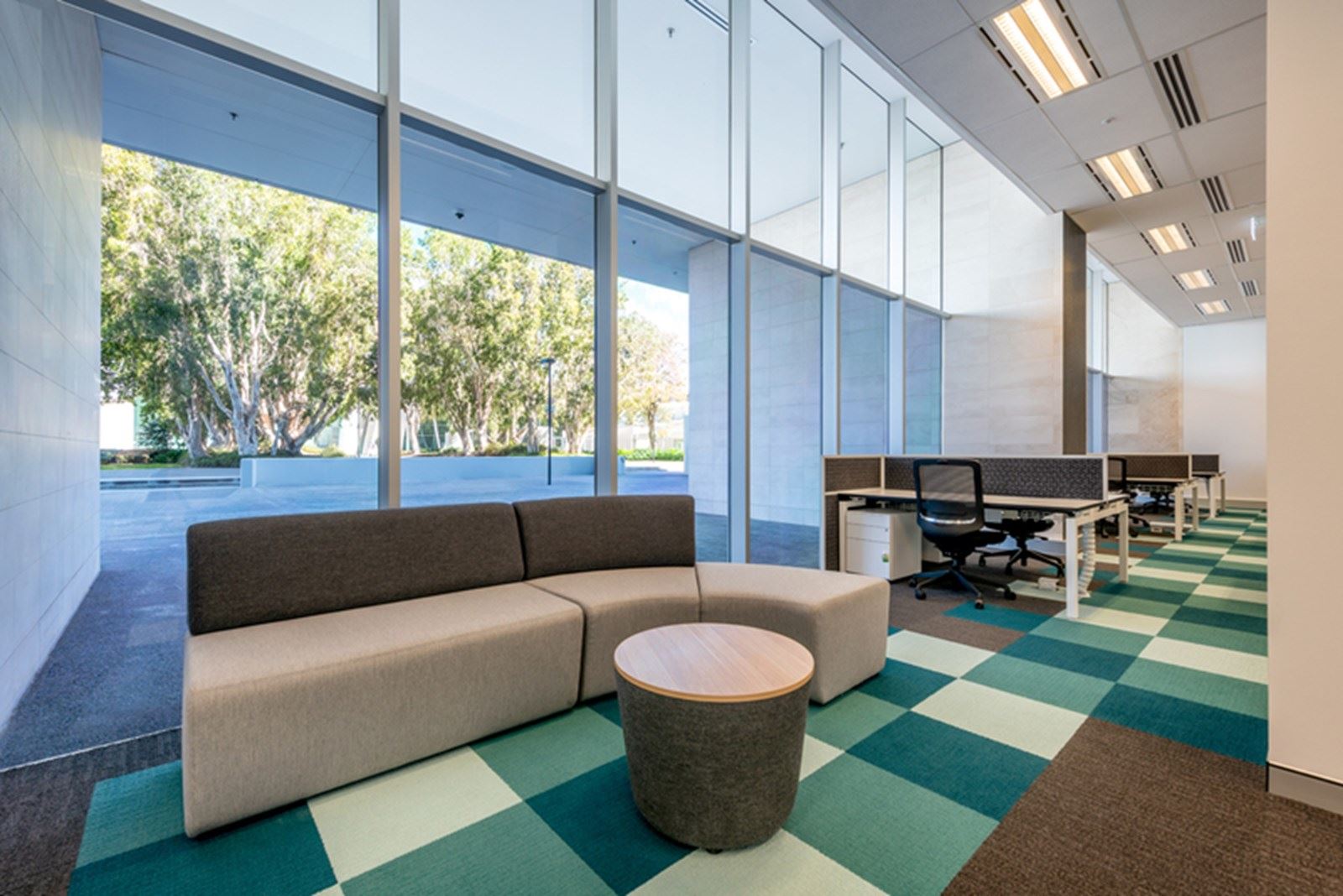
What does this look like? Think of spaces that avoid harsh lighting, distracting noise and visual clutter to create a calming atmosphere where everyone is able to focus.
Flexible layouts with distinct work or learning zones, such as quiet areas, collaborative spaces or sensory rooms allow people to choose the space to suit their tasks or moods.
Nature-inspired design elements, like abundant natural light, plants and organic materials, reduce stress and cognitive overload. Clear wayfinding and structured layouts that support people with neurodivergent needs and enhance efficiency, and reduce stress for neurotypical people too. Ultimately, inclusivity fuels innovation.
The Allen key to unlock ideas
Creating spaces that support neurodivergent people isn’t just about inclusion – it offers many practical advantages.
EY has established 23 Neurodiverse Centers of Excellence where tech wizards work on complex projects at the cutting edge of artificial intelligence, blockchain and data analytics.
These teams perform their roles alongside tailored professional development. EY reports productivity, quality and efficiency uplifts of 1.2 to 1.4 times their neurotypical peers, and the retention rate is an enviable 92 per cent. Neurodivergent team members also create a “halo effect” where their neurotypical colleagues are 30 per cent more productive thanks to higher group morale.
To better support these teams, EY is progressively redesigning its offices. The recent Perth office refurbishment, for instance, features soundproof spaces, enhanced lighting and signage, calming décor and measures to reduce overstimulation, discomfort and distraction.
EY’s experience isn’t unique; broader research echoes these advantages.
Deloitte has uncovered five key drivers that neurodiverse thinkers bring to problem solving. Some are well documented: cognitive diversity can be a crucial driver of new ideas and dismantle groupthink, for instance. But some are less well understood. Neurodivergent people often exhibit intense focus and perseverance – traits that enable them to push through challenges and setbacks with the tenacity that can inspire their teams.
There’s also a critical business case to be made. If up to one in five workers identify as neurodivergent, it’s likely that a similar proportion of customers do too.
This recognition can reshape how products and services are developed. IKEA founder Ingvar Kamprad is the prototype here. His dyslexia led him to think in maps and images rather than numbers and words. This was the inspiration for a product naming system based on evocative Swedish places rather than unmemorable product codes.
Deloitte has found that many neurodivergent people learn creative problem-solving as a survival skill. As neurodiversity researcher Eliana Grossman aptly puts it: “We have resilience that neurotypical people haven’t had to build.”
Building for brains, not just bodies
Neurodiverse design can enhance the workplace experience for all employees, but there’s another reason why it isn’t a niche trend or a nice-to-have.
Technology has always magically transfigured workspaces. Rows of desks for typewriters transmuted into seas of cubicles with personal computers before being recast more recently into hot desks for laptops. As technology has shifted, our needs have too. People have more flexibility today in how and where they work.
Technology has always dictated what we do and how we do it. Now, as we leap headlong into an AI-powered future, workplaces are shapeshifting again. We are looking for places not to perform tasks but to nurture the minds of those that inhabit them.
As AI takes over routine tasks, we are free us to use our minds in new and creative ways. To rise to this challenge, we must learn to use our little grey cells in new ways. Neurodivergent thinkers – with their out-of-the-box ideas and daring ingenuity – can lead the way. So, let’s design with that in mind.