



Urban form often stands-in as an indicator of the deeper appeal of a place; think New York’s towers and its lively urban lifestyle; the historic fabric of many medieval centres and their dignified repose; the striking architecture and vibrant street life of inner Melbourne.
Is there any link between Adelaide’s urban form and its popular dismissal as just a “big country town”? Might a new Adelaide be emerging? Here’s Part four…
Probably originating with its rural-town-width main streets, Adelaide’s reputation was expanded to reflect, when compared with larger Australian capitals, what many visitors perceived as its slower pace of life, supposedly reserved locals, and its aping of big-city urban gestures.
Yet the urban form of Adelaide has evolved in recent years, just like its interstate counterparts. The most noticeable changes have been the proliferation of tower developments, no longer concentrated in the business core of the city.
MORE FROM MIKE BROWN’S SERIES ON PLANNING IN ADELAIDE:
- Myeh-delaide – Australia’s emerging capital of urban mediocrity
- Naffelaide: “…time for Adelaide to just grow up”
- Radelaide – the worship of cars in the City of Churches
- Radelaide – from “big country town” to the towers of “Sad Gimignano”
- Happilaide? Adelaidean born and fled – why do its citizens leave to succeed?
Let’s apply our comparative method to some of central Adelaide’s urban form and, as previously, leave it up to you, dear reader, to conclude if ongoing popular disdain is deserved.
A “big country town”?
Let’s look at a few examples …
1. Adelaide’s water front – the Popeye view
Most televised capital city news bulletins include a signature locational image.
Many state capitals are depicted next to a view of, or over, water.
Adelaide is as well; the Torrens Lake in the foreground of a line of significant buildings, all sparking at dusk. Sometimes, the local tourist craft, “Popeye”, appears on the lake.
Yet, where other city centres front real water features, Adelaide’s lake shares with Canberra the artificiality of its water front, both held aloft by an out-of-sight dam.
Unlike Canberra’s, the scale of Adelaide’s water feature is comparatively tiny, closer to that supplying a large rural town.
This pastoral impression is amplified by the backdrop buildings – a parliament house, a culture centre, casino (former interstate rail terminus), a convention centre, associated hotel, and an exhibition centre. Out of camera-shot, the large sport stadium still known as Adelaide Oval rounds out the assembly.
The model for this ensemble is deeply reminiscent of a large English country seat; an artificial water feature fronting a rising sward of lawn, the odd folly (the bandstand) framed by trees, and the essential baubles of status and grandeur arrayed like a string-of-pearls across the tableau to signify, in Adelaide’s case, state capital-hood.
2. The Glenelg Tram – a street-car named Retire?
Though like some other state capitals, Adelaide’s tram network is slowly being enlarged, it was mostly removed some decades ago, retaining just one line running between the city centre and the seaside suburb of Glenelg.
Like the sole retained line in Ballarat, Adelaide’s became little more than a tourist attraction for many years. It provided little fundamental transport service, yet by linking the city centre with a burgeoning retirement suburb, the line unintentionally symbolised the trajectory of Adelaide life; from active CBD labour to retired decline, facing the setting sun.
3. Rundle Mall
Upgrading Rundle Mall, which is more than twice as long as its Melbourne and Sydney counterparts, is an almost perpetual obsession of ambitious Lord Mayors.
The most recent upgrade is high-quality, with street-furniture, planting, paving and art-works that seem genuinely loved by the shopping hordes.
Yet unlike the pedestrian-only streets in many global cities that throng after dark, when the Mall shops shut and night descends the strip is largely abandoned and becomes as scary as a clown (see title image).
4. Adelaide’s (s)crappy signage
Denise Scott-Brown and Robert Venturi’s “Learning from Las Vegas” celebrated the visual richness of urban tat; of low-brow design originating far from the snooty halls of urban academe.
Good signage is now much loved; consider Osaka’s Dotonbori or Tokyo’s Shibuya.
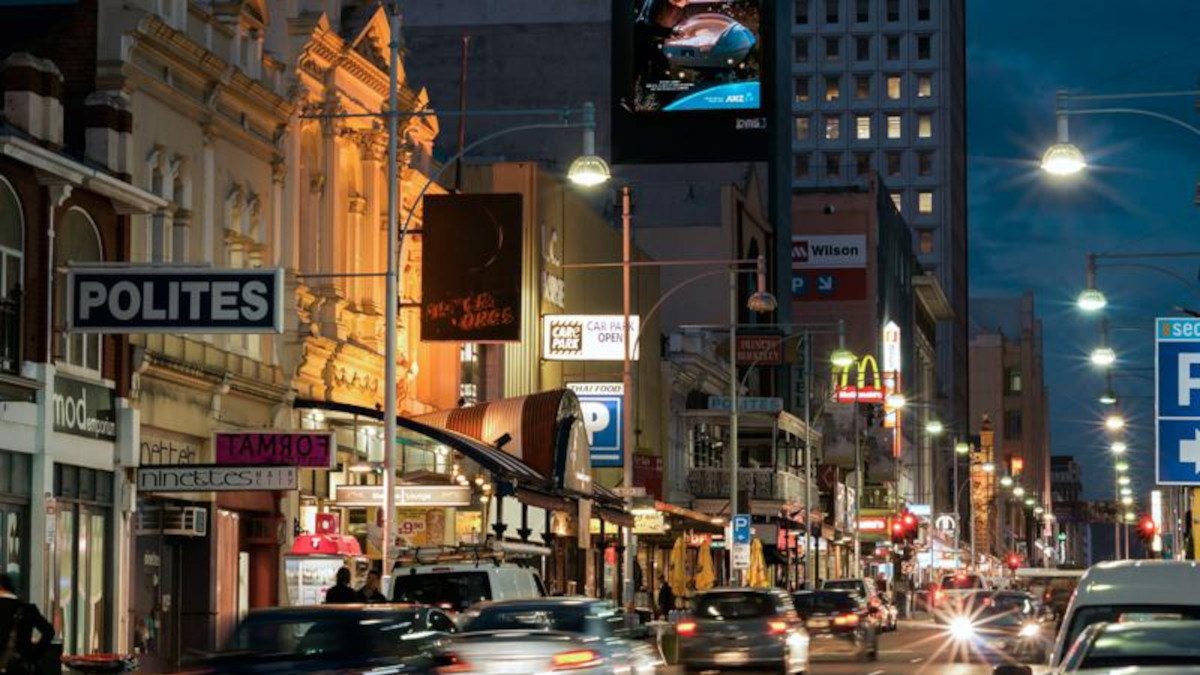
Not so in Adelaide. For example, its night-life strip retains the same rag-bag collections of property, advertising and business signs that, in some cases, date from half a century ago.
Some of the largest signs entice drivers to park their cars and get a burger – but little more (see image below).
5. Just another country platform – Adelaide’s interstate rail terminus
When travellers arrive by train, their first perceptions of a place are defined by its rail terminus.
Sydney’s grand Central Station and Melbourne’s contemporary Southern Cross both discharge directly into the city. Even Spain’s tiny Toledo is distinguished by a lavish rail terminus.
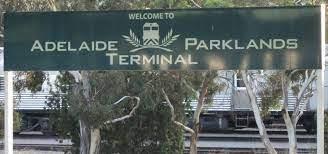
Adelaide emphatically confirmed its self-estimation as a country town when it relocated its “interstate terminal” to scrubby parkland at the outer edge of the city.
Only the platform sign tells passengers that they have arrived (see image below), yet they need a bus or taxi to get to the city centre – or they could stay on the train and head to Darwin or Perth instead.
6. Terminal views – the vanishing vistas
Where opportunities arise, it seems to be a feature of modern grid-city-making to celebrate axial terminations.
At the end of Sydney’s William Street, the Kings Cross “Coca Cola” sign is now a heritage item. The southeast corner of Melbourne’s grid is marked by a slick office building designed by Harry Seidler.
So it was with Adelaide.
Mindful of the immense propaganda power of a large carefully placed building, St Paul’s cathedral points sacredly heavenward, terminating the northern vista down Adelaide’s central avenue.
The Newmarket Hotel served a similar but profane role for thirsty visitors approaching the corner of Adelaide’s grid from Port Road.
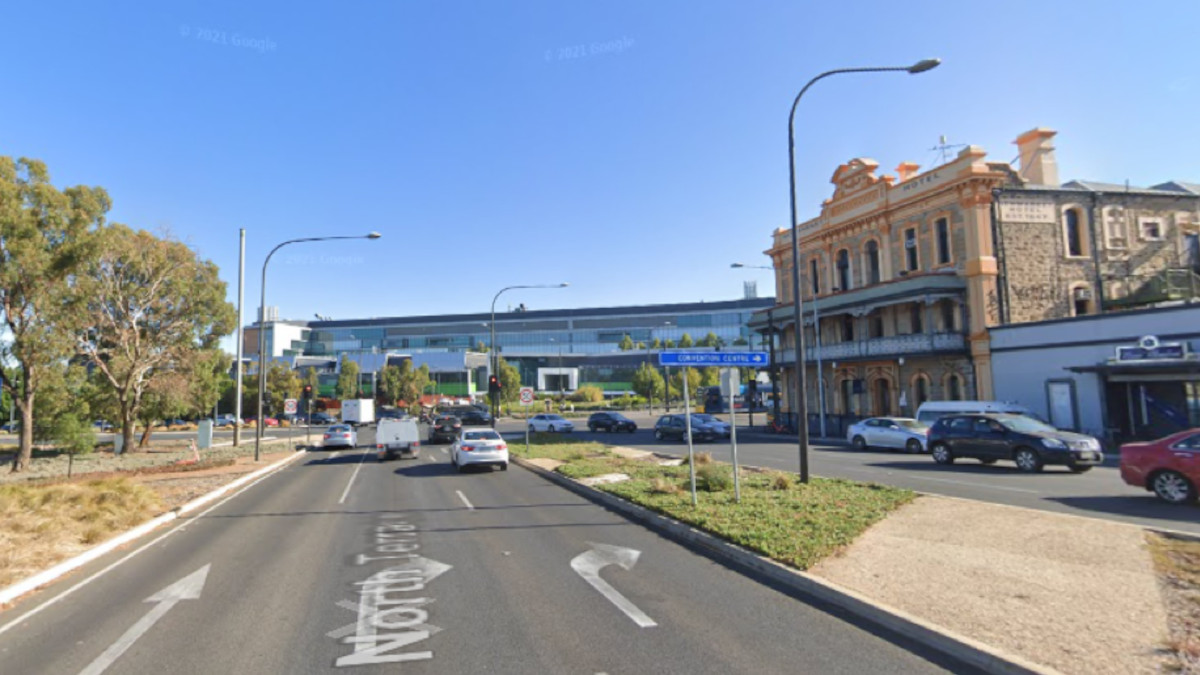
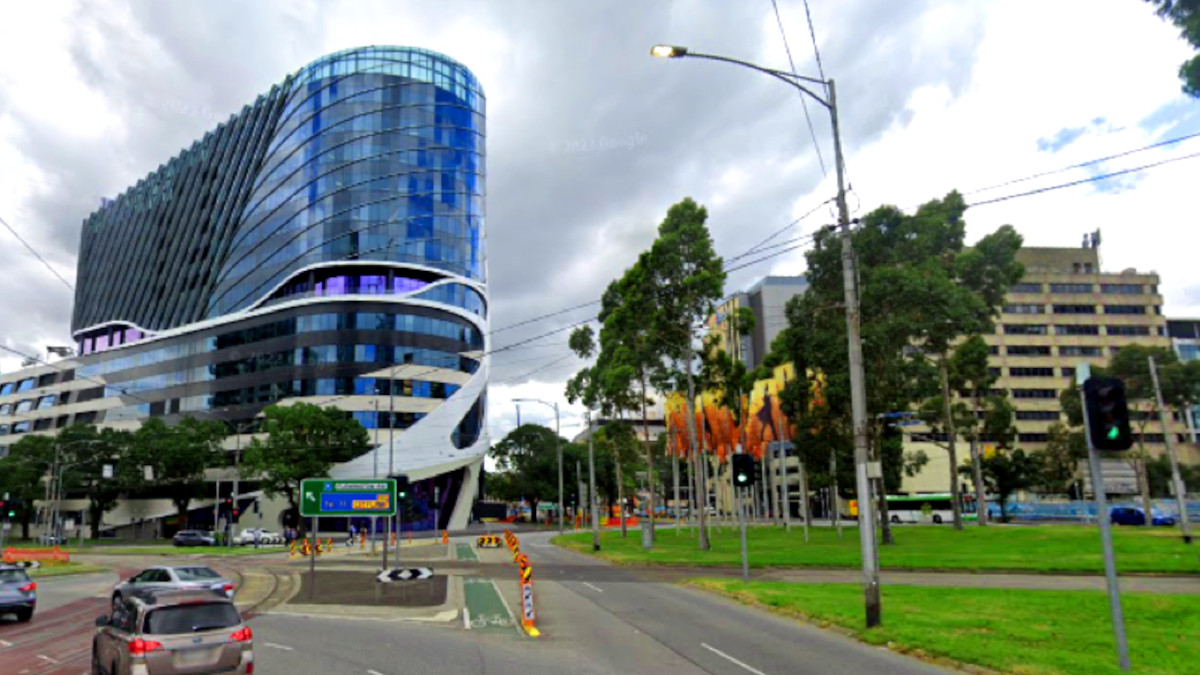
Yet, right across the same intersection, the recently completed Adelaide Hospital looms long and low, seemingly casting West Terrace as a road terminating in lengthy convalescence.
Compare Adelaide’s hospital to a Melbourne counterpart (refer Google Street view images below).
7. Adelaide’s laneway upgrades
If in literature imitation is the sincerest form of flattery, so it would seem with city-making.
Following the wild success of Melbourne’s laneways, starting a quarter of a century ago, many other Australian cities sought to capitalise on their own bin-strewn wastelands.
Adelaide was no exception.
However, Adelaide never quite managed to crack the Melbourne code; something about making them interesting, attractive, extensive, vibrant, intimate, rewarding curiosity – urban even.
Google Adelaide laneways images and Melbourne laneways images to compare.
8. A great place to die?
Adelaide’s reputation as “a great place to bring up kids – then die” is accurately mapped in the squared arc from Adelaide’s North to West Terraces, which hosts several schools, tertiary institutions, a new hospital – and culminates in a cemetery, aptly facing the setting sun.
New Adelaide – “Viagra-Ville” or “The Towers of Sad Gimignano”
Those paying attention would have noticed the face of central Adelaide has changed in the past few years. It is as though Adelaide has bought a sports car in retirement.
It seems that tall buildings (well in Adelaide terms at least) have broken free of their CBD corral. Let’s call it “Viagraville”.
The two buildings in the image below face North Terrace and Frome Street in precincts defined by 2-4 storey buildings, many heritage listed.

The two buildings below – one a playful evocation of a robot, the other perhaps a Cubist’s rendition of Swiss cheese – are located within different precincts, each with an established scale of one to three storeys.
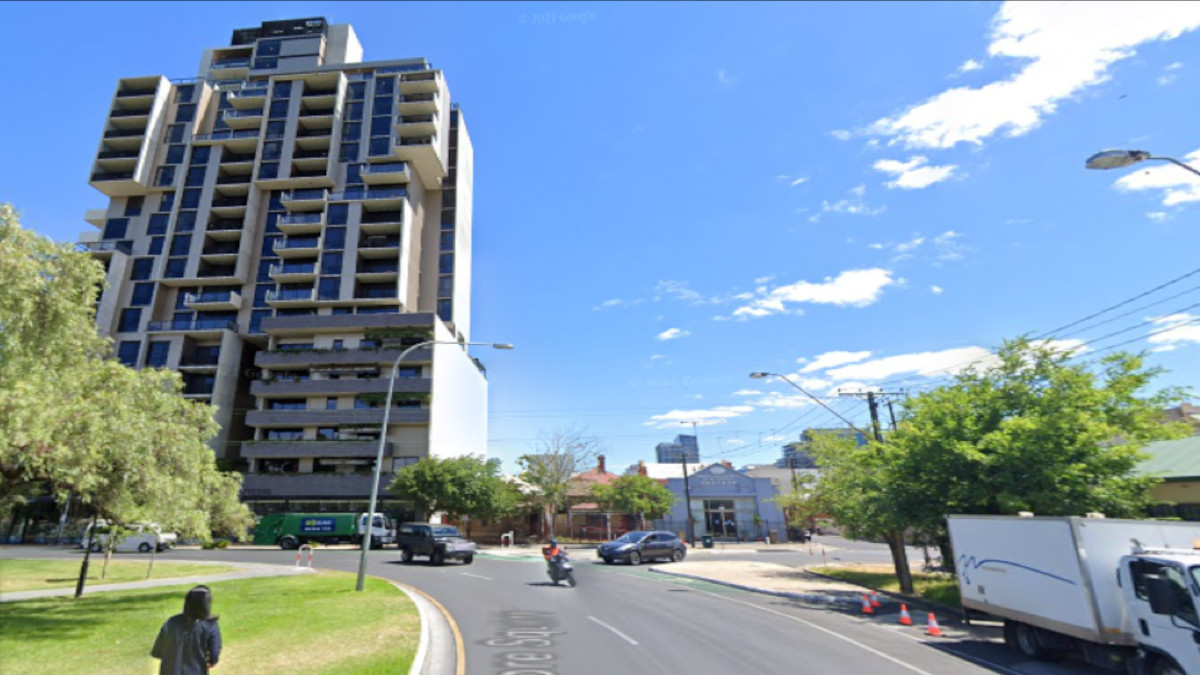

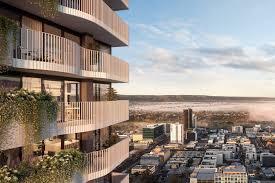
We encountered the central market redevelopment in part two. The projected views from its residential balconies depict its scale against its context (see image below).
We also encountered the Eighty-Eight O’Connell development, which is helpfully depicted amongst the prevailing scale of North Adelaide and beyond (see image below).

By themselves, all of these buildings are well designed yet they have generated significant disquiet amongst many locals and puzzlement from outsiders, mainly because they are where they are.
Unlike the gradual growth of most towers in Australian CBDs, the sudden and isolated appearance of this new crop is reminiscent of San Gimignano, near Siena (see final image).
Its jarring, now charming, stone towers, were erected by locals to signify their wealth and power during wars between the Guelphs and Ghibellines of the 12th and 13th centuries.
That city is now a tourist attraction. Will Adelaide’s towers attract the same kind of affection in the future?

Dear reader, it’s your turn again …
We have focused here on the symbolically rich built-form of Adelaide, comparing it to examples from other cities.
What do these examples say about Adelaide?
Where do you think each might be located along the spectrum Crapelaide, Sadelaide, Naffelaide, Myeh-delaide, Happilaide, Radelaide, Fabulaide or Spectaculaide?
MORE FROM MIKE BROWN’S SERIES ON PLANNING IN ADELAIDE:
- Myeh-delaide – Australia’s emerging capital of urban mediocrity
- Naffelaide: “…time for Adelaide to just grow up”
- Radelaide – the worship of cars in the City of Churches
- Radelaide – from “big country town” to the towers of “Sad Gimignano”
- Happilaide? Adelaidean born and fled – why do its citizens leave to succeed?
MORE FROM THE FIFTH ESTATE ABOUT URBAN PLANNING IN SOUTH AUSTRALIA:
- SA has a lot to crow about with power – but faces some sustainability challenges beyond the “Stobie” poles
- Heritage or higher density: Peter Malinauskas’ big dilemma over South Australia’s planning laws
- Now he’s PM, Anthony Albanese can help Malinauskas get Adelaide’s tram plans back on track

Mike, I think comparing ourselves to others has been one of Adelaide’s issues. I think we now do less of that and are happy to be known as livable. I also think we are less CBD centric than some other cities. Our regions are unique and many of us shy from the examples you listed. I will say Adelaide’s population is a little split between those that have travelled and those who have not. San Gimignano is a beautiful old village but the towers are basically phallic. Our new towers are mostly chinese owned apartment buildings so probably wont be around quite as long.