


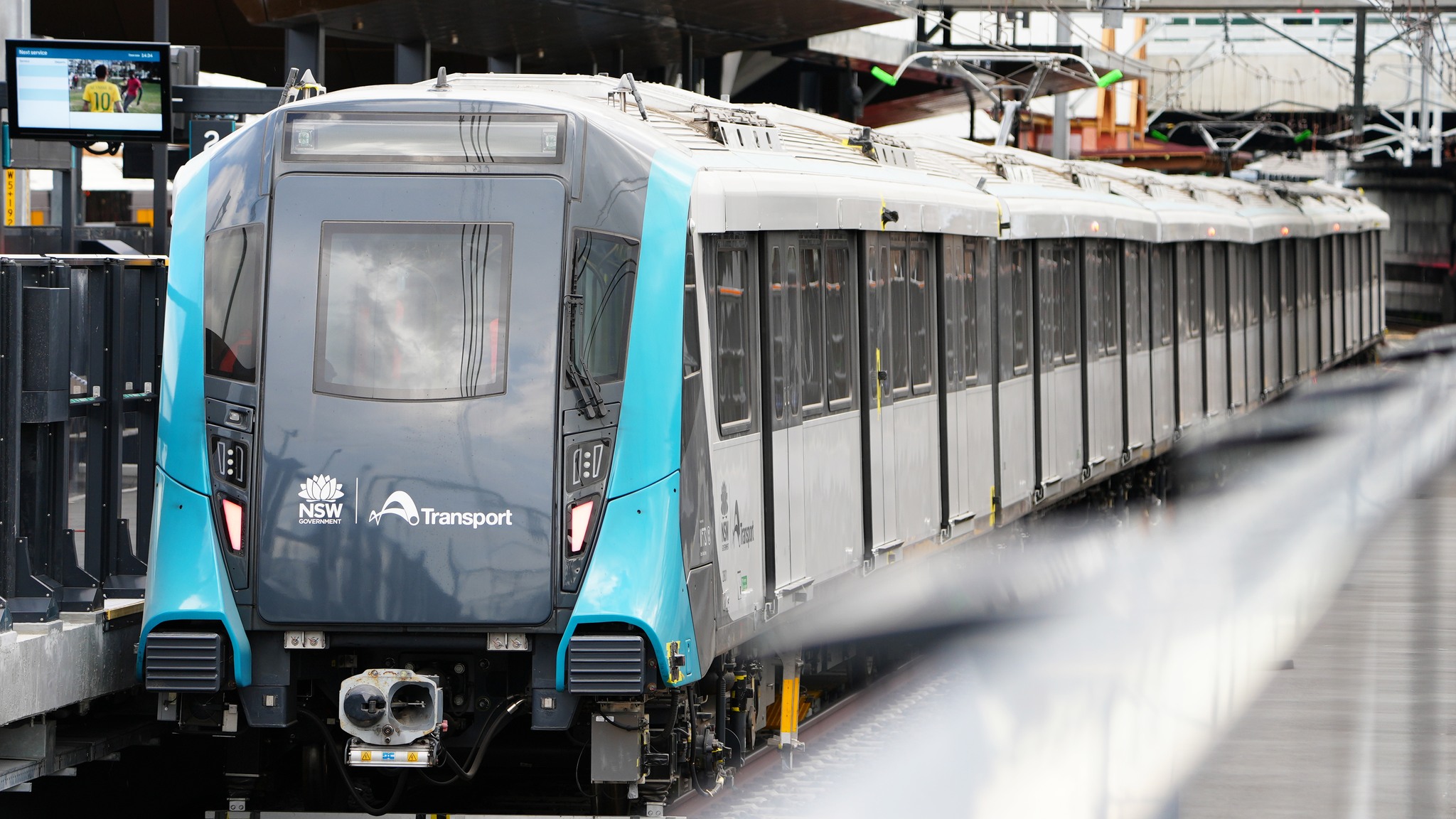
In the face of a massive cost blowout, the NSW government is rethinking its Sydney Metro West rail project linking Sydney’s CBD with Parramatta because of a massive cost blow out from $10 billion to $20 b. But it’s not the only capital city infrastructure project under review.
In Melbourne, the mostly underground Airport Rail has also been postponed because of similar costs concerns. In Perth, the mostly underground Airport Rail cost $8 billion for a line of just eight kilometres. All of these projects need rethinking despite the continuing need for more rail in our growing cities.
The main cost of most of these projects is building underground and overground, instead of running a line on the surface and facing up to the politics of disrupting land users.
Tunnelling might solve the problem of people who own tunnelling machines but it’s way more expensive
Everyone has an agenda and wants to pitch their version of the best project to government, for example, tunneling companies which suggest its cheaper and easier to build underground than having an impact on streets and buildings. But the truth is, tunnelling can add at least 10 times to the cost.
The emergence of such rail projects around the world has been dubbed the “second rail revolution”. It started after the recognition that cities needed to get away from huge road projects that were destroying the very urban fabric they were meant to be supporting. Rail was rediscovered in the 21st century after 50 years of decline and continues globally to grow as a major part of urban economies.
The value of agglomeration
The reason for rail’s value and popularity lies in agglomeration economies that occur when people meet to work, play and visit in urban spaces made attractive through walkability. In the US, a recent study has shown that only 1.2 per cent of urban space is walkable (probably the lowest proportion in the world) but this urban fabric creates 20 per cent of US GDP.
New research at Curtin University shows that a combination of good urban rail and activated places around stations can create great cities.
Is there another way?
Competitive cities need good urban rail and projects such as the newly completed Crossrail in London that will join rail lines across the city, dramatically shortening commutes.
Hopefully, Brisbane’s Cross River Rail project and MetroNet in Perth will yield similar results. But can we avoid such huge, costly projects that involve long distance tunnels cutting through suburban areas?
Trackless trams are promising
Trackless trams might just be the answer. At Curtin University, we have been researching this technology for seven years. It is an innovation that combines six smart technologies from high-speed rail and transforms a bus into a rail-like vehicle, giving it both high capacity and a ride quality that can compete with cars and buses.
These trams are battery-electric vehicles running on guided tracks using either magnetic or light-based sensors. They can carry the equivalent of six lanes of traffic at 70 km per hour along main roads at a tenth of the cost of light rail and probably over 100 times cheaper than underground rail.
Mid-tier transit projects such as trackless trams are more complicated to plan because of the impact on local government, local land owners and local communities.
However, although it is not a simple engineering solution of concrete and steel, it won’t cost the earth.
If we are looking at reduced capital for such projects surely we can afford a bit more messy urbanism?
Trackless trams for Australian cities will trial in Perth
Last week in China I rode a trackless tram being built for Australian cities that will arrive in Perth late August for final trialling. These digital-track trams are running in many Chinese cities and there is great interest in them after our studies in all Australian cities.
The first study on what a trackless tram could do was on Paramatta Road nearly 10 years ago. It showed that a fast service along this road could provide a powerful solution to Australia’s first main road that has become a traffic slum.
The project was postponed until after the underground options of the West Connex motorway and Metro West rail were built, both of them underground, ridiculously expensive and, in the case of West Connex, unlikely to solve traffic congestion.
Spinifex is an opinion column open to all our readers. We require 700+ words on issues related to sustainability especially in the built environment and in business. Contact us to submit your column or for a more detailed brief.
The ill-considered Perth and Melbourne Airport rail projects are also salutary lessons. In Perth and Melbourne there are main roads or freeways where one lane could be used for a trackless tram that would carry the equivalent of six lanes of traffic at a speed that beats most traffic and would provide the certainty and opportunities for urban economies as well as attracting urban development around stations.
If we are to review Sydney’s Metro West and the Melbourne Airport rail line, let’s take the chance to consider trackless trams. They are on their way and will soon have a strong following.

I have been trying to find the difference between Brisbane’s electric bus/trackless tram and the one tried in Stirling Shire a few months ago which was promoted as an Australian first. Is it the batteries? Type of batteries? Are the charging systems different? Is it the roadway and different ‘tracking’ systems? Do the roads need to be re-sealed to ensure the quiet stable passage of the tram?
Is the Brisbane one more route adaptable, than the one tried here in Perth, because of different tracking systems?
For Metro West, it’s better to reconsider the future of this route includes extending to New Airport or Penrith through T1. If the government choose the former, it should go ahead. Otherwise, it should be delivered as train and extend to Penrith through the exisiting T1 track
The whole redevelopment of western Sydney’s transport seems to be on the cards there. I am just suggesting that a Trackless Tram on Parramatta Road should be a serious consideration as its possible to make a tram boulevard with redeveloped station precincts. These would try to get the road back to being more like its history as Australia’s first main road, and one that seems to have had a longer term history as a songline track as well, like many main roads.
I think trackless trams (busses) are a crazy idea, unless they operate on their own reservation. If positioned along an existing road such vehicles will have to compete with normal road users. Those brutes will drive on the trackless tram zones due to the ignorance of motorists.
That is the idea to actually compete well with automobiles. They can begin using those parts of roads where there is space to share but must get rights of way through lights and into stations. This can be done easier than a complete right of way. There is experience with managing cars in bus lanes in Australia that is not all bad. We have to keep trying surely.
The Melbourne Airport link was not “mostly underground”. It was proposed to use largely existing lines almost entirely above ground. And it was half-arsed with the station proposed to be on the airport boundary, nowhere near the terminals.
A cheap cynical exercise in vote buying.
The “underground” section it proposed to use was the Metro Tunnel, which has already been built without being anything to do with the airport link.
It’s all moot now anyway, as it’s been axed – the only major city in Australia without an airport rail link…
Trackless trams… Yeah, they tried that one in Germany. And they got replaced with…
“Da – Da – Da”… Trams.
Europe hasn’t tried these trams that we have discovered yet. Nor America. Come to Perth in October and you will be able to try them.
No more unused land therefore resort to either undergroynd or long bridges called viaducts.
These new metro trains are like lifts, driverless. Ever seen a tram treckless or not without a driver on our busy roads? It is possible to pack far more services per hour with driverless train than driven trains.
Ever seen a tram as long as a metro train? Why not?
Eachbhas it’s merits. Bias views like this article does not help
I have driven within a driver’s cab on several Trackless Trams where it is following the digital signal or magnetic track without the driver holding the wheel. It is very steady and very fast. But a driver is needed as it’s in mixed traffic and he can over-ride at any moment. Hi-Speed Rail is autonomous but has a driver. The technology in the TT comes from that.
I wonder if you have ever visited Sydney? The whole purpose of tunnelling is so that high density apartment blocks can be built on top, especially around the new stations. A trackless tram / train between Parramatta and Hunter Street in the CBD (or Zetland)? These are also driverless and rapid, so being underground makes them safer.
I was the NSW Sustainability Commissioner in 2004-5 and on the Board of Infrastructure Australia 2010-14 which met in Sydney. My daughter works at UNSW. So yes I have been to Sydney and I worked on the Plan that developed the two rail lines to NW and SE Sydney and the light rail. High density around stations has been quite successful along most of Sydney’s rail system, this Trackless Tram along Parramatta Road can do that and transform the corridor.
Proposing trackless trams, which are over-priced, over-engineered busses, as an alternative to rail projects is not a solution to the actual problem: the high cost of building rail infrastructure in Australia, compared to other places in the world.
Apart from perhaps the UK, NZ and North America, construction costs here are extremely high. $65 billion for a 24 km metro in Sydney is madness, triple the cost per km compared to the Paris Grand Express metro, as well as the regional rail tunnel project in Munich. Even the Second Ave Subway in New York, touted as the most expensive subway in the world, didn’t cost as much as Sydney metro will.
Finding ways to bring the cost of building rail in Australia back in line with the rest of the world should be the priority.
A “trackless tram” is not an alternative for high-capacity rail services, such as the Melbourne Airport link. Why this “innovation” is a dud has been covered in previous comments to this article, including and not limited to offering lower capacity then trams and trains, being an unproven technology (they only run in one city in China), they’re expensive to run and not offering a real cost savings compared to rail.
Deutche Welle has an insightful documentary on why gadgetbahn solutions are a bad idea: https://youtu.be/qNNKpnd5lyM
And RMTransit covers in detail why these “trackless trams” are overhyped:
https://youtu.be/RjKG0Lw1uFc
Most of what you say is wrong about Trackless Trams in terms of their capacity. There are many more cities in China with them and many more are being rolled out. They are not a gadgetbahn, they are using tried technology in hi-speed rail to improve the ride quality and speed in a main road. If you would like to give it a try I think you will be pleasantly surprised.
The fact that these things require high speed rail technology to approach rail-like comfort, perfectly illustrates my point that they are over-engineered busses.
The statement “Europe hasn’t discovered the trackless tram” doesn’t cover the whole story; in Europe there are plenty of examples of premium, successful road-based (bus) systems, just without the pretence of being a tram. (Except for Belgium calling their BRT trambus perhaps) Europe’s premium bus services, such as the French interpretation of BRT are lightyears ahead of what’s available here and could be a great fit for mid-sized cities such as Geelong.
In terms of capacity, going by the specifications for the trackless tram, their quoted capacity is based on a standing density of 8 passengers per square meter, while 4 passengers per square meter is more realistic (and comfortable). A 30ish meter long trackless tram would more realistically have a capacity of 150 – 170 passengers, rather than the claimed 300+ per vehicle and not counting the large wheel wells eating up a lot of space inside. A Melbourne E-class tram hold around 210 passengers and Sydney’s coupled tram sets up to 450. If the goal is to move more passengers than a regular bus service, trams make more sense.
I’ll absolutely give them a try, still do not see what the added value of them is over a bus; if trams don’t stack up for a particular corridor and a standard bus isn’t enough, just buy a higher-capacity bus such as the ones for Brisbane Metro. Those busses do have a proven record of being able to run on a normal road, although from personal experience the ride quality isn’t as good as rail. Added bonus is that a range of different manufacturers make them so plenty of products to choose from. If a higher capacity bus service can’t cope, just bite the bullet and build a tram.
I fear this “innovation” will be just another Translohr, TVR or Phileas to name a few of it’s failed predecessors.
Just let a Chinese company have cart Blanc and delivery the whole system. The Chinese public transport systems are first class, get completed quickly and don’t cost a fortune. Constructing to Australian standards is ridiculously expensive and unnecessary. The industrial relations and safety costs in Australia are also ridiculous. Corruption is also a big problem that affects the bottom line and tender costs. Do you want a transport system or do you want to employ Australians and expensive overseas companies. If they really want a transport system let the Chinese deliver it to their standards with service guarantees/penalties.
We cant do that and I wouldn’t want that. We have such great transit projects in Australia and we need to use all of that skill but we need to see when we are going crazy and these long tunnel trains are crazy. We need to become as creative as the best rail projects and add to it creative ‘messy urbanism’ to enable these surface projects to work. I will try and set out what I mean by that in a follow up article.
Where’s your source for Perth’s Airport rail costing $8 billion?
Its an old source and I checked the most recent statement from MetroNet which is a lot less. But its probably not including the other major construction for the project in a switch back at Claremont and a huge interchange still being built at Bayswater. Its all part of the same issue that we are building trains like they are freeways and in particular the underground long tunnel projects. The Perth Airport Rail could have been built as a mid-tier transit project down Great Eastern Highway where a bus lane exists or a heavy rail line along the road corridor to the Midland line as we have built along the northern and southern corridors. However the huge interchange at the airport which means no-one has to slow down (though of course they do in peak traffic) was built at huge cost and had ‘no room left’ for a train. The designers should have known better as the system has worked well in the other corridors and serious urbanism can happen around stations. The interchange at the airport is larger than a medieval city and is impossible to any urbanism around it now. The beautiful interchanges are popular with drivers but we cant build cities around this.
I remember seeing trolley buses in Darlington United kingdom back in the fiftys, these were similar to buses but used electrical power from over head power lines,a pioneer of what you are describing in this article but not as high tech and definitely a lot cheaper .8, Brian Townson
The TT is not a trolley bus nor is it an electric bus with batteries, its much better in its ride quality. That really matters if you want speed and capacity to compete with car traffic.
I’ve always seen that proponents of trackless trams underestimate the capital costs of trackless trams and never seem toi note that the operating costs are substantially higher than actual trams due to substantially increased friction between the wheels and road surface (also increasing particulate emissions).
Not only that, as it’s proprietary technology, you have a massive contractual risk going forwards.
It’s substantially more expensive than BRT for a like for like with higher risk to construct, yet it has lower capacity, more expensive to operate and releases more emissions than trams.
It’s a lose lose at the moment.
It’s time for a new version of a bus that is completely transformed into a train-like system. Let’s be a bit more open to that possibility.
Trackless trams have proven a total flop in Europe. France is about the most advanced transport system to try them – if anywhere was going to do it it was going to be France! – and they’re tearing them up. The savings were illusory; it’s not one tenth as expensive, it’s more expensive. The service standard isn’t better either to justify the extra costs. And it costs more in the long run. You also have to take into account the non interoperability of trackless with existing tracked or bus services, addind more cost. Like BRT before it the trackless trams is in practice an excuse to obsess about magical technology. There is no magic technology that can magic us into the promised land without making hard political choices.
We are dreadful at public transport. We’re the absolute back of the class. The people who do know what theyre doing build rail. That’s because alternative gee whiz technology doesn’t really stack up. Being massive dunces who don’t know what we’re doing, we should walk before we try to run and wwork on the actual political obstacles to good PT, none of which are in any way related to or solvable by magic gadgets. That means doing the boring work required to actually move people around even if that means with boring old rail.
The Europeans have not discovered the Trackless Tram, all their options so far are not in the same race. Same in America. I agree boring old rail is having a revival and it must continue but we will kill this ‘second rail revolution’ if we try to make it all underground. Its time for a truly modern mid-tier transit to service a lot of these options, especially connecting to trains and to keep the trains for long corridors. Messy urbanism can then happen.
France developed no less than three different trackless tram technologies in multiple different cities. Both Bombadier and Translohr built systems in France. They both suck. Worse service standard, more expensive build and far more expensive maintenance. No upside. Bombardier was so bad they’re actually ripping it up to replace it with normal light rail, because it’s much better. This in the best possible conditions; an effective PT manager, good budget, no political impediments, a receptive audience which uses PT. Australia would be much harder and therefore the service much worse. No need to try again, it’s an idea that had its time and failed. Unfortunately we’re too late. In a decade we will once again replace Brisbane’s busways when the new metro system fails, adding to the failure of the bus only approach.
We should simply build the simplest possible technological system. No need to overthink this stuff. Let competent PT managers innovate; we should simply implement. Walk before you run.
Trackless tram trials failed in parramatta road 10 years ago. The Chinese trials apparently do not work on normal roads, involving high road costs. Sydney property at 2 million dollars to resume everyevey 50 metre wide lot, is 400 million a kilometre above ground costs
Interesting that you say it ‘failed’ before it was even trialled. It was rejected because of politics associated with Connex West. This was meant to take traffic off Parramatta Road and when completed they would look again at a Trackless Tram option. It hasn’t happened. Its nonsense to say TT’s dont work on normal roads and it certainly can be fitted into present roads if we are prepared to reduce traffic capacity along that road. This is the essence of a Movement and Place strategy. Cities need to choose special roads to be Place-oriented with substantial urban regeneration and far more emphasis on public transport. That is the messy urban bit!
Trackless trams are just large buses/gadget bahns and not the so spruiked revolution you keep touting.
Give me a tracked traditional tram (with or without battery power) over this design by one manufacturer any day.
Do you have any commercial interest or donations from any of the involved companies?
I didn’t take up with Trackless Trams lightly as I have spent 40 years showing why rail systems are better than buses if we want to get people out of cars and stop urban sprawl by enabling redevelopment. I won a number of these battles in Perth and helped cities across the world. Read my books and you wont see much support for buses apart from local services that feed into longer, faster rail systems. I didn’t even much like BRT. But this Trackless Tram technology intrigued me so I went to China where it was invented and found something totally different to a bus. I discovered it had used all the ride quality smart systems from Hi Speed Rail and made it move like a train despite having rubber wheels. Its due to the sensors telling the suspension how to adjust for the shape of the road. You just dont get the bucking and jerking and swaying that you find in a bus. It really looks and feels like a three car light rail. I found it very similar to the new Sydney Light Rail which cost $180m per km. This TT would cost $4m per km. Its worth considering as its also battery-electric for net zero outcomes. You will have a chance to ride one in Australia later this year. On your suggestion I must have a commercial interest I will take that as a compliment as I have never made money other than my academic salary. But I am pleased you felt I was a bit of a salesman as that is what I am when it comes to technology that can help make better cities and save the planet at the same time.
There is a major flaw with this article.
The Melbourne Airport Rail project is not intended as a mostly underground project – it has always been proposed as a surface line. The 13km line is mostly aboveground – the only point at which the Melbourne Airport Rail route was proposed to be underground was via the new Metro Tunnel system from the Cranbourne/Pakenham line to the start of the Sunbury line. Further, the Victorian Government has spent considerable time and capital negotiating with landowners in the areas through Melbourne’s west that will be impacted by the proposed train line.
It was also proposed that the Melbourne Airport Station terminus would be aboveground, a concept that APAM, the owners of Melbourne Airport, have opposed in favour of an underground tunnel from the outset. Indeed, the Victorian Government has argued that it would be more expensive and more disruptive for the airport precinct if the station terminus was built underground.
There needs to be a significant correction to this article.
Thanks for picking up on that. Its certainly got a lot of underground and a lot of overground that are both around ten times more expensive than doing it on the ground. My article is not saying we cant do some of that in places but they have to be city centres or very difficult terrain. But this obsession with tunnelling has gone too far and we will not be able to get decent public transport options into the future unless we do more messy urbanism on the ground and make decisions that create place-oriented outcomes instead of traffic as outlined in the answer above. Trackless Trams offer an opportunity to re-engage with messy urbanism as its such a spectacular technology that it will draw people and developers to want to engage with it. Politicians will have an option that does not involve breaking the bank.
Melbourne Airport Rail, as proposed, has exactly 0km of underground track.