


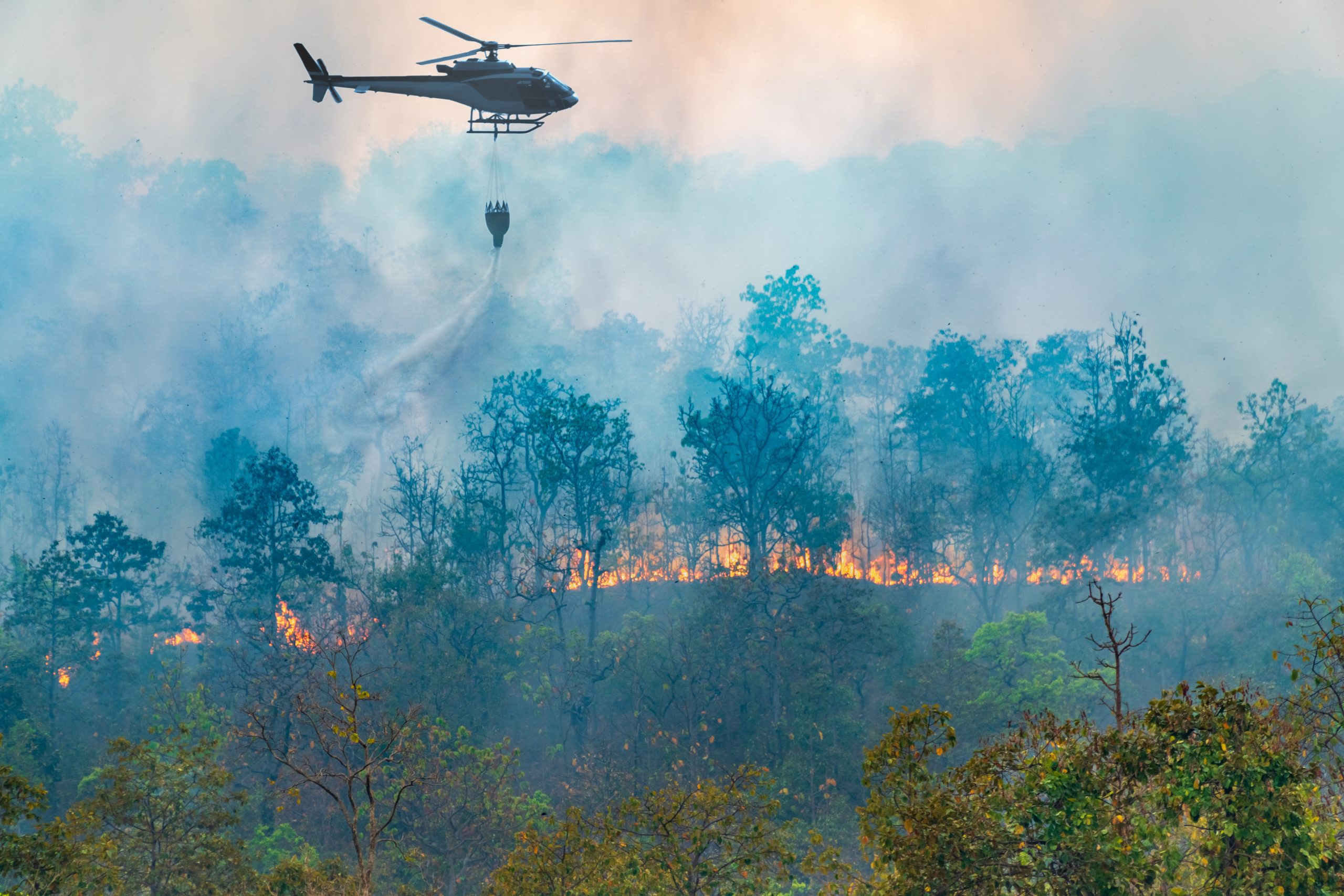
The surge in climate related damage presents a significant challenge for the insurance sector. As natural disasters multiply, insurers must find pragmatic solutions to support their transformation. The current claims management model is not sustainable in the long term; therefore, it is crucial to increase investments in the energy transition to ensure the very survival of the insurance model.
Spinifex is an opinion column. If you would like to contribute, contact us to ask for a detailed brief.
After cyberattacks, the climate crisis stands as the greatest threat facing insurance companies. In this context, a complete transformation of the sector is needed to ensure its long term viability. The 2019-2020 bushfire season in Australia, known as “Black Summer,” resulted in estimated insured losses of $2.32 billion, making it one of the costliest natural disasters in Australian history. This staggering figure, which is bound to increase if no action is taken, poses a critical obstacle to the sustainability of the insurance model.
Major stakes
The very profession of insurer is at risk because if no action is taken, the volume of claims to be compensated will become unmanageable. Even in an increasingly ambitious low emissions scenario, the annual costs of disasters in Australia are expected to reach at least $73 billion by 2060. If insurers continue to prioritise short term profitability, climate change will lead to an unsustainable economic situation where they may no longer be able to operate. It is therefore up to risk management departments to mitigate the devastating impacts of climate change and a disorderly transition.
On this front, three areas of improvement have emerged: first, the simplification and standardisation of extra financial data and ESG ratings to foster investment from asset managers. Second, access to positive initiatives in the marketplace, such as the Green Bond Principles. Third, a significant and necessary increase in investments from responsible financial players. These players are at the forefront of sustainable finance, working toward a swift and responsible transition.
The need to insure emerging markets
Moreover, emerging markets should no longer be ostracised. To date, very high risk regions remain uninsurable. It is essential to work toward making these regions insurable and conducive to long term investments. The time has come to bring all involved regions—especially emerging countries, where the need for financing is even greater—into a virtuous cycle of funding. Only then will these regions become viable and attract financing, which in turn will trigger positive transformation.
We can no longer view emerging countries merely as breeding grounds for projects and opportunities if we refuse to promote their insurability. This dynamic should support the redirection of financial flows toward assets that promote decarbonisation, such as renewable energy production, transport electrification, and low carbon real estate, alongside recycling and the rare metals necessary for the transition. If we cannot insure them, we are condemning certain potential investments and, in effect, harming the share of funds allocated to the transition.
The role of the insurance industry
Therefore, preserving the insurance profession depends largely on the willingness of all industry players—from regulators to asset managers—to organise themselves so that we can live in a world that is both insurable and viable. The insurance industry plays a triple role as risk managers, risk carriers, and investors in supporting a just transition to a resilient net zero economy. This includes addressing interconnected sustainability issues related to protecting nature and biodiversity, as well as preventing pollution through a circular economy.
Amid the global challenge of a widening protection gap (i.e., the difference between economic and insured losses), there is an increasing need for the insurance industry to innovate through insurance solutions that support the transition to net zero, known as “transition insurance.” Recent research indicates that global insurance premiums for climate resilience and natural catastrophe protection should increase by 50 per cent by 2030. Furthermore, insurance plays a key role in mobilising the climate transition, estimating that over half of the US$19 trillion (A$30 trillion) already committed to financing the climate transition through to 2030 will require additional insurance coverage.
Similar to the aims of transition finance, “transition insurance” can be viewed as insurance capacity allocated to entities, activities, or assets that support the goals of the Paris Agreement. Transition insurance can apply to many lines of business (across non-life and life and health insurance) and focuses on climate solutions and enablers, including low, zero, or negative emission solutions, technologies, and projects; or activities contributing to the early retirement and managed phaseout of high emitting or emissions intensive assets or activities.
Adaptation and mitigation to climate change are two sides of the same coin. They can both be viewed through a risk reduction lens. Adaptation and building resilience entail coping with the physical impacts of climate change through, for example, disaster risk reduction measures and insurance as a financial shock absorber. Climate change mitigation and the transition to a net zero emissions economy can also be viewed as risk reduction as it addresses the root cause of climate change—GHG emissions.
Preserving the insurance profession therefore vastly depends on the willingness of all industry players, from regulators to asset managers, to organise themselves so that we can live in a world that is insurable and thus viable.