


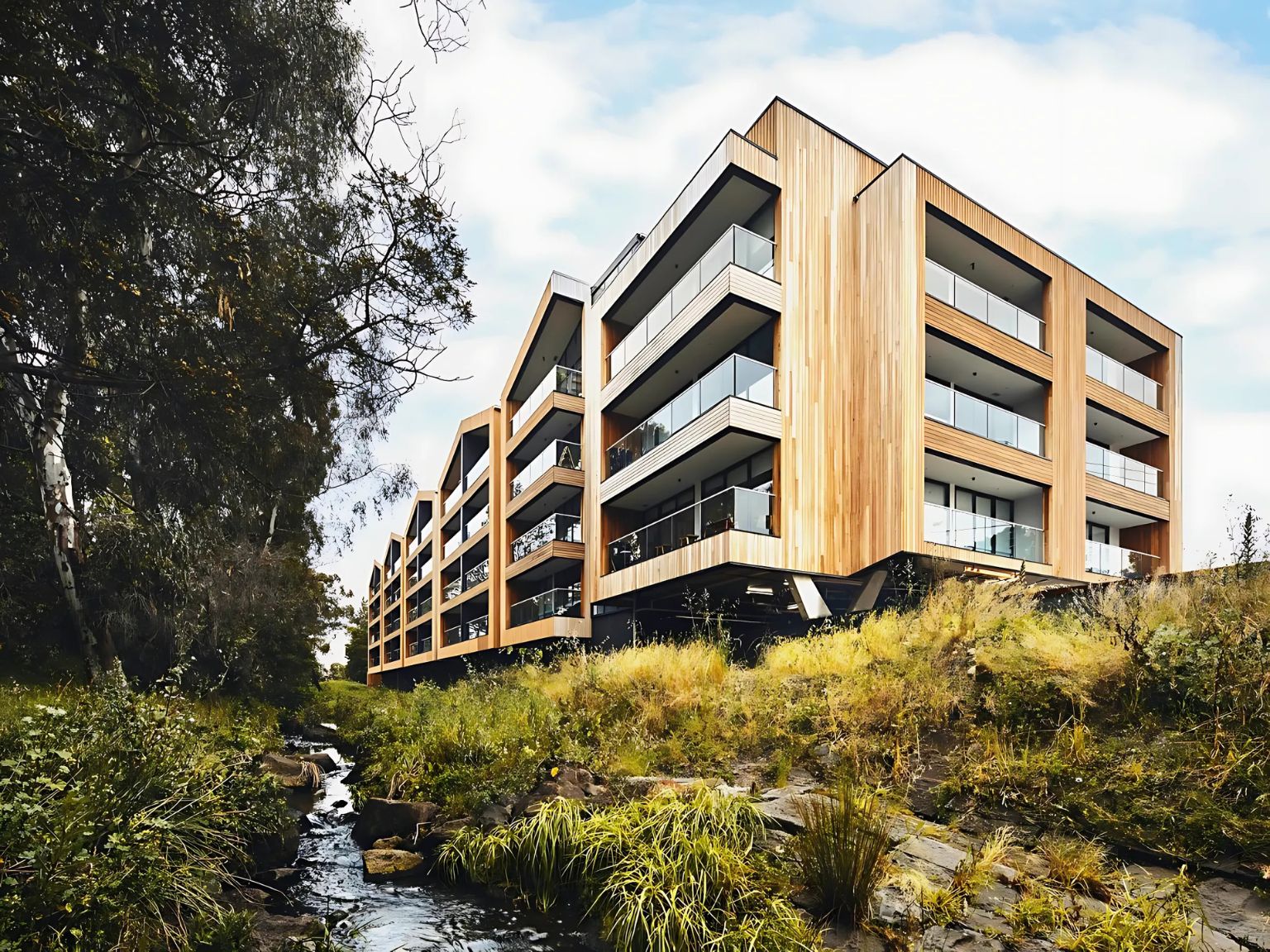
As 2025 starts and resolutions to improve are being made, there is no better time for architects to embrace the opportunities we have to address this critical moment in the fight against climate change. As UN director general Antonio Guterres noted in his message to the world at the end of 2024:
“This is climate breakdown in real time. We must exit this road to ruin,” he continued. “In 2025, countries must put the world on a safer path by dramatically slashing emissions and supporting the transition to a renewable future. It is essential—and it is possible.”
Spinifex is an opinion column. If you would like to contribute, contact us to ask for a detailed brief.
Incremental change is no longer enough. Architects hold immense power to advocate for and drive strong, positive action by rethinking how buildings are designed, upgraded and operated.
The International Energy Agency’s Breakthrough Agenda Report 2023 makes the role of the buildings clear:
Buildings account for a third of global emissions—26 per cent from operations and 7 per cent from construction. By 2030, all new buildings must be net zero to stay on track for net zero by 2050. Today, less than 5 per cent achieve this.
The message is urgent, and the opportunity clear: in addition to reducing embodied carbon, architects can lead teams and clients to take bold steps to cut operational carbon and embrace renewable energy solutions.
Demand: designing for low-energy living
Buildings demand energy for heating, cooling, lighting, water heating, appliances, and now EV charging. Architects have direct influence over the largest factors —heating, cooling, and lighting. Poorly designed buildings (both existing and new) continue to worsen the climate crisis and endanger lives in crises while placing unnecessary strain on the grid.
What architects can do and advocate for now:
- Go electric: design fossil fuel free electric buildings that are powered renewably, healthier to be in and ready for the future
- Design for resilience: create buildings that naturally stay comfortable, no matter the weather. Understand today’s climate and plan for future extremes
- Prioritize passive design: combine sensible window sizes, high performance glazing, seasonal solar protection, well insulated and well sealed envelopes, and appropriate thermal mass to minimise energy use
- Upgrade existing buildings: we need to retain our existing buildings with their embodied carbon and embodied culture, and they need to perform better. Focus on insulating, sealing gaps, and doing more with less to maximize efficiency
- Think holistically: balance passive strategies with whole-life carbon to ensure long-term sustainability
Well designed buildings don’t just reduce carbon — they provide great healthy places to live in while helping prevent grid failures during peak demand. The cheapest and most renewable energy is the energy we don’t need.
Supply: embrace renewables now
Australia’s energy future is in renewables, not fossil fuels. Coal is phasing out, and gas — once marketed as a “transition fuel”— is proving too costly and damaging in extraction and operation. Nuclear energy, with its high costs, high water needs, damaging extraction, dangerous waste and radiation and 10 to 20 year delays, is not an option.
Renewables are ready today. Australia, one of the sunniest and windiest countries on Earth, has immense potential for clean energy. Photovoltaics integrate beautifully with built environments, and wind energy leads at scale.
How architects can lead:
- Fabric first: Before all electric solutions, shape and detail the building envelope to respond positively to the climate.
- Design for distributed energy: Transition buildings from passive consumers to active participants in renewable systems.
- Integrate renewables: Consider solar panels as a design feature, not an afterthought.
- Support storage innovation: Collaborate with engineers to incorporate wide ranging battery systems, turning homes into resilient power hubs.
- Enable enjoyers: Design buildings so they can easily be used at times when renewable energy sources are abundant.
New approaches to seasonally and daily attuned energy use, like integrated EVs, hot water storage, and buildings as batteries, mean architects can create self-reliant, future-proof designs well suited to their clients and the wider community.
Conclusion: architects hold the key
The built environment is both the problem and the solution. Architects have a unique opportunity—and responsibility—to reimagine how we live, work, play and learn in a low-carbon future. By reducing demand and embracing renewable energy supply, we can create desirable, healthy, efficient, and sustainable spaces for everyone.
This is the moment to act. Design is not just for the present but for the legacy we want to leave as good ancestors.