


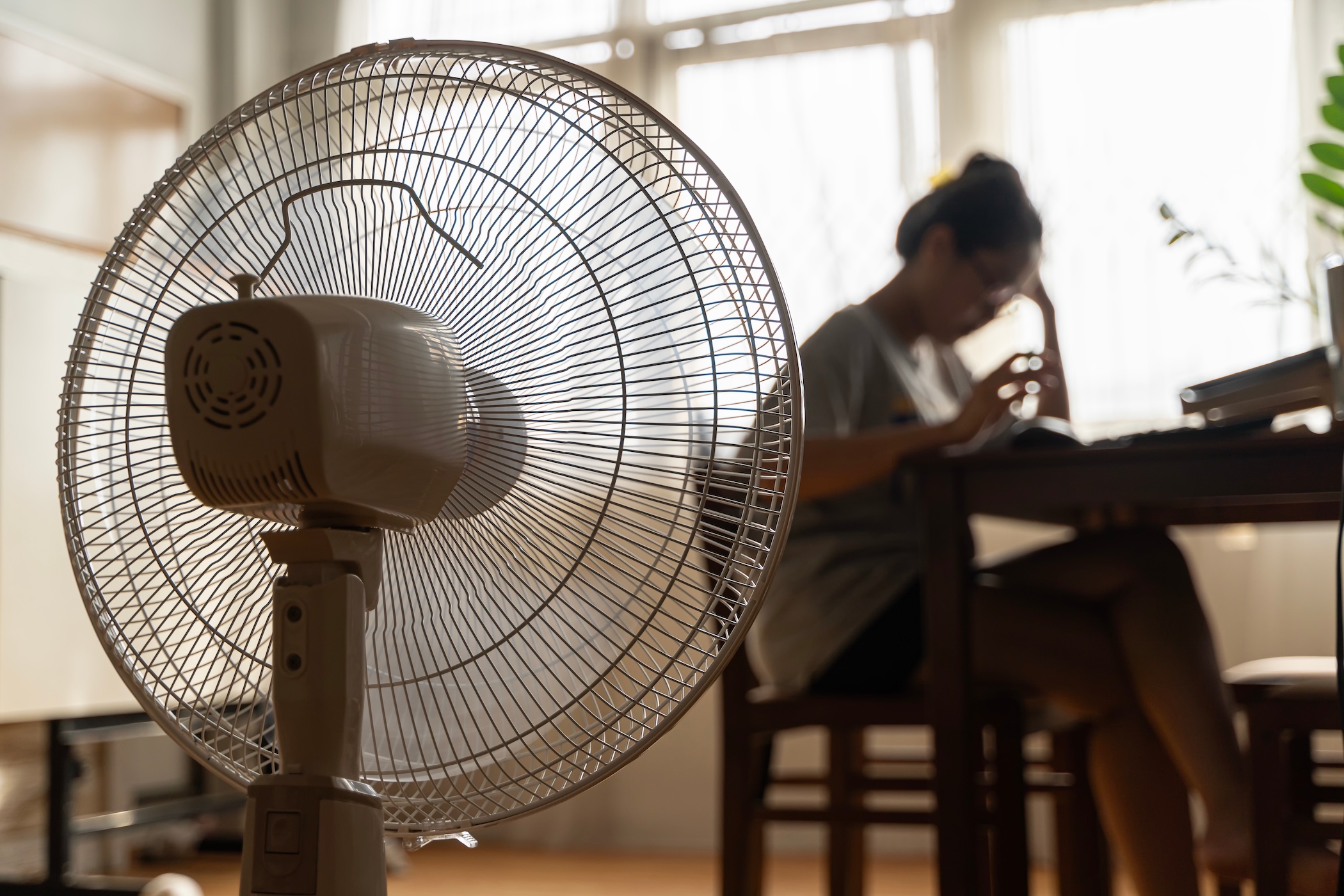
Energy hardship is often defined as an inability to heat one’s home. This definition presumes that excess cold is what prevents people from maintaining comfortable indoor temperature and drives energy demand.
Spinifex is an opinion column. If you would like to contribute, contact us to ask for a detailed brief.
A winter-time problem. A problem of excess cold, not excess heat.
It might be reasonable to assume than that with climate change, the rise in average global temperatures, energy hardship will be abated. Yet, many European countries that are well-adapted for winter-time cold and have experienced little energy hardship in previous decades are now having to cope with summer-time heatwaves and heat related energy hardship.
Australia is a vast continent with a range of climate zones. Most of the population resides in coastal regions with relatively mild climates. Despite the population imagination of Australia as a sunburnt country, cold housing is a significant problem, linked to health losses and energy hardship.
On the other hand, there is also concern that Australian housing is too hot leading to unhealthy conditions and high rates of energy consumption for cooling.
The lack of quality housing such as poor insulation that is a problem both for cooling and heating has led Australian housing to be likened to tents.
If Australian housing is not currently up to standard to deal with the current climate, what does that mean for the future of energy hardship in a changing climate?
Our research recently published in Nature Communication, Earth & Environment found that energy hardship can increase in response to more intense, frequent, and prolonged extreme heatwaves and cold snaps. And more extreme heat and cold average temperatures.
Colder areas are particularly vulnerable to abnormal hot temperatures, while warmer areas are more susceptible to extreme cold temperatures.
One degree higher in average temperatures was associated with a higher risk of not being able to pay utility bills on time by 0.81 per cent in cold cares.
In warmer areas, one degree lower in average minimum temperatures was associated with an increased risk of utility payment arrears by 0.76 per cent.
Spending more than 10 per cent of household income on energy has a similar association with temperature extremes.
Looking forward to potential climate scenarios, our model estimates suggest that under the Intergovernmental Panel on Climate Change’s moderate climate emissions pathway (RCP 4.5) energy hardship will increase by between 0.1 per cent – 2.6 per cent on average (assuming energy costs, housing stock quality, and incomes remain constant).
Just as with other climate change impacts, we are not all equally at risk of experiencing energy hardship.
Ensuring that robust minimum energy efficiency standards are in place is critical for addressing energy hardship.
Our analysis found that older individuals, lone-person or single-parent households and rental tenants were more susceptible to temperature related energy hardship. These groups tend to have more constrained incomes which might make them more vulnerable. While renters also often reside in poorer quality housing which is another risk factor for energy hardship.
Factors that were found to offset the risk of energy hardship were quality housing and renewable energy installations.
Ensuring that robust minimum energy efficiency standards are in place is critical for addressing energy hardship.
Two weeks ago, leader of the opposition Peter Dutton announced the new housing policy that the coalition intends to take to the next federal election, five billion dollars for infrastructure to support greenfield developments and a 10 year freeze to the National Construction Code (NCC).
The NCC sets minimum standards for Australian housing for liveability, safety, and energy efficacy. Recent changes in the NCC are designed to increase energy efficiency of housing, which are important both as a means for climate mitigation and adaptation.
Dutton claimed that these recent amendments to the NCC around energy efficiency would add $60,000 to the price of a new home, though construction industry representatives have suggested these figures are dramatically inflated.
Energy efficiency gains from the updated NCC are quite substantial, with 7 star energy efficient homes, the new minimum standard, requiring 20-25 per cent less energy than 6 star homes.
Australians in the lowest 20 per cent of the income distribution spend on average 9.0 per cent of their household income on energy, compared 2.3 per cent of the highest 20 per cent of income earners. 1 star higher in energy efficiency of homes would free up a sizable portion of their income for other necessities and ease cost of living burdens.
A ten-year freeze to the NCC would put Australian housing behind when it comes to adapting to the reality of climate change. And we cannot expect rising temperatures solve the cost of living pressure of energy hardship.