


At end of year you want to rule a line neatly under the 12 months just gone, notch up the wins and clean up the to-do list so you can start with a clean slate in the new year.
In order to do so it’s sometimes tempting to put them on the backburner and see how they simmer, until they just fade away.
But when government does that at massive cost to the taxpayer, and the thing isn’t old or aged or redundant, it’s an outrage.
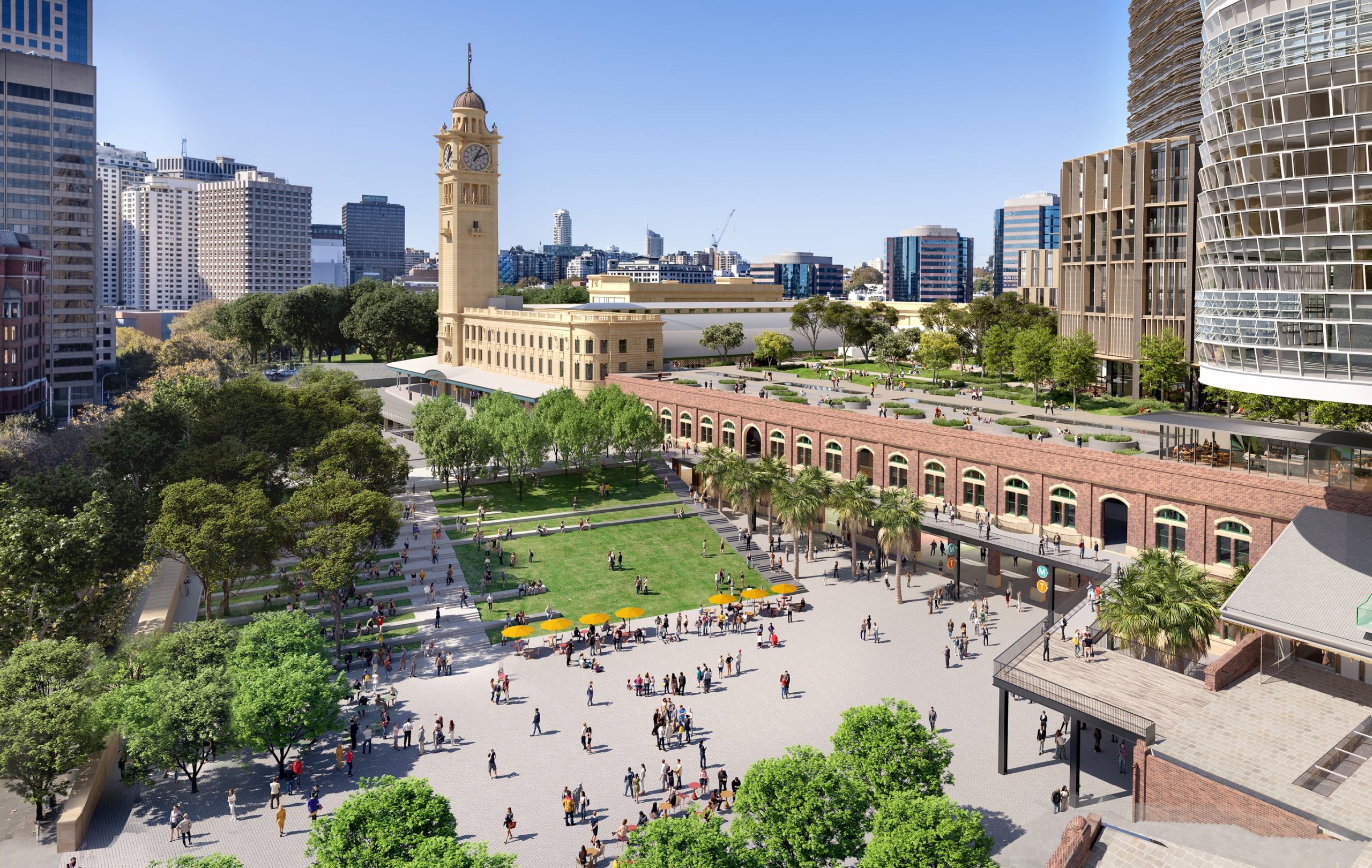
Like the NSW government’s cancellation of the Central Station precinct’s so called “over station development” for 24 hectares of land around Sydney’s leading station and over its huge railway terminal.
This is no innocuous change of mind. It’s the cancellation of a mammoth $130 million investment so far. Down the drain. Countless plans, studies, consultations, feedback, drawings, reviews, and government staff hours wasted.
The precinct had inspired an enormous number of people with its vision to be a sophisticated, techy and innovation precinct that would galvanise the talent around it in universities, hospitals and creative industries.
The vision was to take the dowdy end of Sydney – and its rotten smelly railway tunnel underbelly – and re-envision it to make it rise and shine.
We saw it as a kind of counterpoint to the northern tip of Sydney’s CBD with its sparkling Opera House, bewitching harbour and mass of aimless tourists looking for entertainment. It would be the Emerald City’s serious anchor twin, balancing the flighty northern wing with depth, weight and the hard work of innovation.
The universities were thrilled, University of Technology Sydney and University of Sydney, Royal Prince Alfred Hospital as well. Not to mention the would be young and hungry entrepreneurs hoping to riff off the vibe, all next to Sydney’s biggest railways station.
So too Australia’s tech star Atlassian with its globally outstanding timber hybrid workplace of the future and the small cohort of developer partners and would be neighbours that set up alongside.
Now Atlassian might end up looking like a shag on a rock. Its people called the government’s people. But no dice. The project estimated at $6 billion was shelved. The former Coalition government pollies who originated the idea were not pleased. Rob Stokes former planning minister said the two sides of Sydney’s southern east and west would now be forever split by the unwelcoming cleavage of the railway lines. Which in so many other major cities are things of joy and excitement.
Back a few years ago we caught the train to Melbourne overnight and on the way back as we boarded we were stunned to see the platform at Southern Cross station jammed with people in their evening finery, on their way to some gala event or other. Not something easily imagined in Sydney’s Central Station, surrounded as it is by those unmentionable streets that frighten small children.
Atlassian was not the only one to get neither sense nor shame from the state government operatives at the other end of the phone line,
Others ditto.
Fair enough that the big development building project would not go ahead right now – even though the promise was housing of up to 1000 apartments, 30 per cent affordable, public open space, retail and employment lands for Sydney’s creative innovators to grow.
But what’s emerged in recent days is that it looks like even the rezoning and masterplan part of the project will fail to be approved. Even if the government is no longer understandably interested in ploughing more big funds into the development why not let others do it?
Why not approve the plans and let the course of nature roll out delivery over the next 20 years if and when it’s appropriate. At least there would be a plan to follow. (Novel for Sydney, we know).
But nope. No dice, according to our sources. Even that looks like being shelved.
Meanwhile the universities around the much vaunted Tech Central precinct and their Aussie bred tech geniuses at Atlassian are left to wonder if they’re going to feel lonely in their green tower.
Thank goodness Mike Cannon-Brookes told everyone they can work at home. No matter how bored, how insulated from the real world they get; even if they forget how to use their vocal cords or how to make small talk in the elevator; he may well now insist they keep working from home.
You do have to wonder – over and over – who exactly is pulling the strings here.
From what seems apparent it was an article in one of Murdoch’s newspapers that broke the news on the cancellation of the project in early October and may have embarrassed the government into also shelving the rezoning and masterplanning for the site.
What makes this so disappointing is the huge waste of public funds at a time of extreme cost of living challenges for many – we’re now seeing ads on television to help people struggling to feed themselves. And of course a time when housing is in critical undersupply.
But while not at least go ahead with the masterplan that gone through all the hoops, barriers and costs?
That’s a mystery, but we suspect the pollies are the babes in the woods here, pushed and pulled by the loudest lobby voices – and their media advisers.
Sadly media advisers now seem to run the planet. They’ve always been masters of mass manipulation but now their pincers are wound ever tighter around the mechanics of both business and politics. They may be concerned about the optics… to think big picture at a time of bread and potatoes, may not be the right “look:, as someone put it this week.
We can only speculate. They spend their energy on approved tightly worded media releases and have slammed the hood tightly shut on any other insight.
But we need to remember that it’s the cracks that let the light in. As Leonard Cohen said.
Back in the real world
Meanwhile back in the world of mortals doing business on the ground we hear next year is looking up – in general and ESG in particular.
Stephen Moir and his colleagues at executive search company Moir Group can see bright skies pushing through the murky year just gone.
He’s positive on both the general economy and sustainability. With his colleague Andrew Pownall the company recently hosted a briefing in Melbourne by ANZ senior economist Catherine Birch who painted a suitably uplifting picture.
If you’re worried about Trump and tariffs, they are unlikely to threaten Australia, she said, because we can find other markets than the US.
More important to us is how China is performing.
And while unemployment is slow, and expected to rise slowly, good staff is still hard to find with 80 per cent reporting difficulty in finding suitably qualified people.
On interest rates, Australia’s did not increase as much as those of other countries and are therefore slower to come down.
Moir told The Fifth Estate that best performers in this year’s patchy economy, have been “anything around energy, health and agriculture” along with technology related to these areas.
Roles that were in demand but harder to fill have been mid level roles reporting to heads of ESG reporting or analysis. Not the “C” suite roles as there’s been less demand for those.
But Moir expected better performance next year. “We’re quite positive about next year. There’s been quite a lot of momentum in the last six months”.
Coles and high-tech logistics
Data centres and high tech logistics have been big themes for the last half of the year in the industry.
Liam Murray of Build-Apps says this kind of work has been keeping him busy with the likes of Coles rolling out huge “last mile” distribution or last mile facilities in Sydney and Brisbane.
“It’s a highly technical industry; it’s changed from people with forklifts. It’s now robots and backup data centres.”
Just two to three years ago the buildings were simple but now the slab tolerances need be “within a millimetre” so that the robots can navigate them correctly. And their power needs are the in the range of 14 to 15 MW, Murray says.
The facilities have become critical infrastructure for such corporates. And energy to enable a continued uninterrupted flow of data is therefore critical with thousands of drivers, “all interconnected”. If the power supply fails, even fractionally, it can cause a mess.
One solution are so called Drups or diesel rotatary UPS (uninterrupted power supply).
These are a kind of heavy metal “flywheels” that in the event of a mains power failure, use the self propelling momentum of their weight to keep the system going until the diesel generators kick in. So, kinetic energy. It might be only a minute or two but it’s a critical minute or two.
Liam says the Drups Coles has installed are the first outside hospitals or data centres.
But an ongoing problem in Queensland is the continued refusal of Energex, which runs the grid in that state, to allow solar power connection. In Sydney it hasn’t been a problem.
And so we go into the new year picking up where we left off … where the grid and “too much solar” will be back on the agenda.
Best wishes to all our readers.
Have a Merry Christmas and a great new year.
See you back third week of January.
The Fifth Estate team