


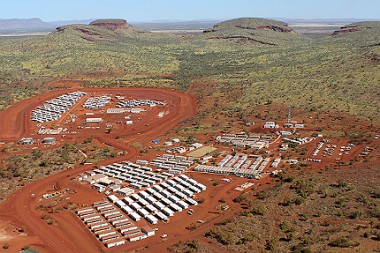
26 March 2014 — Murdoch University has released a study finding it is in the financial interests of villages located on mine sites to install renewable energy generation.
While employing behaviour change measures and energy efficiency could reduce a village’s carbon footprint by six per cent, the switch to renewables could cut the high carbon footprint of a mining village dramatically and pay for itself, the study found.
Lead researcher and PhD candidate David Goodfield conducted a detailed examination of a mining camp in Western Australia’s mid west.
“The camp I examined is powered by the generator at the mine itself, with an eight kilometre spur line running the electricity between the two points,” Mr Goodfield said.
“That spur line cost approximately $2 million to construct. For the same cost, they could have installed a renewable energy system [that] could have paid for itself in as little as three-and-a-half years.
“What company could argue with attractive payback periods and return on investment whilst reducing their impact on the environment?”
Additional benefits included being able to sell excess energy to a nearby town’s power supply, helping to reduce costs further and reduce the carbon intensity of the town.
“At the end of the village’s life, solar panels and wind turbines can simply be packed up for use at the next location,” Mr Goodfield said.
“Or a company could choose to leave a lasting legacy in the town by leaving the infrastructure there.”
The overall carbon footprint of a mine site village varied depending on lifespan, but the study calculated that a camp with a five-year life would create 2600 tonnes of carbon dioxide equivalent.
“That includes the carbon emissions from constructing the camp and buildings, the electricity to run the camp, deliver goods, pump water, deal with waste and so on,” Mr Goodfield said.
“It equates to at least 16 tonnes per camp resident, which is on top of the carbon they are responsible for while at home.
“If you extrapolate that across the nation, the carbon saving is worth thinking about considering the number of fly-in fly-out workers there are to remote camps such as this one.”
The study was funded by the Australian Research Council’s Linkage program.