


MARKET PULSE: When Sumitomo Forestry paid $115 million in late September to buy a majority stake in home builder Metricon, it signalled that someone with foresight could see the longer term outlook for this residential player in the Australian domestic home builder market.
The Japanese company also bought Henley Properties and Scott Park Group.
That’s a good thing because there’s a lot of carnage elsewhere in the market – companies that didn’t make it through the current construction crisis in one piece.
According to various media reports the litany of failures is immense, from $400 million Stevens Construction, to New South Wales’ Quasar Construction, which entered voluntary administration in late September with 10 projects underway including the Carmel Village Shopping Centre and St Patrick’s College at Sutherland. One report said the total number of failures in the industry was nearing 3000.
Skills are scarce
According to Austin Blackburne of recruitment agency Hays, the fallout speaks to the thin margins and the ready labour force that the residential sector relies on, with profits ranging around 5 per cent and down to 3 per cent.
The consequence is that it’s a fragile system with one thing failing – such as a shortage of labour and rising prices for it – likely to spark a downward spiral that’s hard to correct.
Blackburne’s patch is the labour market and right now he’s searching for electricians, lots of them.
According to a recent Construction Industry Report his company released, Australia needs another 32,000 electricians to meet the needs of the renewable energy revolution.
Demand is everywhere, as infrastructure in cities or regional areas lure available trades with much higher wages than the residential sector can offer.
While renewable energy development is still in its early growth phase, Blackburne, tips it will be the next infrastructure boom.
It’s a tough ask to compete with these well funded longer lasting jobs. Pays for more highly skilled trades such as electricians can range from $160,0000 to $200,000 in metropolitan jobs, but they can shoot to well above $200,000, thanks to living away from home compensation and overtime structures.
Blackburne says that for entry level sparkies working 70 hours a week it’s not hard for them to rack up $113,000 a year on enterprise bargaining agreement starting at $63.22 an hour in Victoria.
At our Let’s Hack Housing event last week Brian Seidler, executive director of the Master Builders Association NSW, noted that foreign workers left Australia during Covid and never returned. What wasn’t made clear at the time was that a lot of them were construction tradespeople from Ireland and the UK. When Covid ended we didn’t manage to make it attractive enough for them to return. (Maybe we should have been nicer to them.)
So what’s to be done?
When Blackburne needs to fill requests for electricians and other trades for solar farms, transmission lines and renewable energy infrastructure, he’s had to resort to some creative methods.
In a conversation on Wednesday he said the search these days is “all over the world”, using “every trick in the book”.
This ranges from the assistance of a UK partner known as Global Link to tap expats who might want to come home to Australia after working on similar projects overseas, to researching which countries had recently completed grid upgrades and were likely to have qualified staff who might be attracted to an overseas gig.
Places like Malaysia and Singapore have yielded some finds, so too India, he says.
Meanwhile Australian builders and contractors are busy reskilling their own teams wherever they can for what he terms the “new infrastructure boom.”
New tunnelling project in South Australia
But it’s not easy. In South Australia for instance, there’s a new tunnelling project just announced, the Torrens to Darlington project or T2D, worth around $15 billion to cover a 10.5 kilometre stretch. It’s urgently seeking people to deliver the project expected to employ around 5500 over its life.
“It will suck up a lot of resources,” Blackburne says.
And the skills needed for this work are probably the most difficult to find, he adds.
In Melbourne the Metro tunnel is another big attractor for trades and it’s got another year to run. Then there’s the 6.5km North East Link tunnels from Watsonia to Bulleen.
Electrical trades are the toughest jobs to fill because they get pulled into every industry. It could be mechanical engineering, industrial, defence, infrastructure or commercial buildings.
“We’re seeing a lot of new and international firms dumping a lot of money into that space, into a lot of battery and storage, wind and solar all over the country,” Blackburne says.
“We cover all the sectors where the pain has been and there are still areas of hot activity – obviously infrastructure is still booming”.
In the corporate world it’s a bit different
Richard Evans chief executive of Talent Nation paints a steadier picture in the corporate world. His company is soon to release its remuneration report for sustainability jobs, which will be keenly sought by job seekers and employers alike trying to make sense of how the slowing economy has affected their patch.
At a broader level, he says, there’s a lot of interest in jobs at the compliance level as mandatory disclosure looms in the new year.
Larger entities have most of their people and systems in place, he says. They’re not expecting the authorities to bring down the sledgehammer the first time ‘round should their reporting not meet ideal standards, he says.
“There is the element of the unknown and it’s generating a bit of concern that we don’t know what the first iteration will look like,” he says.
The expectation is that the rollout will be a bit similar to the introduction of the Modern Slavery Act where the first round of reporting was really around “demonstrating intent and putting things in place”
If it goes well, that’s something to build on, he says.
On the Taskforce on Nature-related Financial Disclosures 23 companies have already chosen to voluntarily engage with the program.
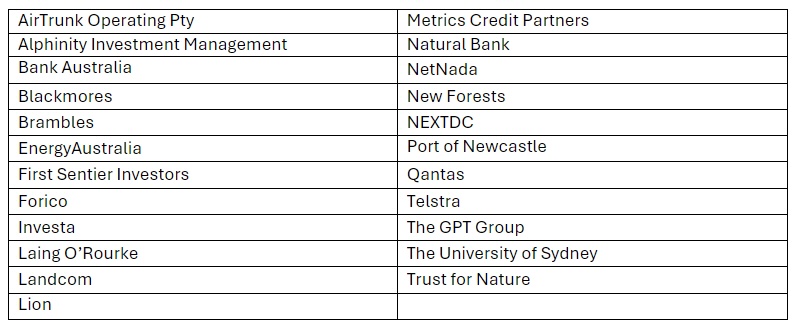
Among them, property companies, GPT, Investa and Landcom.
Second tier companies are struggling a bit. They’ve relied on consultants till now and trying to shore up the growing plethora of what needs to be done through a single staff member. But that doesn’t always work.
They might have hired someone with the technical skills but not the experience to deal with senior executives or boards.
“They’re trying to get all their needs met in one person or they don’t hire the right people. So they’re not setting these people up for success.”
The result is some turnover in staff where things don’t work out or burnout, thanks to the volume of work sometimes expected to be done.
The property world however is far better placed and more stable, in the sustainability field at least, having been ahead of the game by several years.
The big four accounting firms continue to suffer from the perennial search for the best talent and poaching by their clients.
Jobs news
New Australian Energy Infrastructure Commissioner
The federal government has appointed Tony Mahar as the new Australian Energy Infrastructure Commissioner for a three year term.
Mahar will step down from his role as chief executive of the National Farmers Federation, where he has worked for eight years.
In a media statement, the Department of Climate Change, Energy, the Environment and Water (DCCEEW) said Mahar will bring a strong understanding of the priorities and needs of Australia’s regions to the role including “dispute resolution and engagement with local communities, including First Nations communities, about proposed or operating energy projects”.
Yerrabingin moves in with Tzannes
Indigenous owned design and landscape architecture studio Yerrabingin is relocating to architecture and urban design practice Tzannes in Sydney. While the two firms will remain servicing their own clients, the co-location setup will help strengthen collaboration between the two and more widely integrate First Nations knowledge into the built environment.