


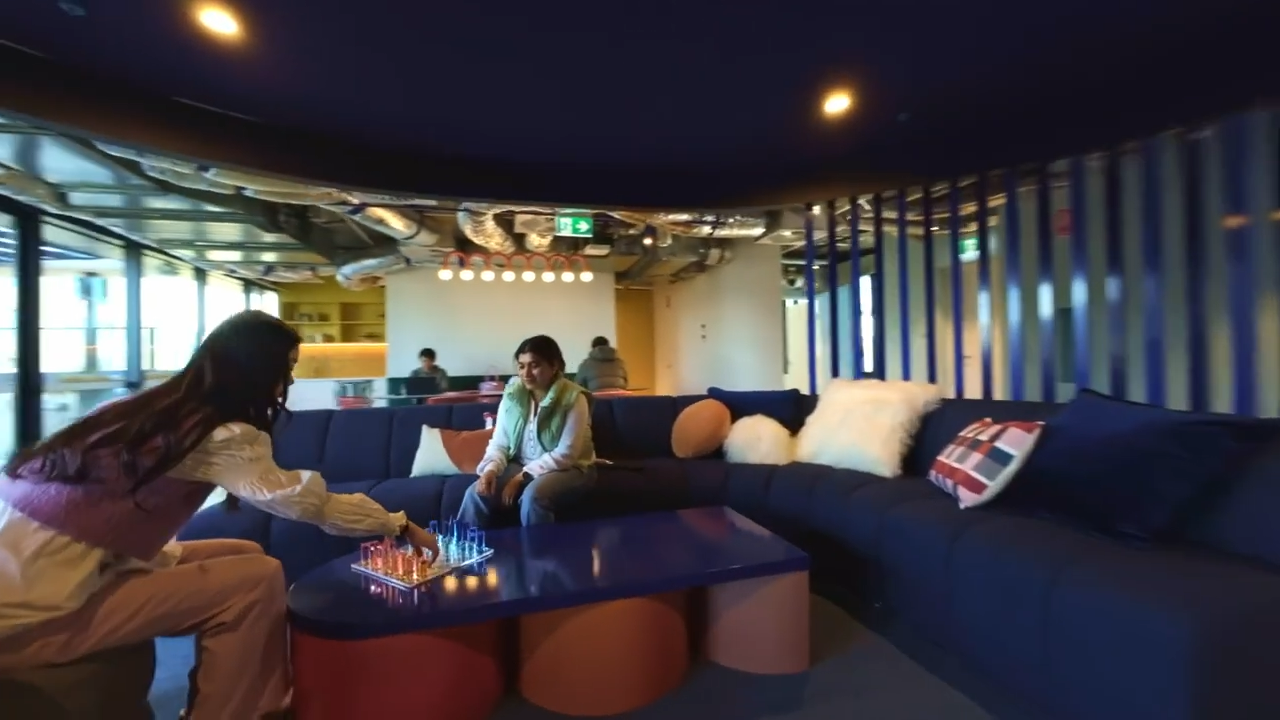
MARKET PULSE AND JOBS NEWS: Steve Slater of Seber Recruitment Group will be in his element at the Chartered Institution of Building Services Engineers breakfast on Wednesday morning. He’ll be addressing an audience that is precisely in his patch, engineers who, he says, are in hot demand, especially if they are in the intermediate range of the profession, with two to five years’ experience.
While the infrastructure boom is now slowing down, that’s not the case for other sectors where demand is hopping, he says.

The residential sector in particular is strong but so too is demand “across the board”. Commercial, mixed use, hospitals, aged care, schools and data centres are all “very buzzy” he says.
Problem is everyone is looking for the same people. Last week Austin Blackburne of recruitment agency Hays told The Fifth Estate that he’s had to resort to searching overseas for the talented electricians he needs for the renewable energy rollout he’s focused on at present.
He’s been forced to use “every trick in the book” to meet demand from clients, he said, and this includes researching which countries have recently done major grid upgrades or installed large renewable power installations. Malaysia and Singapore have been the latest to yield a few gems but it’s tough.
Slater who set up the company about a year ago after 10 years in a partnership known as Slater and Williams, says activity is strongest in Sydney and while Melbourne has eased for now, he expects it to follow Sydney’s activity within about six months, as it’s typically done in the past.
Brisbane with its surge of population heading north is also keeping him busy but most of the industry is awaiting the state government to kick start its Olympics work program. Slater said it needs to do so within a year.
Slater also mentioned that the housing crisis has started to have an impact on clients. He recently had to move one client staff member from Sydney to Brisbane because he wanted to buy a house and Sydney was out of the question.
See our Let’s Hack Housing event to find out what our experts said at our recent event.
Slater said intermediate engineers were earning between $80,000 to $120,000 while senior experienced professionals fetched $140,00 to $170,000. Associate level staff who could bring in new business were being paid $200,000 to $250,000 – all on a total package basis.

New job appointment – Dexus
Parag Shinde has joined Dexus as senior manager developments, transaction and growth markets, sustainability along with new direct report David Butler who came from JLL.
Shinde was previously national manager ESG with Australian Unity Wealth and before that with NSW Property.
Jobs on offer – Scape
Australia’s biggest provider of student housing, Scape, is in the market for an ESG manager.
Chris Nunn, who joined the company as general manager environment social and governance nearly two years now, is searching for a professional with anywhere between 2 to 10 years’ experience. It’s to help implement the strategy he’s been working on and to meet reporting requirements from both mandatory disclosure legislation and stakeholders, he says. But it’s not easy. “At this point there’s still a scramble for talent”, he says.
Scape this week announced it was the first in the sector to achieve a 6 Star Green Star Design and As Built (v1.3) rating by the Green Building Council of Australia (GBCA).

“An efficient, all-electric 14-storey, 10,500 square-metre building, that runs on 100 per cent renewable electricity, Scape Leicester in Carlton, Victoria,” a media statement said in announcing the rating for the building set to accommodate 300 residents at full capacity.
The company‘s chief executive Anouk Darling said the rating aligned with the company’s “overarching purpose to create better living experiences for people and the planet and this latest sustainability stand-out adds to our growing ESG credentials as we set our sights firmly on redefining the standard for sustainable structures and crafting future-ready developments.”
Its ESG targets are:
- Zero Carbon by 2030 – defined as Scope 1 & 2 + operational Scope 3 emissions (waste & water) to be net zero over the course of each calendar year.
- 20 per cent improvement in building energy efficiency by 2030 (v2023 baseline)
- Convert buildings to all electric at end of life of existing fossil fuel equipment by 2040
- Explore feasibility of Passive House Certification in new developments
- All new developments to achieve a 5 Star Green Star rating
- Rate all operational assets using Green Star Performance by 2026
The company has nearly 19,000 beds across 38 buildings with 14 in Sydney, 15 in Melbourne, six in Brisbane, three in Adelaide plus an extra 10 in the development pipeline.
Beds (current): 18,889 beds
Mary Casey on regenerative and the need for Indigenous led design and input at the start of projects

Mary Casey, principal with Introba, is another employer on the hunt for new staff.
She’s been with the company for three years after a social infrastructure role with HKA and founding director with Living Future Institute and an architect by training. These days, she spends time on larger projects doing performance and energy modelling right at the start of projects in order to avoid problems down the line.
But in recent times the focus has shifted increasingly to place.
“You want the solutions to arise from the unique location” of the place, she told The Fifth Estate in a recent interview. And to do that successfully it’s incumbent to talk to First Nations People, she says.
“A lot of projects now have requirements to get First Nations advice and consultation in the early phase.”
Doing this means in relation to place means it’s more likely the sustainability strategy is effective. Paying attention to the prevailing winds, the way the sun moves across the site, the way water sheds, all these are part of the narratives that First Nations People regard as their sacred responsibility, she says.
You might ask, “Is this place under stress? Has water been blocked and how might it be released? Is the health of the river next door showing it’s really struggling?
Casey reminds that the climate patterns are changing and there’s a need to pay attention to what those shifts mean; to be “more intentional” as stewards “rather than take what we want to take”.
The move to value water that has been notoriously underpriced worries her; she’s “encouraged and frightened by discussion in finance circles that if we start to value nature as resources and value water that ensures the health of larger eco systems that it’s not just about the price of water.”
Casey is currently working on the final stages of a Green Star submission for a sports centre and another for a Communities rating in a mixed use precinct. She’s also working on an ESG strategy for an “entire collaboration” of companies in Sidara in the Middle East.
The company has about 150 in total staff numbers and is currently looking for junior members to bolster the team.
But they need to be “really passionate” about sustainable living systems, Casey says.