


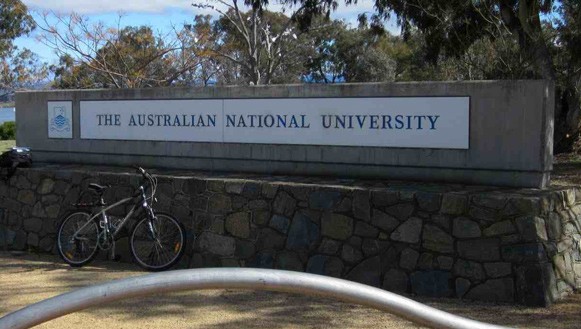
Australian National University is divesting from a range of companies on environment and social grounds. Local Government Super, HESTA, UniSuper and University of Sydney have also recently moved out of coal.
The mining industry says it doesn’t care. No wait, it does care.
This movement, only three years old, led by 350.org and Market Forces, was initially dismissed by coal and its supporters as an insignificant micro-movement that would soon go away. There would never be a significant challenge to the supremacy of coal, the fossil fuel coalition said. Renewables would not be able to provide enough power to run an economy.
But this week saw an outpouring of near hysteria on the financial press, with ample and fulsome coverage of why the movement from coal would cost investors some extra superannuation earnings; how ANU had not consulted the companies it would no longer invest in, and a stream of minutely documented awards won by the spurned companies that include including Santos, Newcrest Mining and Iluka Resources Independence Group, Sandfire Resources, Oil Search and Sirius.
The awards include an environmental award to Santos bestowed by the Queensland premier (the current premier Campbell Newman, not exactly known for his support for sustainability); a raft of community inclusion awards (which may or may have anything to do with environmental outcomes) and generous corporate governance awards, which generally tend to award companies for doing things thing they should be generally expected to do anyway.
Julian Poulter, the executive director of the Asset Owners Disclosure Project, said the ANU’s gesture was largely symbolic.
“We are seeing people starting to hedge their portfolios against potential stranded assets, including divesting of the very worst,” he told The Australian.
LGS chief executive Peter Lambert said his fund’s move was largely an economic decision, driven by its view that governments will soon need to start taking action and this will have a detrimental effect on heavy carbon-emitting companies.
The fund will strip $15 million of coal investment from its $8 billion portfolio.
Cbus and AustralianSuper have said that they don’t believe divestment is an effective strategy, instead preferring to engage with companies to ensure they have appropriate responses to any changes in government policy.
But, though small, the reaction has been blistering.
The Australian Financial Review carried attacks on the ANU move and generous pages devoted to the Minerals Council attack on divestment in general.
The blacklisted companies were “not consulted” the AFR said, and are seeking talks with ANU.
South Australian Premier Jay Weatherill was cited slamming ANU and praising the slighted companies saying they had been “excellent corporate citizens”.
South Australia recently said it would commit to 50 per cent renewables.
- See our article South Australia commits to 50 per cent renewables
Labor’s shadow energy and resources spokesman Gary Gray also criticised the divestment decisions.
“Social responsibility is about investing funds wisely and with a view to the long term,” he said, without elaborating on what was a reasonable timeframe to avoid irreversible global warming.
In August, Whitehaven Coal head Paul Flynn signalled the war was on. The divestment campaign, he said was, “green imperialism at its worst”.
Two weeks ago Anglo American chief executive Mark Cutifani called on the coal industry to mount a counter-attack against the global divestment effort. He said the divestment movement was “short-sighted” and “unfortunately very vocal”.
In a lengthy opinion piece in the AFR on Monday the Minerals Council chief executive Brendan Pearson cited a new report commissioned by the council that said superannuation investors would lose nearly $60,000 on average by divesting from coal. However, he said nothing about the costs of continuing to burn coal and heat the earth.
In an emotional and charged opinion piece Pearson turns to the latest tactic of the fossil fuel industry, calling on the “social sustainability” agenda of providing energy for the poor in developing countries. He cites the cost of renewables and their still low overall percentage of total energy but provides no cogent argument why this industry, barely 10 years old, should be abandoned in favour of coal.
For example, he says, “1.3 billion people in the world’s poorest nations are still waiting in the cold and the dark. And if coal is ruled out of the energy picture, their wait for energy access will be long and miserable.
“But can’t wind and solar power provide energy access to the world’s poorest? No.”
His “evidence” for this thinking is to point to the status quo, not the trajectory that is possible with renewables.
“Take the last decade as a guide. In the 10 years to 2012, the world added about 2500 million metric tonnes of oil equivalent to its total energy consumption. Of that increase just 14 per cent came from non-carbon sources including hydro.”
New investment might bring the price down, he concedes, but “not yet or any time soon”.
He cites Bill Gates: “poor nations represent a small part of the emissions problem … they desperately need cheap energy to generate economic growth to lift millions out of poverty … and they can’t afford today’s expensive clean energy and we can’t expect them to wait”. But last we looked Bill Gates is a technology billionaire not an expert on climate or energy.
Pearson uses research by actuarial firm, Rice Warner, to show that “so-called ethical funds constitute less than 1 per cent of total funds under management” and says they cost more and deliver less. Which begs the question why the coal industry is therefore so worried.
He cites indoor air pollution from poor ventilation and energy sources in developing countries as a major killer, but fails to mention the outdoor air pollution suffered in countries such as China from coal fired power stations that is also a major killer.
But regardless of the lack of evidence in Pearson’s argument, be prepared for the one thing the mining industry has demonstrated it has in spades – its ability to run extravagant media campaigns, full of emotional ammunition, devoid of evidence, but packed with smartest advertising punch in the land.
All power to the divestment movement!