


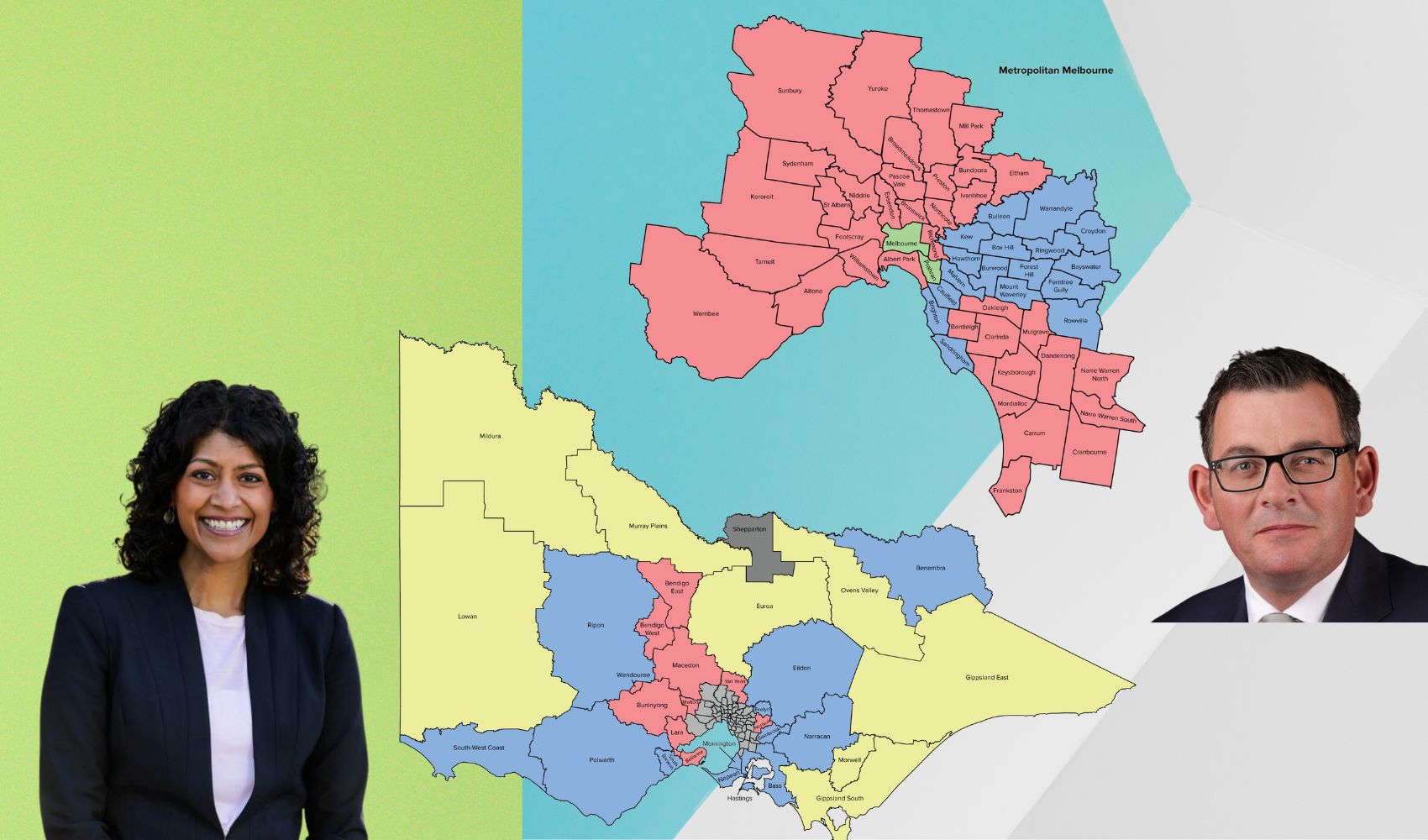
POLITICS – THE LONG READ: When it comes to “headline” environmental issues around the quest for net-zero, Victorians of a greenish hue could be excused, with an election looming, for thinking it’s all beer and skittles solar panels and wind farms.
The two most recent elections at state and federal level have forced erstwhile climate sceptics from the opposition LNP to address emissions targets, energy from renewables and the other headline questions around carbon neutrality.
“Being ambitious about the environment is being ambitious about the state’s future. We are not the party of 2018,” insisted Victorian opposition environment and climate change spokesperson James Newbury, a reference to the LNP’s election shellacking of that year after it opposed the Andrews state government’s net-zero target.
The impact of climate change – aggravating the extreme droughts, floods and fires of recent years – has registered with Victorians, and the LNP wants to show it finally gets it.
The result is what Environment Victoria (EV) calls “a race to the top” on these headline environmental issues, with parties and independents alike burnishing their net-zero credentials with a public that demands it of them.
“[It’s a] very different prospect to 2018. We’re hoping to see [LNP, Greens and independents] pushing Labor on renewables”, EV’s climate campaign manager, Sarah Rogan, said.
Having led the way on net-zero, and with parties across the political spectrum scrambling to compete, Victoria considers itself as a national benchmark on the environment. However, when it comes to oft-ignored environmental elements such as planning, development, gas and even old-growth logging, it turns out Victoria is something of a mixed bag: a lot that’s good, but more than a bit that’s bad.
The Fifth Estate breaks it down for you:
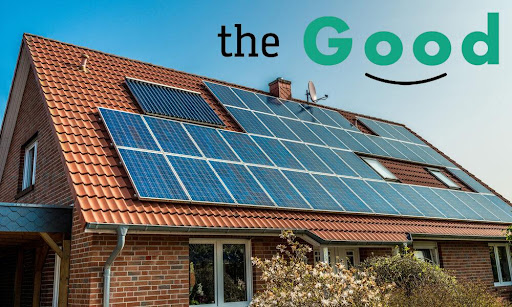
It does no harm to perceptions of progress on net-zero when visual proof pops up all over Victoria in the form of subsidised rooftop solar photovoltaic systems such as the one above.
From 2001 to 2018, about 384,000 rooftop systems were installed – albeit coming off a high reliance on fossil fuels – meaning that the state is decarbonisng faster than the rest of Australia.
Renewables now account for 34 per cent of the state’s energy generation. Victoria has legislated a renewable energy target of 50 per cent by 2030 and to that end, the state government set up 10,000 batteries in Victorian homes and larger-scale battery storage projects in Geelong and Yallourn and aims to achieve enough renewable energy storage capacity to power half Victoria’s households by 2035.
Victoria plans to halve carbon emissions by 2030 and reach net-zero by 2050. Moves in aid of that goal have come from both government and private industry and a recent, market-driven example was in late September when AGL announced it would close the coal-fired Loy Yang A power station a decade early.
As the table below shows, Victoria easily exceeded 2020 emission reduction targets and appears set to achieve net-zero ahead of its 2050 schedule:

The icing on Victoria’s emissions reduction cake comes from what is now near-unanimous support among the political class, including the LNP latecomers and more reliably green-tinged crossbenchers.
Keen to seize some kind of initiative on this environment thing, Newbury and his LNP leader Matthew Guy pledged to lock in Victorian Labor’s emissions target (50 per cent reduction by 2030) via legislation, much like the federal Climate Change Bill mandated a 43 per cent reduction nationwide. Theatrics perhaps, but they were backed up by the promise of $4.8 billion – about three times Labor’s current budget – for a million solar and battery installations by 2035.
In another significant step in Victoria’s weaning itself off fossil fuels, the coalition plan also doubles the rebates available for rental properties as an incentive for landlords currently dragging the chain. Perhaps most importantly, it throws down the gauntlet for Labor to match these LNP Johnny-come-latelys.
You can see what EV meant by a “race to the top” on net-zero. Premier Daniel Andrews and environment minister Lily D’Ambrosio will be rolling out policies to head off the LNP as election day approaches. Not to be outdone, Victoria’s Greens want net-zero or better “as soon as possible”, achievable through binding targets on the stationary energy sector levied “no later than 2030”; and teal independents contacted by The Fifth Estate outlined positions which were roughly on a par.
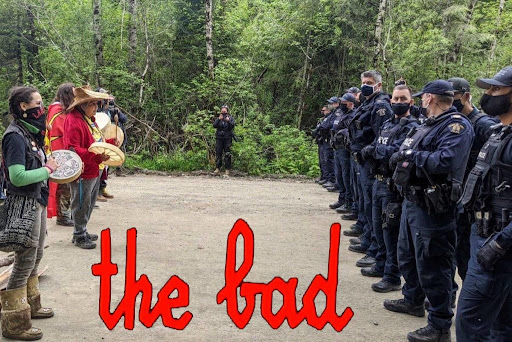
Of course, there’s a lot more to the environment than net-zero and what will get us there. Ongoing native forest logging and moves to jail protesters – normally grist for shock jocks and grandstanding MPs – have taken something of a back seat as politicians clamber over each other on carbon emissions.
Phasing out native forest logging is planned for a six-year period from 2024 but ending it now would save swathes of old growth forest, threatened plants and animals, and an estimated $192 million in taxpayer money doled out to loss making entities like VicForests.
Of greater concern still are moves to jail native forest logging protesters at places such as Granite Mountain or Errinundra in East Gippsland, which civil rights advocacy group Liberty Victoria described as “draconian… plainly disproportionate [and] intended to have a chilling effect on protest activity”.
Likewise, Victoria’s strong commitment to cutting carbon emissions is at sharp odds with its road user tax on electric vehicles (EVs) last year. The distance-based tax sent a mixed message on the benefits of trading in gas guzzlers at a delicate, early stage in the state’s EV transition.
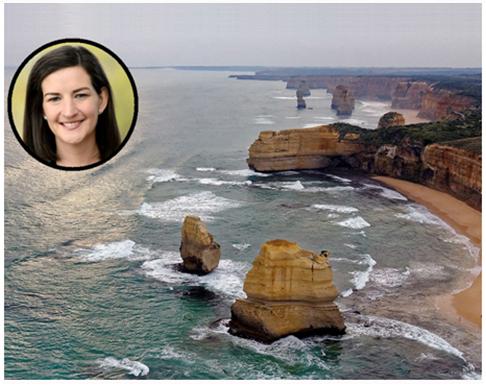
The state’s support for gas drilling – most notably under the celebrated Twelve Apostles Marine National Park (below) – is equally egregious, given gas is every bit as much a fossil fuel as coal.
Victorian Greens deputy leader Ellen Sandell said state support for gas drilling was a “bonkers” reversal of all the other work Victoria is doing to curb carbon emissions, and that no one would visit the Twelve Apostles “if it’s surrounded by drilling rigs”.
Perhaps the most sparsely reported yet environmentally-impactful change ushered in by successive Victorian governments is the erosion of the state’s planning system as councils’ and residents’ rights are slowly giving way to a code assessment regime
Perhaps the most sparsely reported yet environmentally-impactful change ushered in by successive Victorian governments is the erosion of the state’s planning system as councils’ and residents’ rights are slowly giving way to a code assessment regime – not utterly dissimilar to that in NSW – involving fewer checks and balances on developers.
“[The government is trying] to deregulate the planning system as much as possible. The inappropriate use of land in our green wedge zones (non-urban areas of metropolitan Melbourne) for unintended commercial purposes is destroying natural vegetation, creating traffic jams on rural roads and pushing us to be more like Houston in Texas”, RMIT Emeritus Professor (environment and planning) Michael Buxton said.
Readers familiar with planning disasters will have raised their eyebrows at the mention of Houston, a cautionary tale in which unbridled development led to intensive urban growth, increasing air pollution and environmental hazards including flooding such as Hurricane Harvey, which decimated Houston in 2017.
Slowing down or reversing these changes may be beyond new planning minister Lizzie Blandthorn who in July was forced to recuse herself from any project involving her lobbyist brother to avoid a conflict of interest with his construction and development clients. Her LNP opponents appear no more willing to reverse decades of steady planning deregulation, begun in the 1990s under then Liberal premier Jeff Kennett.
Both major parties have challenges earning trust on the environment, but as things stand right now, the new-and-improved, net-zero LNP is in worse shape,
With a state election fast approaching, both major parties have challenges earning trust on the environment, but as things stand right now, the new-and-improved, net-zero LNP is in worse shape, facing a wall of voter cynicism after years of climate denial and internal dysfunction. So parlous is the coalition’s standing that insiders predict its numbers will decline in the next Parliament, despite a worsening hospital and ambulance crisis, Covid-19 lockdowns and cost-of-living pressures.
Riven by factional infighting and a recent branch-stacking scandal, the Liberals are – despite net-zero appearances –shifting further to the right. Voters have figured them out: the LNP can’t credibly claim an epiphany on the environment (after years of retrograde policy) while populated by climate deniers and other assorted zealots.
As in May’s federal election, LNP seats may migrate to the teals, whose community engagement principles promote direct voter input via regular meetings, fortnightly newsletters and . By going direct to constituents, community engagement tries to cut out the middle-people (read lobbyists and fossil fuel money) making a refreshing change to the politics as usual voters are turned off by.
Labor, too, was shocked when Greens candidate and community organiser Max Chandler-Mather snatched Griffith (Qld) away from it at May’s federal poll, and another Green nearly did likewise in McNamara (Victoria).
While the Greens retain a party structure that limits direct community engagement, their policies (which cover gas drilling, logging and other areas neglected by Labor) their eschewing of big money (something the ALP can’t brag about) and grassroots campaigning is expected to yield at least three inner-Melbourne seats from Labor at next month’s poll.
As with the headline environmental issue of net-zero (which papers over other deficiencies in Labor’s approach) the headlines following next month’s state election will largely ignore a growing Green/teal cross-bench that is both strong on the environment and offers a grassroots appeal that’s largely free from vested interests and hidden agendas.
Big boys/gals beware: the voters might like what they see.
Beware fake teals! Clarke Martin standing for the seat of Sandringham owns a swag of shares in mining companies (declared as interests due to his role at Bayside City Council) and Felicity Frederico was a Liberal party member for the past 17 years until earlier this year. Had she beaten James Newbury in Liberal part preselection ballot late last year, she would now be happily standing as the Liberal candidate for Brighton.
Neither Clarke Martin nor Felicity Federico are among the four independents supported by Simon Holmes a Court’s Climate 200 group. More details here: https://www.climate200.com.au/candidates/victoria