


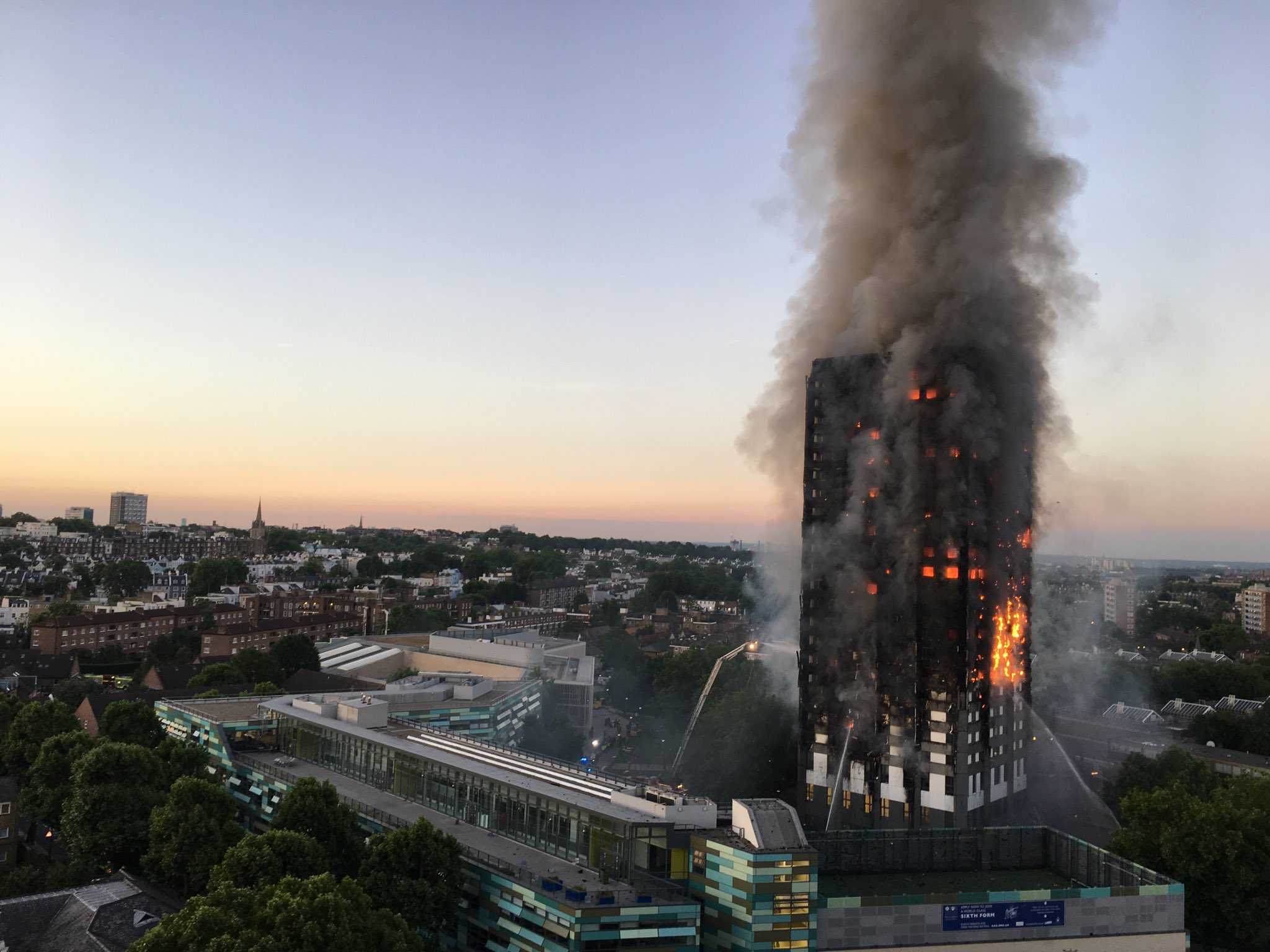
The heartbreaking story of the Grenfell Tower fire in the UK in 2017 that killed 72 people and raised alarm bells in Australia over similar flammable cladding that caused the fire keeps shedding ever more disturbing insights into the individual, agency and, in the end, systemic failures of the systems that are designed to protect people.
Australia might have strict and highly regarded fire regulations, but there are stern lessons from the fiasco that should continue to raise alarm bells.
Among the evidence raked over during several years of testimony were fake test results in official laboratories where those in charge turned a blind eye.
A long form report by James Butler in the London Review of Books in early October based on the final report over Grenfell released on 4 September, show there was outright deceit in testing. For instance, Celotex, a subsidiary of the French multinational Saint-Gobain, in 2014 inserted magnesium oxide boards inside the insulation – something that would not happen in practice – to show the insulation would not burn and then tried to erase the photographic evidence of the test.
- See our earlier articles on Grenfell
There was the Building Research Establishment that certified the product but “knew the system [of testing] was being gamed,” Butler says, elaborating on his extensive investigation in an LRB podcast.
And there was the tragic decision of fire authorities to continually advise occupants of the tower to remain in place until it was too late to leave for many because they had no experience of the toxic nature of the fire and no training to deal with it.
Butler goes on to outline any number of complicit coverups of risk and even explicit warnings of what could happen with the insulation used at Grenfell from experts, within companies and politicians that dated 10 years before the fire. And there was the social housing authority, the landlord over the tower, who also turned a blind eye.
The cladding has been described by several sources as “coating the building in petrol”. But it was the insulation inside the cladding that created the toxic smoke that killed most of the people who died in the fire.
“Managers at Arconic knew about the dangers of polyethylene-core cladding years before Grenfell was refurbished,” Butler writes.
In response to a safety query from a Spanish manufacturer, one executive from the company wrote that the failure of Arconic to have the cassette panels certified to Spain’s minimum standard, Euroclass B, “should be kept ‘VERY CONFIDENTIAL.’; a few months later he told the same employee, in response to a query from a Portuguese company, that ‘we’re not clean’.”
Regulations in most of Europe meant that cladding used on high-rise buildings had to meet stringent fire-retardant standards, but the company still had options to work in places that were not as restrictive, the executive said, Butler’s article says. This included the UK.
“Fire safety expert Barbara Lane, who called Kingspan’s insulation an ‘accident waiting to happen’ and refused to sign off on it.”
But if there was a single overarching cause of the multiple failures, it was, unsurprisingly, the systemic deterioration of standards and care for consequences in a marketplace that valued deregulation and self-regulation at the apex of its concerns.
Butler says this is still the case as most media attention fades, and industry leaders hope the fire does not cramp their style in the future.
“The report’s final judgment is that all the companies involved were guilty of ‘systematic dishonesty’, which eroded the system of standards supposed to protect citizens.”
“Even the most pessimistic would not have predicted that seven years on, almost nothing would have changed. Survivors fear that the public is easily inured to disaster, as those responsible retire on healthy pensions or are elevated to the peerage, and it has certainly seemed true that the media lose interest all too quickly.”
The lesson for Australia
The big lesson for Australia is also way more than the failures of individuals and companies. It’s the systemic failure that created the fertile ground for the disaster. And the same that has allowed so many toxic chemicals to make it past the guard rails into our water, our fabric and now the microplastics in our organs.
It’s a failure of the market and its deep hubris that wants to believe it can self regulate and doesn’t need mandated minimum standards.
When former New South Wales building commissioner David Chandler led Project Remediate to remove flammable cladding and indicated certain products would not be approved, the manufacturers immediately lobbied politicians to ignore his advice, and he told The Fifth Estate early this week.
The recent calls from the New South Wales Productivity and Equality Commission to halt building reforms, because the market is under financial strain, ought to alarm anyone who cares about consequences in the housing and construction sector.
The call from opposition leader Peter Dutton to halt progressive improvements in the National Construction Code ought to likewise be a cause for concern.
And so too South Australia’s decision to freeze new building code upgrades on energy efficiency for its most vulnerable new housing buyers – arguably the policy that “inspired” Dutton to dig quickly into easy fixes that would win him votes among people that industry leaders and organisations are meant to protect.
In Australia, fire regulators have thankfully paid great attention to the fires at Grenfell and the Middle East, where the same cladding was implicated, and the near disaster at Southbank in Melbourne at the Lacrosse apartment fire, though perhaps from a different cause, sources say.
They toughened up rules and regulations and have probably gone too far in some cases. But for each complaint that comes across our desk, we hear another 10 people say, thank goodness; the results speak for themselves – Australia is still mercifully free of such massive disasters.