


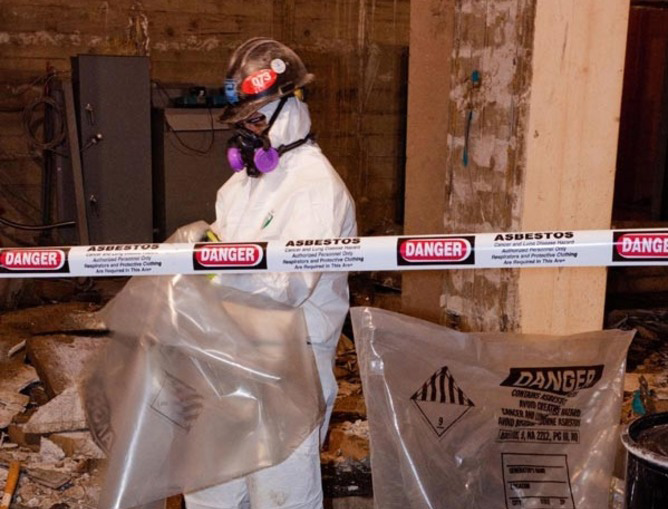
Asbestos found on multiple construction sites over the past couple of months has put non-conforming building materials back in the national spotlight, with Senator Nick Xenophon expected to push for the reinstatement of a Senate inquiry into the matter imminently.
The previous Senate inquiry into non-conforming building products, pushed by Mr Xenophon following the Lacrosse high-rise fire in Docklands, came up with one recommendation – to be provided an extension to report. However following the announcement of this year’s federal election the inquiry lapsed.
Following this a range of asbestos scandals have occurred – the latest involving asbestos found in Chinese-made equipment at the Port Pirie smelter redevelopment in South Australia – leading Mr Xenophon to promise to reinstate the inquiry this week, along with an “urgent hearing” on asbestos contamination scandals.
A spokeswoman for Mr Xenophon, however, told The Fifth Estate it might not be able to happen this week because the Senate Economics References Committee needed to be reformed before the inquiry could be reinstated. She said the inquiry was “absolutely” on the agenda and would be reinstated as soon as possible.
Asbestos plague
The last few months have seen the detection of asbestos in a range of products, including in roof panels of the newly constructed Perth Children’s Hospital and the 1 William Street government office in Brisbane in July. Testing is now occurring on at least 68 buildings across Australia, including Sydney’s Star Casino. All have been supplied by Chinese manufacturer Yuanda.
What’s going on? A serious breakdown in regulation and oversight
In its interim report – Safety – not a matter of good luck – the Senate inquiry said there had been a “serious breakdown” in the regulation and oversight of non-conforming and non-compliant building products, requiring “determined action”.
“Given the seriousness of the problem, the various areas of glaring weakness in the regulatory regime, including the certification process, and the disjointed regulation of the use of building products, both manufactured in Australia and overseas, the committee has formed the view that it should continue its inquiry,” the report said.
Submissions made to the inquiry show it’s an issue that spans the whole supply chain, with players from across the political divide agreeing action must be taken.
Weak border protection – only five per cent of products are checked
Border protection arrangements have come under fire following the recent release of an Asbestos Importation Review, which found a number of weaknesses in the current approach, and came amidst claims from the Asbestos Industry Association that only five per cent of products imported into the country were checked.
The review recommended more prosecutions of asbestos-related cases in order to incentivise voluntary compliance.
However the report said it was difficult to prosecute importers when they could show they had exercised due diligence, which could be an overseas laboratory testing certificate showing an “asbestos free” result, even if not done in accordance with Australian standards.
Senator Xenophon is pushing for jail time for those importing asbestos-containing products.
“Currently only fines of a maximum of $170,000 can be applied for breaches,” he said.
“Being exposed to asbestos can lead to a death sentence. Knowingly or recklessly importing this deadly substance should lead to a jail sentence.”
The current maximum fine has never been imposed, with the Department of Immigration and Border Protection telling a Senate inquiry that just $64,000 in fines for asbestos importation had been received since 2009.
In July Mr Xenophon told the AFR that the World Trade Organization could also be engaged to place sanctions on countries that were supplying products that endangered lives.
“We have to work through this with some urgency,” he said. “Companies are receiving compliance certificates that are worthless. There ought to be scope for action and we ought to be able to apply WTO sanctions to countries that don’t have robust regulatory systems to prevent asbestos products from being sent out of their countries.”
Need for independent certification of high-risk products
The problem of course doesn’t stop at asbestos, with substandard engineered woods, steel, windows and facade components all making their way into the country, leading to a range of structural safety concerns.
In his submission to the inquiry on non-conforming building products, Building Products Innovation Council’s Rodger Hill said these substandard products were not entering the market by accident.
“In most cases manufacturers seek to use the data management weaknesses to deliberately substitute or provide substandard product,” he said.
He wants independent testing, such as used to be provided by the CSIRO Building, Construction and Engineering Division, which was shut down 15 years ago.
“As recent experience shows, relying on companies, especially overseas manufacturers and importers, to supply data that backs their claims, and relying on the threat of vague penalties if they are misleading, is not an effective system. Company and product claims need to be independently tested.”
CSIRO in its submission said it agreed a “robust, independent, Australian-based testing and certification environment to be an important factor in addressing the issue of non-conforming products”.
Australia was warned and New Zealand has a good solution
A submission from materials engineer Dr Peter Haberecht noted that New Zealand had a product certification scheme that helped to weed out non-compliance.
The scheme is funded through a building levy of 0.1 per cent of the contract value paid to the Building Research Association of New Zealand, where Dr Haberecht was once a researcher.
Dr Haberecht said BRANZ had spent “a vast amount of resources” between 1994-2004 trying to convince the Australian Building Codes Board to implement a similar program locally.
Some objectives of the scheme were to remove the chance of importation of substandard products, and to “provide a mechanism to check compliance against performance claims often from unreliable overseas testing labs”.
“The warnings BRANZ provided more than a decade ago regarding the importation of substandard product are now being realised in Australia,” he said.
“New Zealand still experiences some issues but they are very small in comparison to the Australian Problem.”
A race to the bottom as pressure to cut corners pushes good builders to the fringe
The Australian Industry Group said the low-margin building industry added pressure to cut corners.
“The building industry including certification is high pressure, highly competitive, low margins. There is currently a race to the bottom in terms of price and quality in the area of certification. Builders use the certifier who is cheapest and easiest to work with, [that is], responsive and likely to certify. Building certifiers who do a good job of checking compliance of all aspects simply don’t get the next job.”
No political will – responsibility should lie with each stage of the supply chain
The Housing Industry Association said there was “a lack of political will” to address the problem, but warned against placing too much blame on builders and building surveyors.
“Rather than redressing upstream deficiencies, the current regulatory framework relies on the last people in the supply chain, the builder and building certifier, to correctly identify that a problem exists – that a product is non-conforming. Often even a keen eye is unable to distinguish the difference between a conforming and a non-conforming building product,” it said.
“This is not how the system should operate. The regulatory frameworks across the building product supply chain need to place the requisite responsibility for compliance on the appropriate players at each stage of the supply chain.”
Building Ministers’ Forum – still waiting for a meeting
The Building Ministers’ Forum, the body of Commonwealth, state and territory ministers responsible for building regulation, which meets annually, or on an “as needs” basis, last met in February, largely “to ensure the community can continue to have confidence in the safety of buildings in Australia”.
It has set up a Senior Officers’ Group to investigate strategies to minimise risks associated with the failure of building products to conform to relevant laws and regulations, including at the point of import.
With the slew of scandals regarding asbestos, The Fifth Estate asked the federal Department of Industry whether a meeting of the BMF was scheduled, however a spokeswoman said a meeting was yet to be confirmed.
Compliance starts and ends with the construction industry. They make the decision to buy on price, they deal with corrupt suppliers, they fail to verify compliance, so they have to take responsible for the proliferation of non-compliant building products.
It is also disturbing that home owners are not forced to disclose asbestos containing materials when they sell their properties.There should be government subsidies available to assist people to replace all asbestos-containing material in existing homes.