


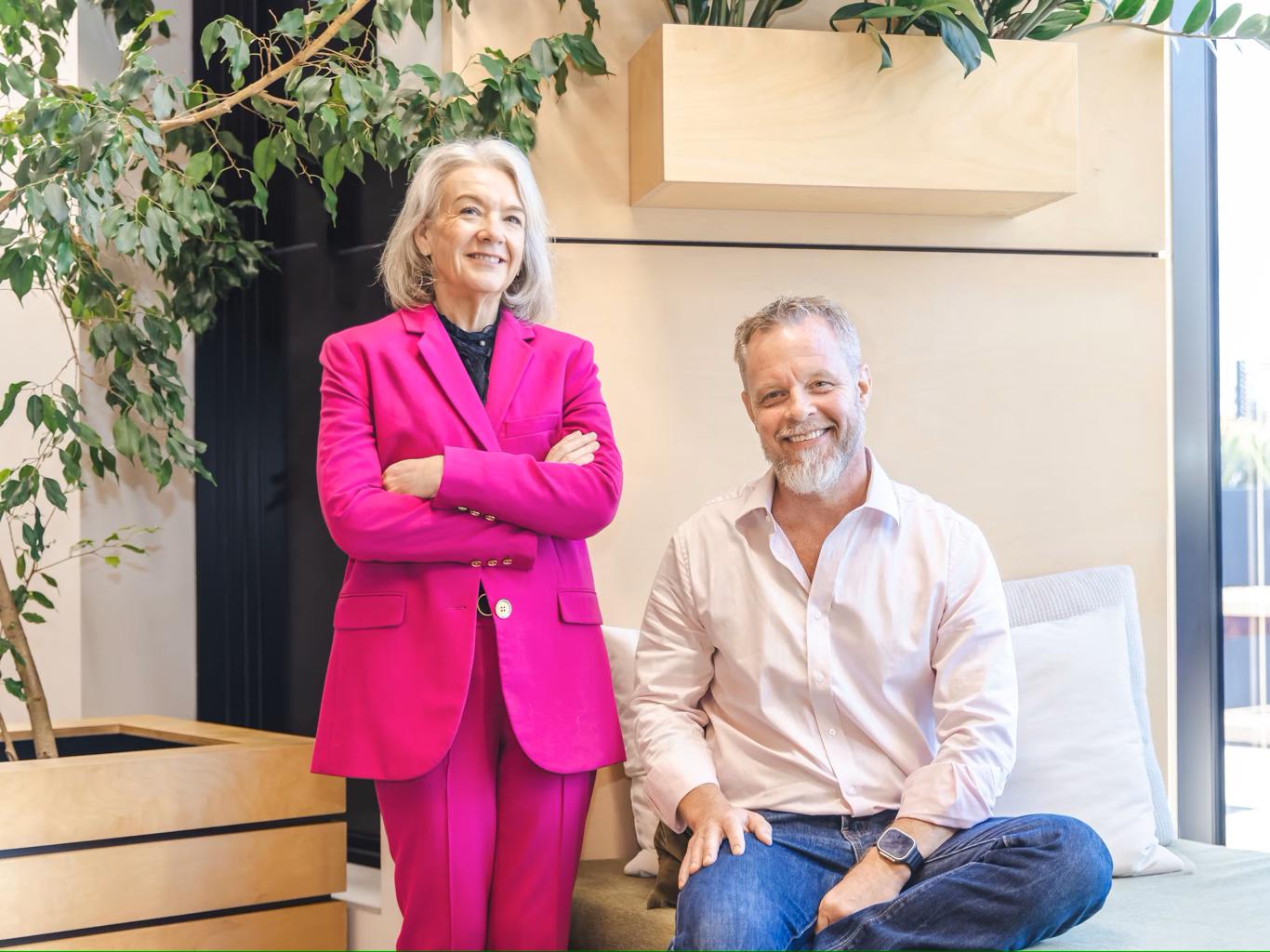
Edge Impact has a new majority owner – the highly acquisitive RSK Group whose business model is to snap us as many promising companies in the sustainable solutions space as it can, keep their brands, let them do what they’re good at – and hopefully everyone prospers.
RSK already has about 175 companies and about 15,000 staff globally, most in its home base in the UK, making it the biggest in the sustainability sector in that country.
Mark Haydock, RSK’s divisional director, Australia, says the company’s business strategy is to buy good businesses where the founder or leadership team want to continue to be involved and everyone benefits from the continued expertise and commitment.
The company keeps the acquired companies under the same brand for a simple reason: “Their brand recognition is higher than RSK’s, and there is an allegiance both from the employees and clients.”
The company’s founders or leadership teams are generally hugely enthusiastic and keen to keep involved in the business.
“It’s a unique selling point,” Haydock told The Fifth Estate on Tuesday.
RSK’s founder Alan Ryder calls it the lily-pad principle. The companies it acquires are the lily pads that offer a range of services to similar companies and where they bump into each other, is “where the magic happens”.
In Australia the company has racked up 800 staff through this model, just since 2021.
Edge Impact’s chief executive Alison Rowe, who took up the reins in April, said the deal is set to allow her company to achieve and hopefully surpass its ambitious plans to be at 250 staff globally by 2030.
For now, she expects the new majority owner to let her company do what it does best – and to pursue its strategy.
In a conversation with The Fifth Estate on Tuesday Rowe said it had been a “fantastic year”.
She took over the reins as CEO in April after a two year stint on the board and an approach by co founder Jonas Bengtsson who is now global director of impact reporting to Rowe.
Co founder Tom Davies along with Bengtsson and staff including Rowe will remain as minority shareholders.
“We’ve seen such a massive change in our market; everything shifting, and lots of sustainability consulting firms are consolidating, and very quickly, that was on the agenda for me as the CEO.
“We’ve found what we think is the perfect partner for Edge to really grow and scale our impact. So it’s been a big year, but a fantastic year.”
Rowe says the company has a great team of highly specialised people as well as the mission to create enduring sustainability.
It’s now at 80 staff in Australia, New Zealand and Chile with a swathe of clients that over the 16 years since it was founded have morphed from the property sector to government and now include health services, retail, fashion and food and beverages.
Rowe’s background is with the Australian Energy Foundation, the Nature Conservancy and Fujitsu but she cut her teeth in sustainability 20 years ago working Transurban.
Over that time she’s seen big shifts in sustainability, with the biggest, the move to the boardroom.
“That’s been a fundamental change that’s now been accelerated by quite a few things over the last 12 to 18 months. One of those is climate mandatory disclosure, which is really shifting the conversation and the clients.
“So we’re now more and more dealing with the CFO (chief financial officer) or the chief risk officer in organisations, particularly around those getting ready for mandatory disclosure reporting that comes in in July next year.”
The new climate reporting requirements kick in for about 500 companies next year, and another 5000 companies the year after.
“So that’s been quite a big market shift.”
Another big factor has been concern around greenwashing and the “substantial fines” imposed on those who breach the rules.
This has shifted people’s perception of risk around sustainability, “hence the change in clients”, Rowe says.
Other factors include decarbonisation in the supply chain, how to account for scope 3 emissions and then some serious mergers and acquisitions of smaller consultancies such as Point Advisory and Energetics by bigger firms, which led to an increase in inquiry for Edge.
“I think for us, our strategic goals were very, very important and our purpose was very, very important when we’re looking at what we want to do as a B Corp.”
The company’s ambitious plans include scaling to $60 million in revenue and a team of 250 globally by 2030 in order to “achieve the impact that what we think we need to do to keep our world at 1.5 degrees and have nature on a positive trajectory.”
A buyer – or investor – that would allow the company to deliver on that purpose was “really important” Rowe says.
Perhaps adaptability not ‘sustainability’ would better meet the 24/7 constancy of change across environmental & commercial business landscapes.
May be time to throw away the ‘sustainability’ crutch & adapt to real time, real life disruptive actualities & to walk the talk.