A true density renaissance in this town needs to employ small sites and small capital development; that’s where a vibrant city lies, argues Philip Bull in this long read on the problem with planning reform in Sydney, as he sees it from a planning practitioner’s point of view.
It was sad to see The Sydney Morning Herald lose its urban affairs writer earlier this month.
Spinifex is an opinion column. If you would like to contribute, contact us to ask for a detailed brief.
His farewell letter to Sydney reads well. He despairs at the lack of reform in this town. The root cause of all the city’s ills is its housing system, and the obvious reform targets its planning. The article has that feel of the first rat leaving the density ship. Maybe it was just the timing. End of the year – where’s TOD (transport oriented development) and all?
Where is TOD? Has he been naughty or nice? Is TOD a promise or real? It’s hard to know, but TOD’s progress so far has been busy.
| Date | Event |
| August 2023 | The National Housing Accord signed NSW is meant to build 350,000+ new homes by 2029 |
| 14/12/2023 | State Environmental Planning Policy (SEPP) Housing 2021 amended to provide 30 per cent building height bonus and reduced minimum to 10 per cent on infill affordable housing. First regulatory reform for Housing Accord. |
| December 2023 | Transport Oriented Development (TOD) Program announced Transport Oriented Development – Accelerated Precincts Low-Rise and Mid-Rise housing Exhibition of the explanation of the intended effect |
| 12/04/2024 | Announce the first tranche of TOD SEPP sites. So far, some metro sites and inner west Sydney metro sites are delayed. |
| 13/05/2024 | TOD SEPP gazetted – first actual rezoning The amended planning controls apply within 400m of 37 stations. |
| 1/07/2024 | Stage 1 low rise provisions for R2 low density residential zones gazetted, notable for areas excluded for flood and fire risk, hazard risk (most of the Inner West Council (IWC) is excluded because of airport noise?) and whole fringe local government area excluded such as Hawkesbury and Blue Mountains. |
| TOD is in hiding till after the council elections in September | |
| 15/11/2024 | Winning Designs for the NSW Housing Pattern Book announced. Housing Delivery Authority announced |
| Awaiting??? Stage 2 mid-rise provisions, six storeys in Bondi? TOD plans for the Sydenham to Bankstown precincts, third time lucky for IWC on this one – the more controversial established sites where people want to live! | |
The great irony of the state government’s promises about housing reform in 2023 and exhibitions of mid-rise and low-rise controls, patterns books and schedules for TOD to get out and about, etcetera was that soon after, not much happened.
As a planner this year, clients sometimes came to me with their sites. I looked at the various promises on reform and told them to come back later in the year when we know whether it’s a two or six storey building.
That seemed like the honest thing to do. Every time I did that, I looked up the relevant council, and in February 2024, every council in metropolitan Sydney did some sort of submission to the Department of Planning on the mid-rise and low-rise controls. Every council responded with a document called Submission to Proposed Planning Changes by the State Government or something like that.
These documents are a convenient summary of what councils want out of housing reform – surprisingly little, by the way. They are mostly sad NIMBY love poems about being special and why they should be left alone: “That centre is not really a centre, and that train only comes every now and again.” Real estate hype is in reverse. I send the document out to my future clients with my “wait and see advice” and they never call me again.
These poems are meant to repel change.
Sad NIMBY Love Poems
North Sydney 12/02/2024 State Government Planning interventions to increase housing density
Mosman 6/02/2024 Proposed Planning Changes by the State Government
Northern Beaches 27/02/2024 Council submission to department of planning, housing, and infrastructure – explanation of intended effect: changes to low and mid rise housing
Inner West 13/02/2024 State Government Housing Reforms – Implications for the Inner West and Draft Submission
Woollahra 26/02/2024 Item12.2 Submission to the “Explanation of intended effect: Changes to create more low and mid-rise housing”
Waverley 20/02/2024 NSW Housing Reform – submission
Parramatta 26/02/2024 Submission on the NSW Government’s low and mid-rise housing reforms
And the State Government’s own SAD NIMBY Love Poem to their distressed 29/04/2024 Low- and Mid-Rise Housing Policy Refinement Paper. Got to google this one, it was leaked by a lover.
Industry has been promised a bright new world of TOD towers and easy mid-rise and low-rise approvals. That’s all meant to happen sometime in December, so the SMH writer leaving in late November seems like a sign. I am not seeing a spontaneous outburst of more urban thinking from our bureaucrats (that’s state and local).
When you read their actual response to housing reform and experience their actions, new private housing is still mostly falling on housing-phobic soil in NSW.
Most councils are slow DAs (development approvals) appear to be noticeably down in some core TOD areas. If you look at a lot of planning panel agendas, there is not much there of economic note, just modifications and reviews of old projects. The state government panels are not flooded with state significant housing DAs yet either. Is there a wait, or not that much happening?
Understanding the difference between big and small. Ten small DAs with 100 new dwellings is always better than one development with a 100. Get a lot of people doing small developments, and that adds to the character of the city and slows down the look and quantum of change.
The push for greater housing in Sydney is not just constrained by the NSW planning system (as other contributors to The Fifth Estate have pointed out). Now is not a great time for financing development – where are interest rates going? And valuations seem to have peaked post-COVID (that means real estate is looking a bit risky).
There are skills, labour and construction cost issues. Does a project need a Trump loading if he up-turns the global economy? If the Americans abandon us and Chinese mainlanders finally take over, well, at least they might be able to get the NSW planning system moving.
And while the global order falls apart, the NSW planning industry is working on “more planning” as their solution.
When you meet Planning Institute people at a broader industry function, the talk is about how to unlock housing and get things moving. Planning leaders say, “More planning is required to address this problem”.
What does that mean? Why does an existing urban area need a precinct plan? Why is it better for a DA to take a year as opposed to six weeks? Planning sees itself as special because it’s the frontal part of the regulatory system, the gateway.
The new reality for building regulation, particularly for multi-dwelling residential buildings, is regulatory complexity.
[With specific building controls, however, Opposition Leader Peter Dutton has called for a 10 year freeze to the National Construction Code, and the NSW Productivity and Equality Commission has urged a loosening of quality and even that building reforms be halted – Editor’s Note].
If we know we need a certain type of development and we know where it should go, that means all the subjective reporting, merit assessment, neighbour complaints, and sometimes costly court disputes that go with a DA these days might not be necessary.
Infrastructure is planning too, and Sydney, with its motorways, expanding metro rail, new airport, and the rest, is now at a prime point of infrastructure ripeness. Planners need to understand when there is enough planning around; I think Sydney has reached that point.
But the local government takes the Bob Carr “Sydney is full” award for obstruction. This is where the “can’t see the forest for the trees” sort of planning happens.
Ku-ring-gai Council wants to upzone the council chamber for a 40 storey building and hopes no one notices it never gets built. Or the Inner West Council has come out on building social housing in a few council car parks. That’s going to happen quickly too. This sort of “dog ate my homework” housing policy coming out of local government isn’t real.
But mostly, the obstruction takes the form of just not really understanding or realising there is a problem, and industry is to blame here, too. The new TOD planning controls that are emerging so far are revised versions of what’s been happening in some centres and places like Canterbury Road over the past 20 years. What the local government calls policy is a facsimile of a facsimile.
Planners need to understand when there is enough planning around; I think Sydney has reached that point.
Car and site amalgamation focused housing is the council standard (except for the City of Sydney).
It’s urban housing but not as we know it. There is no philosophical shift to a more urban focus in most of Sydney; SMH stories and state government prodding haven’t moved the culture dial much in local government planning, as far as I can see.
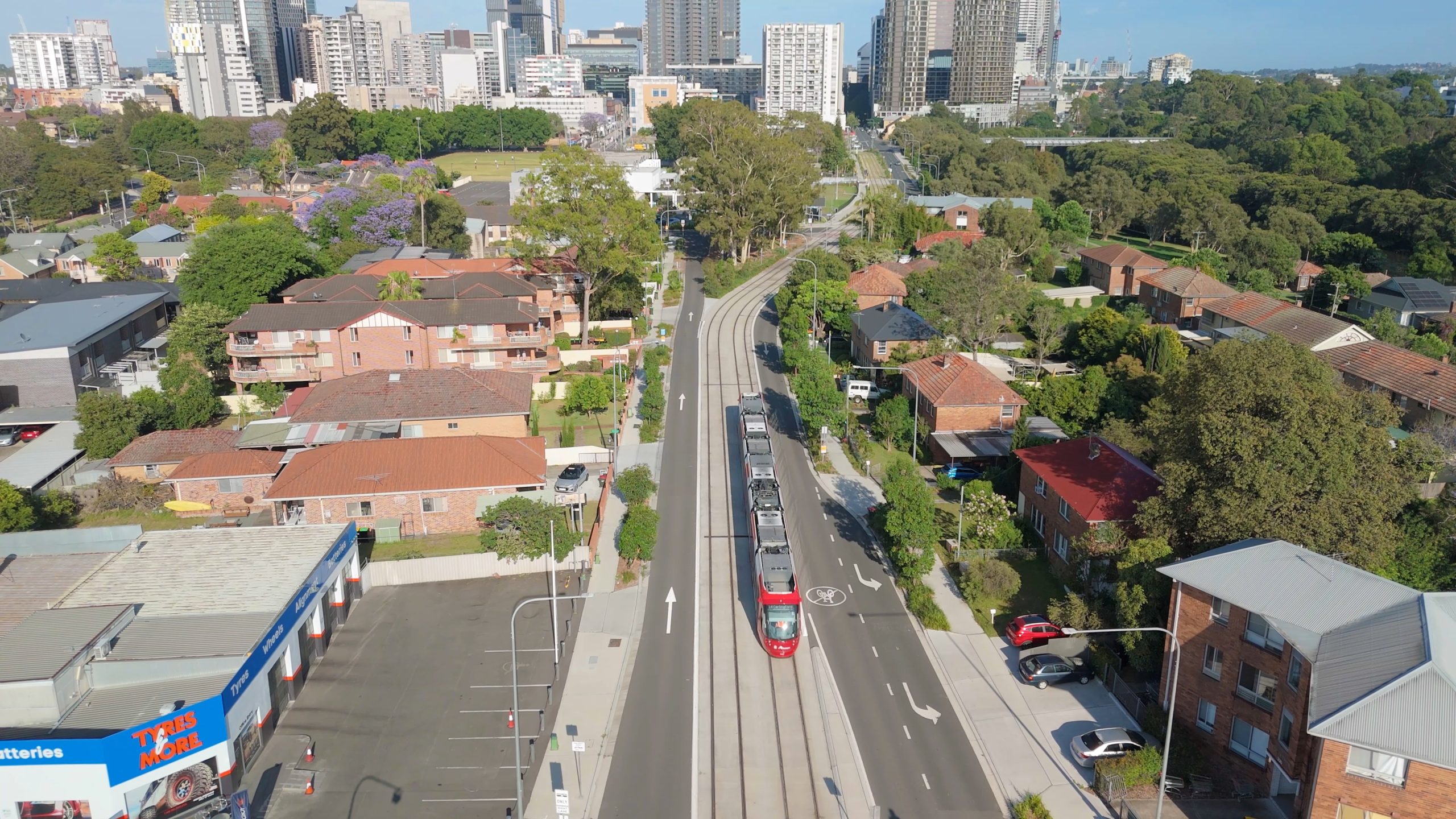
So far, TOD is sitting on top of a car park near a rail station after a lengthy and document laden approval process. Low-rise still hasn’t got past Strathfield and mid-rise is still in hiding.
And the great irony of the exceptionalism of local government in most of established Sydney is the lost opportunity. Most of the urban land in established Sydney has been planned for not much more than two-storey houses. People complain about developers sitting on approvals and land banking; well, look at a zoning map of established Sydney; the biggest land bankers in this town are the residents through their council’s zoning everything R2 low-density residential (with a heritage chaser). Time to open that bank. Demographics change. Values change in various ways.
Local councils could do a lot to help – such as driving cars out of developments, more flexible controls for boarding houses and dual occupancy
In established Sydney, there are various “do less harm” types of density moves that councils could embrace, such as retaining Sydney’s small lot subdivision pattern, driving cars out of urban development, promoting more flexible controls for boarding houses, dual occupancy and secondary dwellings, and in general being the planning pathway for smaller developers.
The difference between big and small DAs
Understanding the difference between big and small. Ten small DAs with 100 new dwellings is always better than one development with a 100. Get a lot of people doing small developments, and that adds to the character of the city and slows down the look and quantum of change.
Heritage can be managed in TOD redevelopment processes, other than by exclusions. Once an established area is planned for redevelopment, the focus for heritage listing should shift to the retention of some book-end type individual buildings and public domain bits and where there is a historic small lot subdivision, that subdivision pattern.
Site amalgamation near a rail station in a historic neighbourhood is the devil’s work
Why destroy the pattern and invite cars into these new urban spaces? Heritage listing the subdivision pattern allows for new but connected smaller buildings.
Development might get a few smaller players and become a bit more democratic. Retaining the historic subdivision will, by default, compared to a site amalgamation approach, retain some older buildings. It’s a more organic take on our heritage, and it allows change. I say to the Planning Institute and industry loyalists, make a decision about where but otherwise let the pattern and the market do the planning.
So far, TOD seems to be beating a path for larger projects only.
In a less regulated world years ago local government did promote smaller developments. There was the pathway for small developers before complexity pushed them out. The back bars of Paddington pubs were full of building surveyors on the make. Approvals were three page documents. I suppose you must keep on looking forward.
Reform in NSW has a strange way of stopping on the corner, mid turn. The last effort at council reform (amalgamations in the 2010s) was clunky. Sydney’s established councils are still a borough-based patchwork of existing landowners’ associations (not you, Clover! [Moore, City of Sydney Lord Mayor]). The areas where change bounces hardest are in established Sydney – hail Hunters Hill. Is housing reform going the same way?
To me that would be so if TOD became more planning, more cars and more big industry developers. A crude rebirth of part 3A and activation precincts. A true density renaissance in this town needs to employ small sites and small capital development; that’s where a vibrant city lies.
Go TOD.