


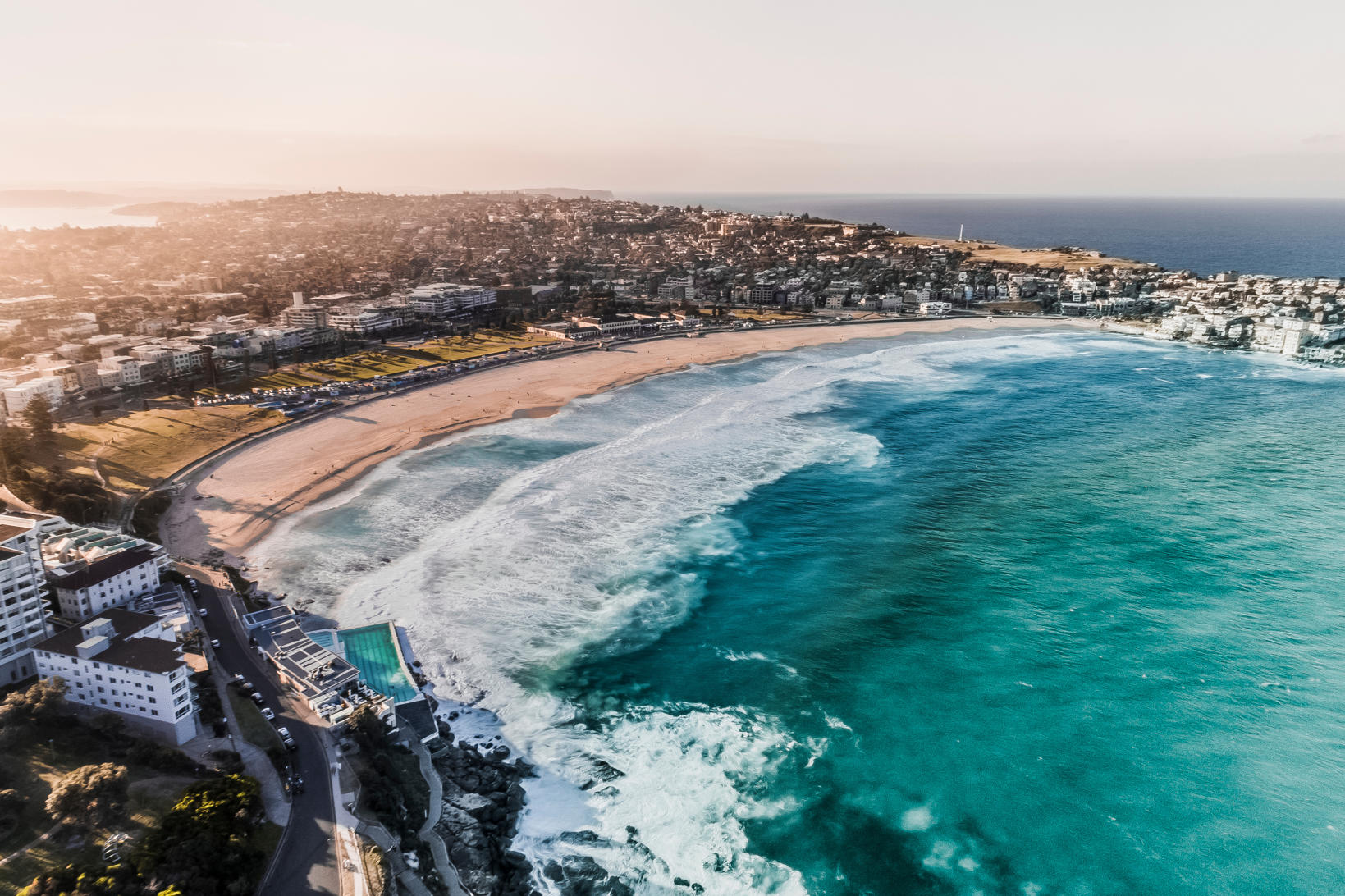
The fact we’re even considering substantial development in villages such as Bondi shows that the NSW government’s housing reforms need more work. Along with a thriving community stemming from its working-class origins, Bondi is a trailblazer and should be held up as a benchmark for “density done well”.
Spinifex is an opinion column. If you would like to contribute, contact us to ask for a detailed brief.
Yet, according to the government’s narrative – few (if any) places in Sydney are getting it right. This means some highly lucrative suburbs are now back up for grabs. With the housing affordability Trojan horse unlocking “once in a generation” development opportunities – for some of the most loved parts of our city, we stand to lose more than we stand to gain.
Underlying this apparent lust to rebuild the parts of our city already working well – there runs an unhealthy discourse fomented by a sort of parochial McCarthyism. For if you’re not a YIMBY, then you’re a NIMBY – selfish and obstructive. A dialogue that seethes with puerility, attempting to disallow discussion about the parts of Sydney actually important to us.
Love it or hate it, there is no denying that Bondi is a place that shimmers with a kind of sexy iridescence
One of these important areas is Bondi. Living in Sydney’s eastern suburbs myself, I’ve always had a hot and cold relationship with Bondi and found myself choosing to bypass it as much as I have enjoyed diving into its waters or its vibrant cosmopolitan atmosphere.
But that said – every local living in this part of Sydney understands that Bondi not only casts a powerful tractor beam of influence across the east – but also across Greater Sydney itself. And love it or hate it, there is no denying that Bondi is a place that shimmers with a kind of sexy iridescence while carrying itself with certain flashy je ne sais quoi.
Flaunty French phrases aside, though, from a built environment perspective, Bondi is an apartment advocate’s paradise. Incredibly, around 95 per cent of dwellings in Bondi are classified as either medium or high-density. Under 5 per cent of dwellings are standalone houses. Waverley Council has the second highest population density in NSW. Yet none of these impressive density credentials are acknowledged at all by the government’s proposals.
What’s more, if you’re an amateur architecture lover like me – stepping away from the beautiful beach and taking a wander amongst its backstreets – you’ll discover that Bondi’s density is not only done well, it is also done with charm. Apart from Potts Point, Bondi holds Australia’s most impressive collection of Art Deco and Spanish Mission apartment blocks. Wonderful buildings that infuse the suburb with character.
Most importantly, though, Bondi has a strong sense of place. Absolutely, some aspects of Bondi’s lifestyle can be gruesomely superficial. But credit where credit is due. As a village, it has a thriving community spirit that is accessible and easy to engage with – and its apartment living culture encourages interaction with the street, bolstering community roots that are decades deep.
For the longest time, Bondi was a working-class suburb built by the sea. In the 1920s, 30s and 40s – developers sold their new apartments to Sydney’s “blue collar” workers. This heritage of affordable housing forms chapters of Bondi’s story that still resonate today. Only in the past 20 years has Bondi swapped out those workers’ boots for its now ubiquitous black trainers.
Furthermore, just up the road from the beach resides one of Sydney’s first Transport Orientated Development (TOD) precincts – Bondi Junction. A mixture of high-rise residential and commercial, it’s not necessarily a place that endears you to linger. Still, it is high density regardless and operates as an effective transport and shopping hub for the east.
Even so – for all the boxes that Bondi ticks on the government’s density wish list – none of this seems to count for much. This sets a perilous precedent for Sydney because if we’re unable to recognise and consolidate the good bits of density, we already have – then a development free-for-all risks damaging some of the most loved parts of our city.
On top of that, we also risk damaging our global brand. Tourism injects $53 billion a year into the NSW economy and supports 90,000 jobs. The NSW government wants to ramp this revenue up to $91 billion a year by 2035. In order to compete on the world stage, Sydney will need the strongest brand possible and the top global cities all know just how much their local built environments contribute to their own brand value.
This means that Bondi requires careful consideration because it is one of the crown jewels in Sydney’s brand. Its lively community and distinctive built environment are just as fundamental to Bondi’s international appeal as a summer afternoon dip in its clear waters. If we dilute “brand Bondi” with unnecessary overdevelopment, we will also dilute “brand Sydney”.
Yes, this city’s housing affordability crisis is dire. Many Sydneysiders can no longer afford to call their own city, “home”. However, reforms that encourage development for development’s sake in parts of Sydney where density is already being done brilliantly – will not only do nothing to improve our affordability woes – they also risk cutting off our own nose, in spite of our alluring face.

I just don’t think the types of arguments this piece makes are valid. My main gripe is less to do with Bondi as a proposed place for development (I do in fact think there are many inner-city places much better suited for development, particularly those with new high capacity transit such as Randwick, Crows Nest, Surry Hills, etc) but more that the types of arguments this piece makes in favour of leaving Bondi as-is could be used for frankly any suburb within 10km of the city. Bondi is not special. Art-deco units are not special. A suburb having working-class roots is not special. You could close your eyes and put your finger anywhere on a map of inner Sydney and say exactly the same things.
If more areas take on greater density, the gentler that density can be. We only get islands of skyscrapers, like in Bondi Junction, because swathes of other areas refuse to take on even modest increases in density.
There is no hope for this city without densifying our inner suburbs. I don’t think people realise how bad it is currently and how bad it could get. If you’re not the child of Sydney-based parents who have equity in their home, or in a very high-income relationship, you’re basically condemned to a life of American-style car-dependency and commuting in an outer suburb far-flung from any of the things that make life in this city worth living.
Because density is done well in bondi and there are lots of services there, that’s why you can actually squeeze more people in.