


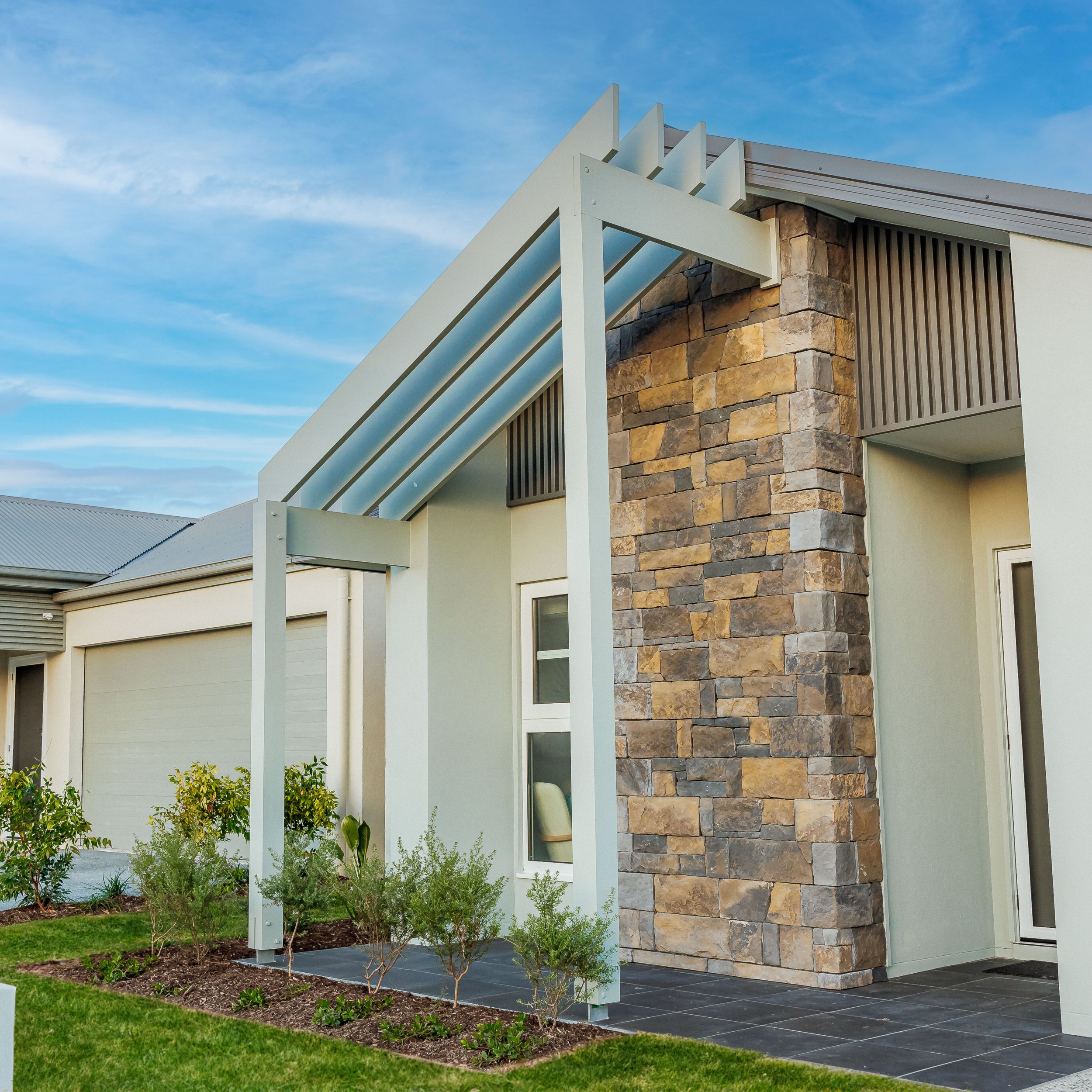
A collection of new energy-efficient homes by volume home builder AVJennings takes energy efficiency to the max and slashes build times
Imagine a home with an energy rating so high you don’t need any heating or cooling. With outstanding thermal efficiencies which claim an 8.6-star rating if you’re in NSW, 8.2 stars if in Victoria, and 9.4 stars if in Queensland. Not only that, but it’s a home that’s been built in record time, with all its i’s dotted and all its t’s crossed.
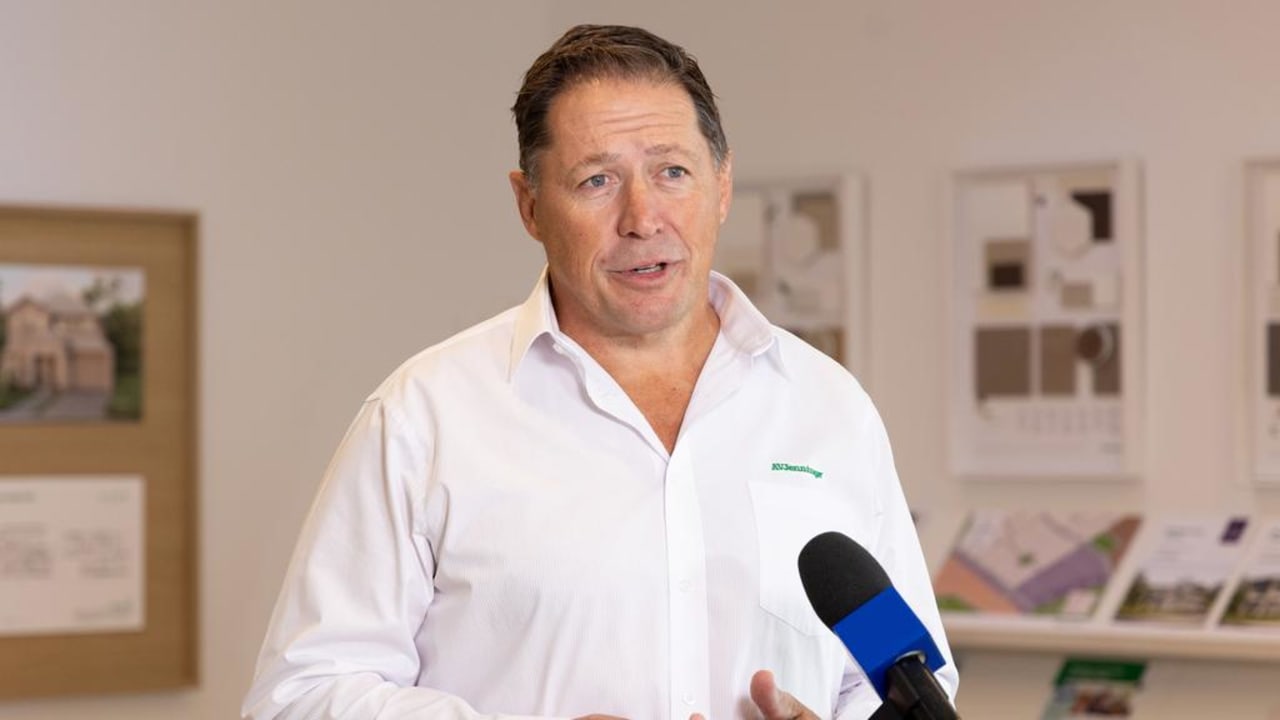
This is AVJennings’ new Stellar Collection, which the company says meets the minimum requirement of eight stars under the Nationwide House Energy Rating Scheme (NATHERS), and far exceeds the new mandated National Construction Code (NCC) requirement of a minimum of seven stars. And the speed to build is incredibly fast, chief executive officer Phil Kearns says.
“In the current labour market, it’s taking 10 to 12 months to build a home, and probably three to four months to get to lock up,” he says. With the Stellar Collection’s new state-of-the art component, it’s taking about five to seven days to get to lock up in these early days of construction but the company is aiming for three.
The company has been “drip feeding” the high-performing homes onto its developments, Kearns says. Currently with three of these homes in Sydney, two in Queensland and five in Melbourne, the company is looking to build 39 more this year and it wants to build more, picking up on their popularity.
One buyer in Queensland, he says, apparently loves her new home so much she can’t stop instagramming and tweeting about how good it is.
The new Ferrari of walling systems
Undoubtedly, the homes represent a massive advance for energy efficient housing. But what’s the secret? AVJennings’ adoption of the innovative Pro9 walling system over recent years is key.
For AVJennings special project executive Tony Rufo, building innovation doesn’t get much better than this. A building industry stalwart with 49 years’ loyalty to AVJennings, he’s seen a few ideas come and go. And according to Rufo, Pro9 heralds a building industry revolution.
“It’s the Ferrari of housing,” he says. “It’s fast, it’s a quality product, it’s cost effective, highly durable, rated for extreme fire danger areas, and has a load bearing to four storeys.”
Eliminates 17 trades
It also eliminates 17 trades to reach lock-up stage, so it bypasses Australia’s labour shortages, Rufo says.
“When the slab is down it takes just three days to complete the frame, externals and internals, the walls come with double-glazed windows and sliding doors already in, roof trusses go up in two days, fascia and gutter go up in three days, roof cover in four, and it takes 12 days to reach lock-up stage.”
Rufo is talking about a 350 square metre brick veneer house with double garage and alfresco, featuring insulated, galvanised steel frames, R-4 rated foam insulation, and A1-rated fireproofing.
Just 50–60 days to finish
Weather permitting, AVJennings can completely finish a house in 50 to 60 days so it’s ready to move into, including driveway, fencing, landscaping, turf, blinds and more, he says. The whole house including the garage is soundproof, he adds; music to the ears of anyone who relishes peace and quiet.
The 39 homes to be delivered this year are just the start of what AVJennings plans to roll out in the future, Kearns says.
Three days to lock up and loads of benefits for the environment, workers and capital
“As we do more of these and get our efficiencies up, we think we’ll be able to get them to lock up in three days. That speed to market is really important. Recycling your capital is very, very important. So if we can get faster production, and finish a home in two to three months, then you’re recycling your capital much faster than if it’s taking 10 to 12 months.
“So, from a corporate perspective, there are benefits for our customers, there are benefits for the environment, there are benefits for our workers in terms of health and safety. We require fewer trades on site, we have a cleaner and safer site …We’re not seeing any downside just yet.”
Kearns also hasn’t seen any competition yet.
“There is some prefab competition, but it doesn’t have the quality and the speed that we have, and it doesn’t have the same energy ratings. And we certainly welcome other builders coming to have a look, seeing how it works and placing an order.
“We’d like to partner with other builders to supply the homes to them.”
AVJennings had been looking at the prefabricated housing model for about 15 years before hitting gold with Pro9, Kearns says. The motivation has always been around sustainability and more efficient ways to build, particularly with the current supply shortage and a predicted 700,000 migrants coming into the country in the next 23 to 24 years. “So, we really need to think of faster, more efficient ways of construction,” he says.
Designed in Western Australia, built in Bosnia but moving to Tuggerah
An Australian innovation, Pro9 was developed in Western Australia but moved to Bosnia for production and is currently being shipped from there. And while not strictly new technology, the panels have been finessed by the work of Tony Rufo in collaboration with the owner of Pro9 and its production factory manager to make it “more buildable” and bring it up to Australian and AVJennings standards.
With the cost of shipping becoming more prohibitive, not to mention the greenhouse gas emissions wasted in transport, both companies have collaborated to establish a factory in Tuggerah on the NSW central coast “in the next few months”. Kearns predicts the factory will have the capacity to deliver 2000 homes a year.
New NCC energy ratings coming into force
The new mandated NCC energy ratings are due to come into effect in just a couple of weeks. And while Kearns acknowledges there has been massive pushback by builders around the country, he believes only Victoria still remains defiant.
“[The introduction of the new NCC] has been a pain in the bum for everyone,” he says.
“[Changing over] is not as easy as just flicking a switch and going from six to seven stars; it’s between $20,000 and $40,000 more expensive to build seven star over six star and it takes a little more expertise.
“It’s fiddly. Building takes longer, and builders don’t like that. So I do get [the pushback], because the market is very difficult at the moment. Sourcing materials is difficult … and finding labour is unbelievably difficult. We’re a decent-sized builder who pays on time and has good relationships with its with its subbies but still we find it difficult.”
Other sources have told The Fifth Estate that over a relatively short space of time the highly innovative building industry in Australia was able to slash the additional buildings costs to near zero the last time the NCC standards were raised about 13 years ago.
With its proclaimed streamlined systems, exceptional energy rating, and reduced demand on labour supply, Pro9 just might be the revolution Australia needs.
Great to hear that volume builders are getting ahead of the energy efficiency/ 7 star ratings, and innovating with new prefab materials, this should put a lot of architects on notice to pick up our game.
We’ve seen many prefab building systems in Europe for the last 3 decades, but very little has arrived in Australia until now. I look forward to hear more details about this AVJ Pro8 system.