


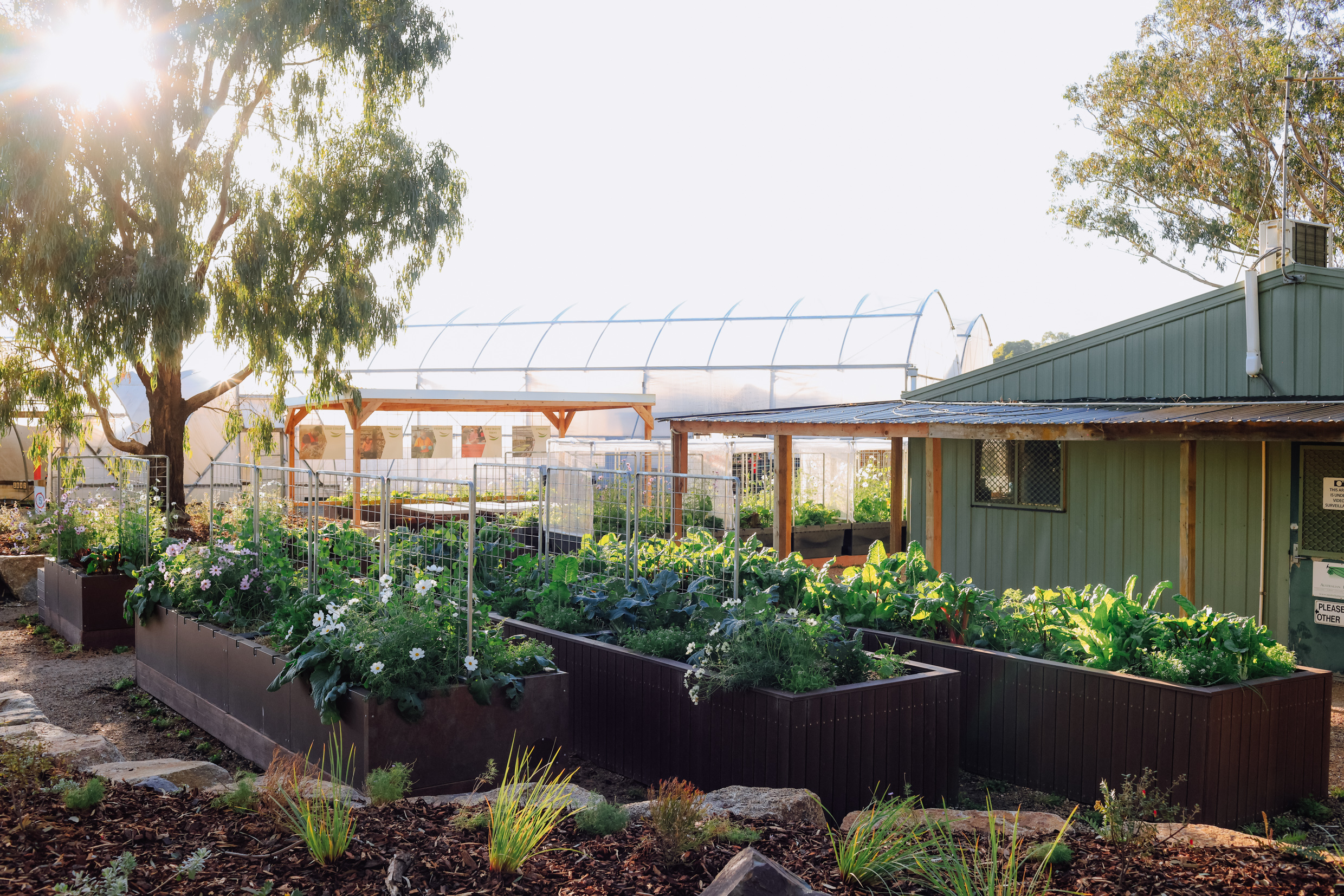
Imagine being able to enjoy a farm-fresh sandwich at work free of charge after picking all the ingredients yourself during your lunch break.
This is Sustainable Landscape Company director Brendan Condon’s vision – for workplaces to be providers of fresh fruit, vegetables, herbs, flowers and more. Determined to lead by example, he created a demonstration farm at Australian Ecosystem’s nursery in Port Melbourne, which supplies plantings for the SLC’s biodiverse landscapes around Victoria.
Using 60 Foodcube wicking beds from Biofilta – a company of which Condon is also a director – planting areas were constructed among seating areas and weather-proof shelters to allow its employees to interact with the farm and reap the benefits of spending time with nature.
The farm now produces up to a tonne of fresh fruits and vegetables a year, so there’s more than enough for employees to harvest the farm’s produce at their leisure and take food home to cook.
Wicking beds contain soil cones which extend below the tray at their base and into a water reservoir underneath, allowing stored water to be “wicked” up into the main growing area above the tray.
The beds are made from 80 per cent recycled food grade plastic which is water-tight and leak-proof. They also contain a passive aeration system with two air-posts in diagonal corners of the wicking bed which allow oxygen to enter plant roots which helps minimise rotting and allows trapped hot air to escape.
Besides the self-watering wicking bed system, the farm has trellises for climbing plants and netting systems to deter possums and pests. Staff can compost food scraps and green waste from the nursery grounds, which will be used to grow new plantings once the composting process is complete.
Apartment buildings and car parks are next
Condon said the benefits of urban farming go beyond savings on food miles and grocery bills. Siting farms within workplaces helps to improve nutrition by increasing accessibility to fresh foods, encourages biodiversity, helps to cool the urban environment and reduces food scrap waste. There are also intangible improvements to mental health and the possibility of teambuilding if staff choose to get involved in the farm.
“Simply being around gardens can be beneficial for your health. There is evidence that soil inoculates your microbiome with beneficial bacterial which release positive mood chemicals like serotonin. As soil is disturbed, these bacteria aerosolise and are absorbed through the skin,” Condon said.
In terms of maintenance, for busy workplaces the optimal solution is to organise for a “consulting farmer” to periodically visit the farm to check the condition of the plants and soil and undertake any required repositioning or replanting.
Workplaces are not the only institutions that can benefit from an urban farm. Biofilta Foodcubes have been installed in several Victorian schools, and a community farm at Cape Patterson, a sustainable community on the outskirts of Melbourne that Condon was instrumental in developing.
Condon has his sights firmly on Melbourne’s rooftops, including office, apartment and car parking buildings, to install the next generation of urban farms.
SLC developed SkyFarm atop a rooftop car park in Melbourne’s Seafarer precinct in Docklands overlooking the Yarra River, with 200 Foodcubes that supplies food to charities all over the city.
Condon said apartment buildings presented a significant opportunity, but acknowledged there were significant hurdles to overcome, both physically and metaphysically, on the part of apartment dwellers and their building and strata managers.
“In Australia we build lightweight roofs In the northern hemisphere they are heavy to take the snowpack weight so they can’t always take an urban farm. Rooftops need to be designed to be able to take an urban farm and a rooftop social space.”
For governance and maintenance, how about hiring a consultant farmer?
As with any new scheme in a shared ownership situation, there is the question of who maintains the urban farm. Building and strata managers are unlikely to have the skill set or time to invest in managing a farm effectively, Condon said.
“We employ farmers to tend to workplace farms they help workplaces manage soil, prevent diseases, work out what to plant and when.”
However, with the right training, the community can be brought on board, he adds.
“In an apartment setting you would need to have an induction process and engage your residents and set them up for success with resources and training.
You would need to hold regular workshops to teach residents the basics of urban farming. The engineering and landscaping parts are easy – but you need a champion on your resident’s committee until the farm is self-maintaining and you can teach people how to use the platform.”
All terribly Mickey Mouse if done within the context of growth. It really only makes sense as a strategy to draw us closer to the sustainable future that past growth as denied us.
If we do these things while we grow (and perhaps to facilitate more growth) all we do is slow the rate of decline — and there is not much point in that!