


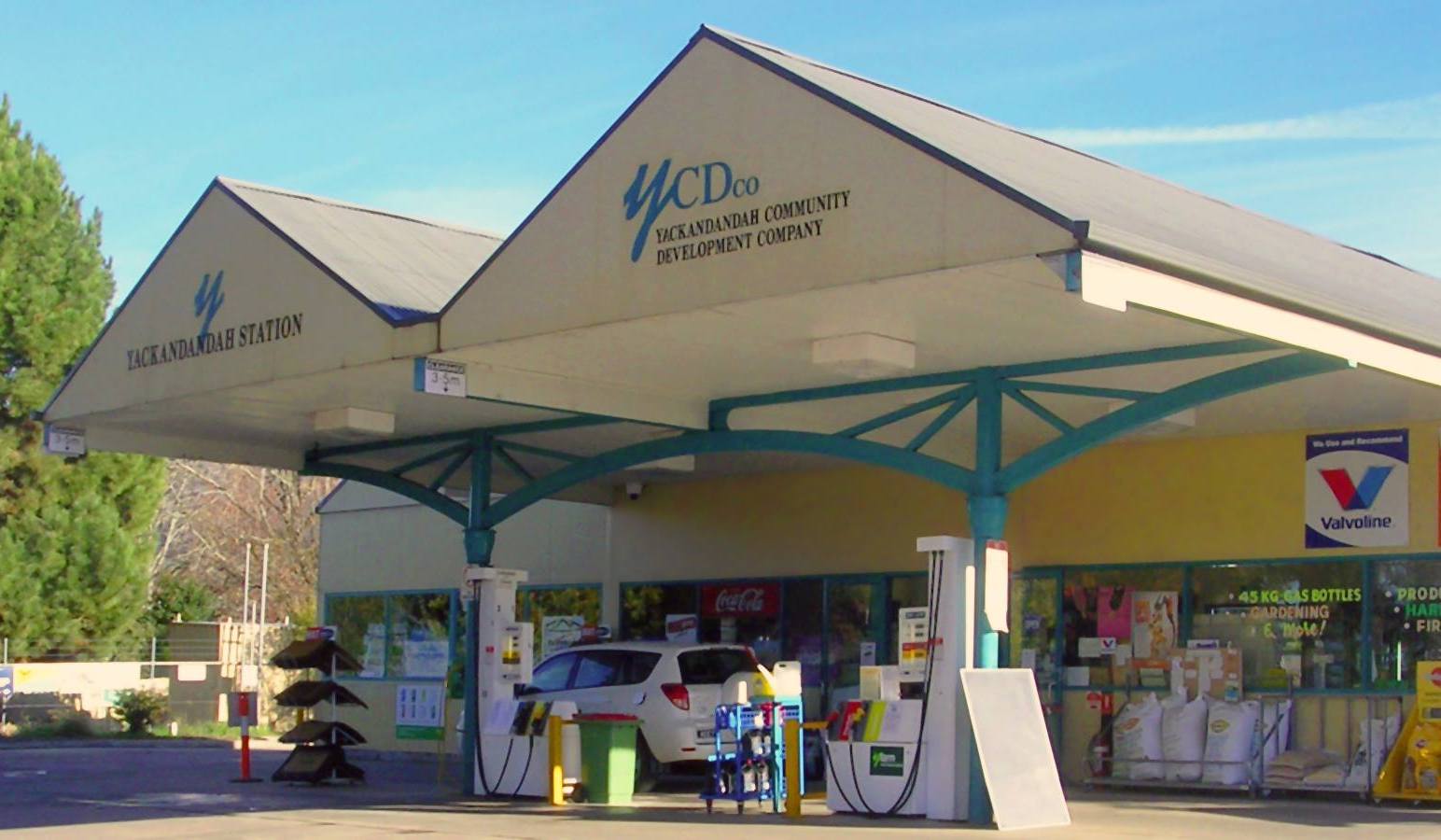
SPECIAL FEATURE: Business schools don’t teach it, but co-operatives can be a boon for regional communities. Many checking out what towns such as Yackandandah in Victoria has done to save its local garage and later install community based solar, and they’re following suit.
In 2002, Yackandandah’s only fuel station was set to close. The owner of the independent business in this small town in Victoria’s northeast wanted to retire. He couldn’t get a buyer at the price he wanted and was going to walk away, leaving Yackandandah without locally available fuel.
Seven concerned locals got together and decided something had to be done. Ian Fitzpatrick, current chairman of the Yackandandah Community Development Company Ltd (YCDCo) takes up the story.
“We knew that if people started going into the nearest metropolis of Albury-Wodonga for their fuel, they’d be doing their grocery shopping there as well and before we knew it we’d be in a dying town.
“We said ‘we can’t allow this to happen, maybe we can get the community together and get enough money to buy it and keep it operating’.”
Next was deciding on the structure of the company. The town decided on an unlisted public company. They wanted to make it a commercial business that could stand on its own, not rely on volunteers or grants.
“The old fuel station site wasn’t right, we couldn’t do much with it, as the EPA wouldn’t let us put new tanks on it. But if we built a new site it could be quite viable commercially and start paying back the debt and delivering a profit in the future to the community.”
The group set up a constitution that said once the business is viable it would donate 50 per cent of profits into a community grants scheme and 50 per cent back to the original shareholders who stumped up the money to build the thing.
Yackandandah’s citizens were pleasantly surprised by the response. They received 600 shareholder applications at $100 a share. They needed 360,000 to build new premises and raised $400,000.
“For the first three or four years there was not much in the way of shareholder dividends but in last 16 years it’s been going gangbusters,” Fitzpatrick, says. “It’s channelled lots of money back into the community and a five to six per cent return for shareholders, with lots of seed money for ongoing renewables projects.”
Those shares are now worth $240-250 each.
Shareholders get two cents a litres off their fuel purchases.
Now YCDCo has established itself as the parent company of several initiatives – including a local newspaper and a rural supplies outlet opened at the fuel station in 2005.
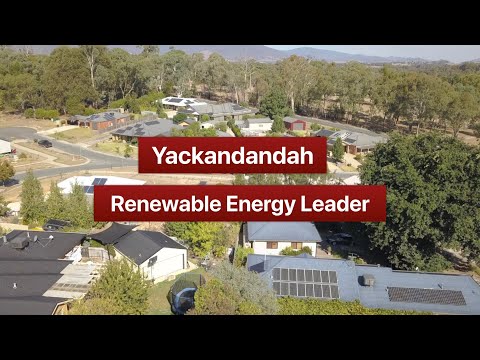
It has established its own self-sustaining solar energy company, Totally Renewable Yackandandah (TRY), aimed at putting solar panels on as many rooftops as possible, with the goal of powering the township on 100 per cent renewables by 2022.
TRY’s solar systems already reliably generate a significant proportion of the town’s energy requirements. They provide 3kW of the total 12kW offsets against the annual carbon emissions of the Yackandandah Folk Festival, a highly successful annual event also seeded by YCDCo.
YCDCo’s success story is outstanding, but no means the only example of community-led initiatives underwriting sustainable, renewables-powered energy and business projects that remain independent of government or corporate interests.
Victoria is leading the way but this is fast growing model
Victoria is leading the way in such venture models, but there are comparable exemplars in West Australia, South Australia and New South Wales as well.
These range from community buyouts of pubs, shops and post offices in small rural towns (shorturl.at/iBMUX), to large scale energy projects such as Hepburn Wind and ZedNet, the Manilla Community Renewable Energy Inc (MCRE) and Haystacks in NSW’s Riverina.
Lismore’s NORCO is Australia’s largest dairy co-op, owned by local farmers. Its purpose is to pay a good milk price to the farmers by owning the processing and marketing activities on their behalf and they’ve successfully kept farmers in business through drought and climate change.
Other prominent examples include South Australia’s Barossa Co-op, formed after a community buy-out of an existing retail store, which has now blossomed into nine distinct retail concerns.
The Cobargo co-op in southern NSW, which started 100 years ago as a dairy co-op and is now a retail co-op, came into its own after the terrible bushfires that devastated the town over the summer of 2019/20.
The Cobargo co-op opened straight after the fires, without power, it was using a paper ledger to get supplies out to people straight away. Manager Dan Williamson says that it was a vital service in that dreadful time.
“The Co-op was the first business to re-open just two days after the fire swept through the town,” he says.
“We ran for a week on one generator for the fuel bowsers and sold vital feed, supplies and fuel simply by taking names and numbers and sorting out payment weeks and months later.
“We were also the only source of fuel for the fire brigade to keep refuelling.
“It was a nightmare to manage but so very necessary. Because of our good reputation and willingness to go the extra mile, we didn’t have any problems recouping any of it.”
Not all co-operatives operate on the same principles as YCDCo or Cobargo, but all have community needs and ambitions in common.
Greg Patmore, Professor of Business and Labour History at University of Sydney Business School says Australia has a rich and varied history of co-operatives. He’s compiling an enormous database with the working title of The Visual Atlas of Australian Cooperative History.
“There’s about 4000 co-operatives in there already and we estimate it’ll be between 10-12,000. They’ve been an economic backbone in both rural and urban areas of Australia since about 1820. There’s such a variety of forms, we keep finding new types. We’ve had concentrations in the Richmond Valley in NSW and the wheat belt in Western Australia.
“You’ll find networks built around fishing co-ops, credit unions, housing co-ops in Sydney, Melbourne, Adelaide and Newcastle and many of them are still here, despite all the best hopes of some people in the neoliberal debates.”
Any form of activity you can form a co-op around, Patmore says.
“If people think there’s a need and the market has failed them, they generally take on this model. It’s a wonderful form of economic democracy, the traditional co-op model where people have a say, irrespective of the number of shares or whatever they have. It’s a great way to reinforce political democracy, because it gives people active involvement in democratic practice at a local level. It’s also a form of self help, where people get together and do things for themselves.”
A renaissance born of necessity
Anthony Taylor is the Policy and Research Advisor of the Business Council of Co-operatives and Mutuals (BCCM), who undertake community outreach to facilitate sustainable community projects.
“Any industry or part of the economy has a co-op or a mutual in it, so the big sectors in Australia are banking, insurance and agriculture. The Business Council is made up of leading co-ops from all different sectors and our role is to raise awareness of the cooperative model and provide education and resources to make it easier to start and operate a co-op.
Taylor says it’s a universal model; wherever people need a community owned retail or energy need in their community they seem to hit on a similar model.
Some have been around for 100-150 years. But there’s been a renaissance out of necessity.
In communities that have been hit by bushfires and COVID and are suffering economically it’s an imperative to have a mechanism to boost the local economy, to run the local store or have a local energy project that the community can kickstart themselves and often in that case a co-op will fit.
“Our role is to make it as easy as possible to form the operating environment. We host information on our website to help how to form a co-op and provide personal assistance.
“A couple of weeks ago I went to Cootamundra in NSW to talk to community group looking at starting a retail co-op as a response to Wesfarmers announcing that Target will be closing in a number of places, including Cootamundra, next year.”
Taylor says that the advantage of co-ops is that their structure and remit can be adapted to suit localised needs.
Not everyone has to copy the same model. Yackandandah uses a company model and that works well for them, he says. But a co-op can do what its members want.
Mary Debrett is the president of Ballarat Renewable Energy and Zero Emissions (BREAZE), a not for profit group started in 2007 in response to Kevin Rudd’s speech declaring climate change to be the moral challenge of our time.
“A group of concerned citizens of Ballarat got together and thinking about what they might do,” Debrett says.
“They started with bulk buying of solar panels and hot water systems and that developed into quite a big business. This was prior to there being many commercial installers and distributors and we’re not really part of that business anymore.
“We make submissions to government and council and are represented in the Ballarat Regional Sustainability Alliance, a network of environmental organisations which the council consults over environment policy.”
In collaboration with the council the group saw the development of a carbon neutrality action plan and a goal of 100 per cent renewables for council operations by 2025.
Between 2017 and 2020 Breaze hosted the Ballarat Community Power Hubs, a state government initiative to cut emissions across the regions.
The role of the hub was to identify community possibilities for renewable energy.
The group did feasibility studies for a micro-grid for the Bunninyong shopping centre and the use of biogas for power and irrigation pumps.
In May this year the state government granted $1.1 million to shovel ready projects and it is currently administering those. The biggest one is the East Grampians Health Service, installing over $600,000 worth of solar panels at the hospital, installing solar panels on a retirement village and on community services buildings.
Not far from Ballarat at Leonards Hill, the Hepburn Wind project operates Australia’s first community-owned wind farm. Its two turbines, dubbed Gale and Gusto, generate 4.1 MW; powering over 2000 homes with clean energy. Hepburn Wind was established in 2007 by the Hepburn Renewable Energy Association, a not for profit group.
Taryn Lane has been the manager of Hepburn Wind for eleven years. She relishes its reputation as the first and only example of a zero net energy town in Australia.
“Hepburn Wind was formed by a co-op of 2013 members who invested $10 million. We’ve always had an ambition to go beyond Daylesford and make our whole shire zero energy and reach for zero emissions. It was a master plan that we could act collectively for.
“We wanted to develop an open source approach to place-based transitions. That means using very bottom-up methods to collect project ideas from the community.”
The group brought in more strategic and technological ideas to reach that ambition. This included seed funding from Sustainability Victoria and Hepburn Shire council and it set up a governance group to guide the implementation of the transition plan, the Zed Net round table, a collaborative governance model.
“All the key stakeholders were at the table including four sustainability groups in our small shire of 15,000 people,” Lane says.
“We run solar and battery bulk buys as well as an electric vehicle bulk buy and charging infrastructure for EVs. We have a free energy audit and retrofit support program and have established what’s called the Zed Net climate resilience fund – a collaborative fund for local funders such as the Bendigo Bank.”
The fund is developing a 7.4 megawatt solar farm and battery storage facility to be co-located at the wind farm site. It’s now raised $2.3 million through further community investment, philanthropic or other government grants in a 15 month period.
Though the Community Grants program the group has funded 60 local projects with more $115,230 in grant funding.
“Having a strategy and knowing what you want to achieve really works,” Lane says.
Community owned businesses tend to be more sustainable and are able to take a longer-term view
Anthony Taylor of BCCM says that co-op ownership by the local community means greater community influence over operations and greater incentive for community involvement.
Wealth is retained in the local area, rather than adding to the profits of national or internationally-owned corporates.
Community owned businesses tend to be more sustainable and are able to take a longer-term view, as there are no external shareholders requiring short-term returns. Their driving purpose is to maintain the service for members and the community.
While not-for profits have a fine record for establishing renewables-based projects, shareholder-owned projects similar to YCDCo are a classic co-operative model. Agricultural co-ops have been around as long as most rural Australian towns and Fishermans Co-ops are landmarks of every coastal fishing enclave.
Emma Stilts, an art gallery curator in the small town of Manilla, near Tamworth in NSW’s north west, formed MCRE in 2013.
She lobbied successfully for a $3.5 million grant from the NSW Regional Community Energy Fund to build a 4.8mW solar farm on land just outside town. MCRE spokesman Brad Pilon said that project should be completed by the end of 2020.
“There are 100 locals involved as prospective shareholders and there’s a real buzz in the community about it,” Pilon says.
“We’re in discussions with energy retailers to deliver the project as cheaply as possible and to provide the cheapest power in the area, to get rid of coal power and allow local people to access cheap alternatives.
“A local guy in Tamworth has developed a hydrogen battery that can power 3500 homes for up to six hours. And we’re looking at a biogas system to utilise the hydrogen byproduct, we’re in discussions with Tamworth council about that.”
Manilla is in a National Party electorate close to the Whitehaven Coal operation at Maules Creek, but as Anthony Taylor points out, there are supporters of renewables co-ops across the political spectrum.
“Rusted on Nationals areas understand from their history of agricultural co-ops, they understand from a community point of view the value of working together.”
But Ian Fitzpatrick says that YCDCo had a less sanguine experience in their initial approach to then local LNP member Sophie Mirabella.
“A group from our Indigo Shire went to Mirabella initially to voice community concerns and the story goes that she rattled off the party lines; ‘it’s all about stopping the boats’ etcetera,’’ Fitzpatric says.
“Our people said ‘you don’t understand, these are not the local issues we’re talking about. We want a decent train service and fixing black spots on the mobile reception’ but she kept talking rhetoric and the community went away with a very sour taste in their mouths.
“So they got up their own candidate, found the right person in the independent Cathy McGowan and got an underground movement going. A lot of young people were involved, they used tools the others hadn’t, like social media and in the first year they knocked Mirabella off. She thought it was just an aberration and ran again and got knocked off a second time by Helen Haynes.”
The group created political history, Fitpatrick reckons. “It was the first time an independent had been replaced by an independent without it falling back to the major parties.”
“It’s always a challenge to get politicians onside and supportive but when you’re motivated and you’ve got runs on the board it’s much easier to do and we’ve stayed politically connected to our local MPs.
“They’ve been very helpful, they know we’re not idiots, that we’ve got ideas worth pursuing and they realise the power we’ve got in terms of community support and that if they’re seen to be helping us that’s potentially good for them too.”
Those connections with local and state government are critical elements to be fostered, he says.
“If they know you’ve got our act together and can sort stuff out and you just need financial support usually, if they’ve got the capacity to do it they’ll do it, because they know the money will be well spent.”
A lot of business schools in Australia have no interest in this alt business model. They teach investor-owned businesses as though it’s the only thing
Professor Greg Patmore says modern neoliberal teachings have largely ignored the cooperative approach to community economic needs.
“A lot of the business schools in Australia have no interest in this alt business model. They teach investor-owned businesses as though it’s the only thing, but there are different models in this country and that’s part of the uphill battle that co-operatives have, you’ve got to read about them, though there is a course on them at the Uni of NSW and one at Uni of WA.”
Ian Fitzpatrick says YCDCo has given the Yackandandah community a tremendous boost in terms of the resilience required to get them through the challenges of the 21st century.
“Once you’ve had a success it gives the community confidence that they can do other things, it builds resilience in thinking. We’ve got a successful business at the top of town, what’s stopping us from doing other things?
“When Covid first hit people met up and said ‘how do we look after each other, how do we help the vulnerable people that might be slipping through the government gaps?’ A group of townspeople started meeting through ZOOM for a chat every Tuesday afternoon, approached the supermarket to arrange access to home delivery for groceries, and to seek volunteers to deliver. They arranged wash stations and the Lions Club bought up sanitisers in bulk from dollar coin donations.”
Dan Williamson of the Cobargo Co-op says that community spirit is what pulled Cobargo through in its greatest trial.
“Because our staff all know we are basically running a community service, we are all dedicated to the needs of the community and generally work here because we love this town, the people and our way of life.
We’ve created a place where customers know us and we know them. We know most customers by name and since the fires we’ve been focused on people’s wellbeing as well as their immediate survival and rebuild needs.”
Anthony Taylor says that the success stories of co-operatives across Australia are developing their own momentum.
“There does seem to be a renaissance. It’s interesting that in the regions different co-operatives seem to be talking to each other. When I went to Cootamundra recently I got calls from two other towns while I was there, they were wanting to join or form a co-op as well.
“It’s exciting seeing these sorts of energy projects emerge – one in Goulburn raised a couple million in the community and Haystacks in the Riverina has seen quite an increase in activity.
“Once it catches on somewhere people have some knowhow about it and see common problems across those towns – there’s a driver for people to do it and it’s a community response based on self-help, not waiting for government assistance.”
Thanks for this article. Extending the thread, is there a register/list of energy co-ops? Important for two reasons I think that there should be–
first . for the nascent groups such as us, there is reference system to look at successful modelling with a view to selecting a structure that suits.
Second, I am reading the ARENA concerns with middle day supply and demand issues and grid management. To that end I read it as likely that storage [battery] will be the standard additional requirement for flattening the supply middle day bump and discharge as a VPP in peak load and night time load. I would imagine the sharing of experience by the community groups will be useful.
Great piece. Fantastic solutions. Economic recovery and regeneration will have to be led from the ground up. These examples provide great inspiration.
Great piece about powerful economic responses to our social mobility and planetary challenges. A genuine antidote to the failings of modern political, financial and economic BAU. And its needed now more than ever as a covid-induced economic crisis compounds those we’re already facing due to things like climate change.