


Politicians took a nasty swipe at the National Farmers Federation a few weeks ago when the farmers said they wanted zero emissions by 2050.
Not a thing, said the pollies. You can’t have a target without a plan, nor a plan without being able to “look Australians in the eye” and tell them what it will cost, prime minister Scott Morrison said (with no hint of irony about what the cost of climate damage will be).
The president of the NFF, Fiona Simson, was forced to endure a surprisingly brutal backlash.
Agriculture Minister David Littleproud criticised the NFF, which has since signed a statement that describes Australia as “woefully unprepared” to deal with the effects of climate change, for “blindly setting a course” for net zero without a strategy, which he said risked “serious implications not just on farmers but the entire nation”.
Minister for energy and emissions reduction (sic) Angus Taylor echoed his boss when he said, “The government has been clear: we won’t set a target without a plan.” Cost was everything, he said (without noting the externalities of fossil fuels that are paid for by the taxpayer).
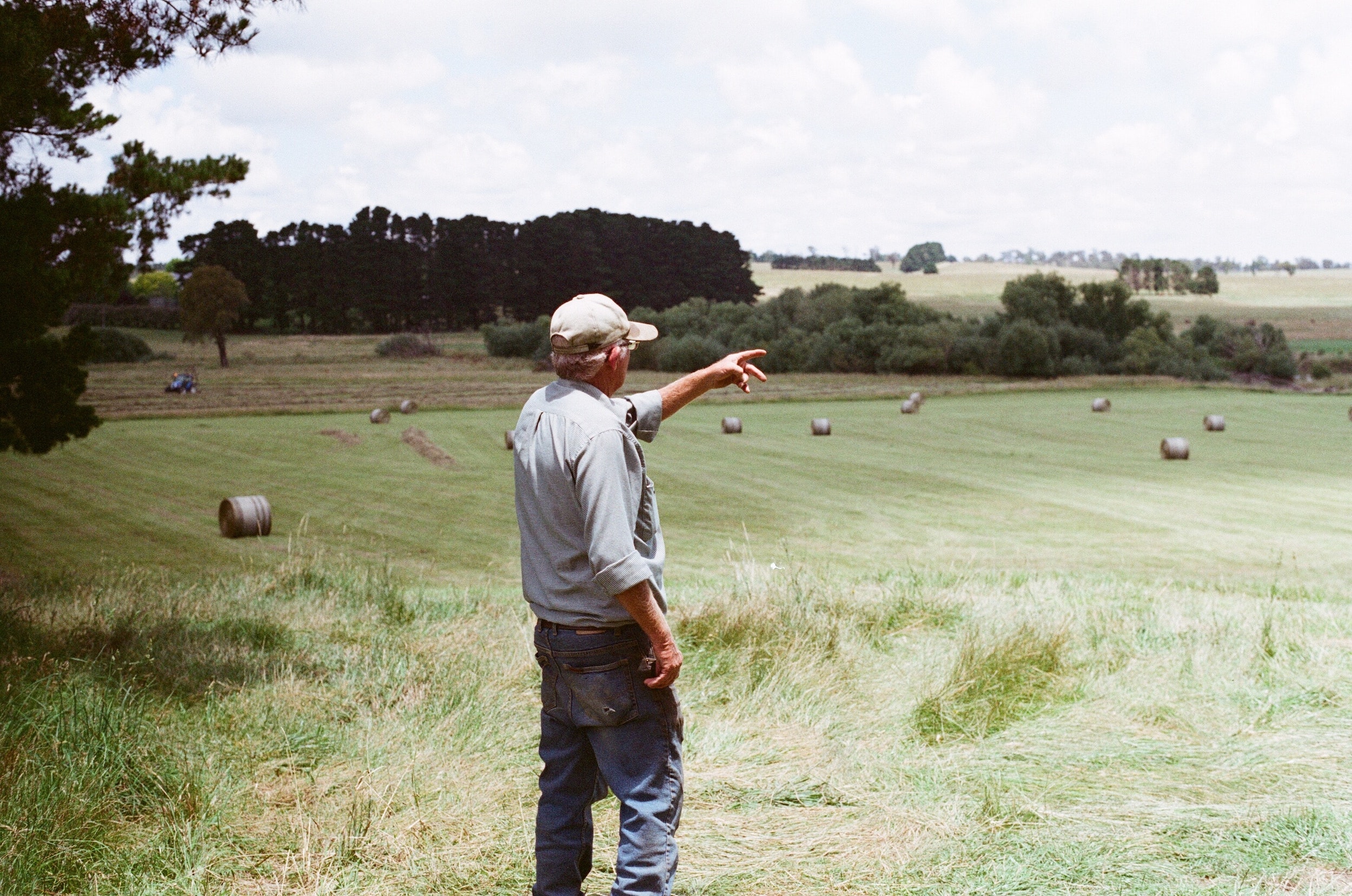
None of this came as any surprise to Peter Holding, a third generation farmer at Harden north east of Wagga Wagga and outreach officer for the Farmers for Climate Action.
“There’s a backlash against everything,” Holding says.
But it’s not a radical policy that’s being proposed. “This is a conservative policy. How could it not be conservative to want to look after our food, our farm and our business?” he says.
Besides, farmers do have a plan.
Like many companies in property and other parts of the economy, farmers aren’t waiting for the government to okay their adjustments to prepare for climate change.
Many are putting solar power, they’re trying to reduce emissions of cattle by changing the genetics to improve fertility which means they need fewer cattle to maintain stock levels, thereby lowering methane emissions and are positive about technologies that help farming to be more efficient.
Most are optimistic about agriculture, he says, but what they’re worried about is climate change.
“You’re losing housing on the coast and the storms are getting bigger.
“The east coast low – we used to talk about them occurring once in every 100 years but now it’s twice a year.”
Right now, Holding is worried about the summer to come.
“It’s been a particularly warm winter.” And the abundant rains in many parts of the country that broke the recent brutal drought have fostered an abundance of growth.
“The canola is a month ahead of itself, it’s been so warm.” And he points to the long grass on the sides of the road. The big threat this summer will be grassfires because they can move so quickly.
Climate wise, he says, “I think we are very close to the precipice.”
“We have to put a value on our natural capital,” he says. “It’s not unlimited.”
But while farmers share concerns about climate change, they may not always voice them to the bank manager when they’re asking to extend their loans, he quips.
Politicians don’t really care
The bank is where farmers might hope for some support given the huge boost in land prices since the GFC, but not many hold out hope of support from the politicians. “I would find it hard to imagine they could give us a harder time,” Holding says.
For instance, there is no drought policy, despite a country entirely so prone to drought and some parts still in its grip.
“Littleproud said he put in $5 billion in drought funding but we’ve not seen much of it yet.
Yet the politicians, too, “get” climate change.
Twelve months ago all the federal and state agriculture ministers agreed to a work plan, to start planning for a future with climate change. Nothing happened.
“They’ve all agreed, but it hasn’t been funded,” he says.
“There’s a whole lot of mythology about how the government helps the farmers.
“What the government is doing is avoiding responsibility all the way down the chain.”
But wait, aren’t farmers the backbone of this country? One of the original vested interests?
“That’s the story most people would like to believe but the reality is there are not that many farmers left,” Holding says.
Numbers have fallen to between 90-100,000 farmers. Ten years ago the numbers were double.
“The reality is that the rural voice has been diminished because rural communities are more diverse now.”
Still, in just three or four years the Farmers for Climate Action, which he helped to found has around 5000 members who are farmers and total membership of around 26,000 when researchers, scientists and other interested groups are included.
Holding says the organisation has had impact.
“I think we’re having an influence. We’re been pushing for action on climate change through the NFF.”
But getting the policy through was “really difficult”.
“There are all sorts of different opinions.” But, in the end, the support was almost unanimous. Only two groups dissented – because they had a stronger target: net zero by 2030.
The NFF are not representative of all farmers, in fact farmers are not direct members of the NFF. The NFF is supported by State Farm Organisations (SFOs) The membership numbers of state farm organisations should be examined and published. You will find that few farmers are active members of their state organisations. The NFF is supported financially by sponsors and by those who sponsor the SFOs. Farmers for Climate Action are almost unknown outside of their own little world. Where are the surveys to show that farmers support the NFF and Farmers for Climate Action and the so-called policies they promote?
Be really glad to hear who you think farmers support and what they think about climate change.
Wow. “You can’t have a target without a plan” might just beg the question, after all this time, why do you have no plan, dear Government? What, no-one told you about climate change before this?